
Health
Why Does Ozdikenosis Kill You? Hidden Truths Explained Simply

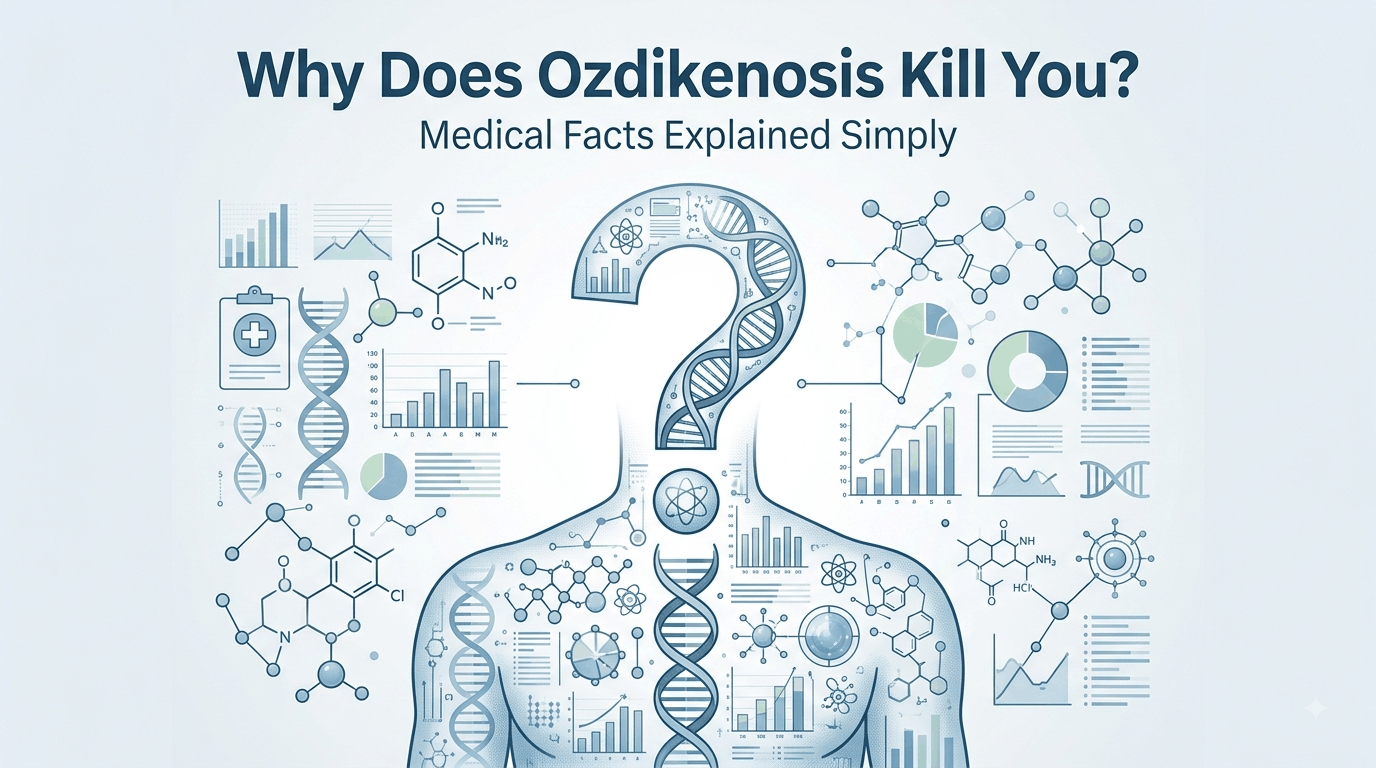
If you searched “Why Does Ozdikenosis Kill You?”, the most important fact to know is that ozdikenosis is not currently recognized as an established human disease in the medical evidence that can be verified.
There is no reliable scientific basis for saying that ozdikenosis causes organ failure, attacks the brain, destroys mitochondria, causes abnormal tissue growth, or follows a specific fatal progression. Online articles make several of these claims, but they do not provide credible clinical evidence to establish them. Some pages even give completely different explanations of what the supposed condition is.
That distinction matters.
A medical condition normally has identifiable evidence behind it: a defined clinical description, documented cases, diagnostic criteria, research findings, or recognition within established medical classification systems. A strange-sounding word appearing on websites is not enough to establish that a disease exists.
So, why does ozdikenosis kill you?
Based on the available evidence, there is no medically established answer because there is no verified evidence that “ozdikenosis” is a disease that kills people.
The more useful question is therefore: Where did this term come from, why does it sound medically convincing, and why are so many conflicting explanations appearing online?
What Is Ozdikenosis?
At present, there is no consistently accepted medical definition of ozdikenosis.
Search results show websites describing it in radically different ways. One site describes supposed abnormal fibrous growths around soft tissues and joints, while another claims it is a neurological condition involving protein misfolding. Other pages describe it as a mitochondrial disorder or an autoimmune disease.
These descriptions cannot all be treated as established medical fact.
That inconsistency is itself an important clue.
Real diseases can have disagreements about treatment, prognosis, or individual symptoms. However, there is generally an underlying body of evidence establishing what the disease is. Researchers can investigate the same condition, compare cases, reproduce findings, and refine the understanding over time.
With ozdikenosis, the online descriptions do not show that kind of evidence base.
Is Ozdikenosis a Real Disease?
There is currently no credible evidence establishing ozdikenosis as a recognized medical diagnosis.
Searches for the exact term did not produce results from major authoritative medical sources such as PubMed, the World Health Organization, the Centers for Disease Control and Prevention, or the National Institutes of Health.
That does not mean that every unfamiliar medical term is automatically fake. Medical terminology changes, rare disorders can be poorly documented, and spelling errors are common.
It does mean that claims about ozdikenosis should not be presented as established medical facts without supporting evidence.
Several websites making strong claims about the condition provide no verifiable clinical documentation for those claims.
Why Does the Word “Ozdikenosis” Sound Like a Medical Condition?
One reason the term can appear convincing is its structure.
Many genuine medical words have endings such as:
- -osis, often used for a condition or abnormal process
- -itis, generally associated with inflammation
- -emia, often relating to a condition involving the blood
- -pathy, generally referring to disease or dysfunction
Because people regularly encounter words with these endings in medicine, an unfamiliar word can sound legitimate even when its actual medical status has not been established.
For example, fibrosis, osteoporosis, and neurosis are real terms, but the presence of a familiar suffix does not automatically make every newly constructed word a recognized disease.
This is an important lesson when evaluating health information online:
A medical-sounding name is not evidence of a medical diagnosis.
Why Are There So Many Different Claims About Ozdikenosis?
The search results reveal a particularly unusual pattern.
Different websites describe completely different supposed causes and disease mechanisms.
| Online claim | Evidence status |
|---|---|
| Ozdikenosis causes abnormal tissue growth | Not medically established |
| Ozdikenosis causes protein misfolding | Not medically established |
| Ozdikenosis damages mitochondria | Not medically established |
| Ozdikenosis causes neurological deterioration | Not medically established |
| Ozdikenosis causes multiple-organ failure | Not medically established |
| Ozdikenosis is an inherited metabolic disease | Not medically established |
| Ozdikenosis is an autoimmune condition | Not medically established |
The problem is not simply that one website might contain an error.
The larger problem is that there is no consistent scientific foundation connecting these claims.
One online article claims that supposed protein aggregates affect the cerebral cortex and hippocampus, while another describes the condition as abnormal fibrous growths. Yet neither explanation has a credible clinical evidence base that establishes ozdikenosis as a real disease.
That makes it unsafe to turn these descriptions into medical advice.
Where Did the “Ozdikenosis Kills You” Claim Come From?
The precise origin of the term is difficult to establish from reliable evidence.
What can be observed is that numerous websites began publishing pages around searches such as:
- Why does ozdikenosis kill you?
- What is ozdikenosis?
- Ozdikenosis disease
- Ozdikenosis symptoms
- Is ozdikenosis fatal?
- How does ozdikenosis affect the body?
Some pages treat the term as a real disease without demonstrating where the diagnosis originated. Others explicitly acknowledge that the term is not medically recognized.
This creates a feedback loop.
A mysterious phrase appears online. Someone writes an article about it. Another website sees the phrase and creates its own explanation. Search engines then find multiple pages discussing the same term.
Eventually, the number of pages discussing a claim can make the claim appear more established than it really is.
But quantity of online content is not the same as quality of evidence.
Why Do People Believe Ozdikenosis Is Fatal?
There are several reasons an unfamiliar term can quickly become associated with death.
The wording is alarming
The exact search phrase contains the words “kill you.” Someone encountering it for the first time may naturally assume that a known disease is being discussed.
Medical language can create false confidence
A complex-looking word may sound authoritative even when its meaning has not been established.
Repetition can look like confirmation
If ten websites repeat the same statement, a reader may assume ten independent sources have confirmed it.
That assumption is often wrong.
The websites may simply be repeating one another.
Health anxiety makes uncertainty harder to interpret
When people are worried about a symptom or disease, dramatic information can receive more attention than cautious information. A headline claiming that an obscure condition is deadly can therefore spread more rapidly than a careful explanation saying that the term itself has not been medically established.
What About Articles Claiming Specific Symptoms?
Several websites list symptoms supposedly associated with ozdikenosis, including lumps, stiffness, neurological problems, swallowing difficulties, tremors, cognitive changes, or organ dysfunction.
These lists should not be treated as diagnostic criteria.
Many symptoms mentioned in those articles are extremely nonspecific.
For example, difficulty swallowing can occur with numerous neurological, muscular, structural, and infectious conditions. Tremors have many possible causes. Fatigue, pain, stiffness, and cognitive complaints can also occur in a wide range of medical circumstances.
A symptom becomes medically meaningful when it is evaluated in context.
That usually means considering factors such as:
- Medical history
- Physical examination
- Duration and progression
- Other symptoms
- Medication use
- Family history
- Laboratory testing when appropriate
- Imaging or specialist assessment when indicated
A list on an unverified website cannot establish that a person has a disease.
Why You Should Be Careful With “Stages of Ozdikenosis”
Some online pages describe ozdikenosis as progressing through stages, beginning with cellular damage and eventually leading to neurological, respiratory, or cardiovascular failure.
This sounds scientifically detailed, but detail alone does not make a medical explanation reliable.
One particularly concerning example is an online article that attributes specific percentages of neuronal loss and patient behavior to named studies. Those references could not be independently verified through the searches performed for this article.
That means such numbers should not be repeated as medical facts.
This is a useful rule for evaluating health content:
A statistic without a verifiable source is not automatically a scientific statistic.
The same applies to named doctors, supposed research papers, patient numbers, survival rates, and claims about a disease being discovered in a particular year.
What Actually Causes a Disease to Become Fatal?
Although ozdikenosis itself has no established fatal mechanism, the general medical question behind the search is legitimate.
Real diseases can become life-threatening in several ways.
Organ failure
The heart, lungs, kidneys, liver, and brain perform essential functions. Severe disease can interfere with one or more of these systems.
Severe infection
Certain infections can overwhelm the body’s ability to maintain normal circulation, oxygen delivery, and organ function.
Respiratory failure
When the lungs cannot provide adequate oxygen or remove enough carbon dioxide, the situation can become life-threatening without appropriate medical treatment.
Cardiovascular collapse
The body depends on effective circulation to deliver oxygen and nutrients to tissues. Severe disruption of circulation can cause widespread organ injury.
Severe neurological dysfunction
Conditions affecting areas of the brain responsible for consciousness, breathing, swallowing, or other vital functions can become emergencies.
The important point is that these are general mechanisms of serious illness. People should not attribute them to ozdikenosis without supporting evidence.
Ozdikenosis vs. a Medically Recognized Disease
The correct next step is to verify whether credible medical evidence supports the term.
| Feature | Ozdikenosis | Recognized medical disease |
| Established definition | No verified definition | Yes |
| Consistent clinical description | No | Generally yes |
| Published clinical evidence | Not established | Available |
| Diagnostic criteria | Not established | Usually available |
| Documented patient population | Not established | Documented |
| Standard medical references | Not established | Usually included |
| Evidence-based treatment guidelines | None established | May exist |
| Confirmed fatal mechanism | None established | Depends on disease |
This comparison does not mean that every rare or newly discovered condition must immediately have extensive research.
New diseases can take time to characterize.
The key issue is that claims about a disease’s symptoms, progression, and mortality require evidence.
The Hidden Truth: A Search Result Is Not a Diagnosis
One of the most important insights behind this keyword is also one of the simplest.
Searching for a medical term does not confirm that the term describes your condition.
Suppose someone searches:
“Why does ozdikenosis kill you?”
They may have seen the phrase on social media, in a video, in a forum, or on another website. They may then search Google to understand it.
Finding several articles does not prove the disease exists.
The correct next step is to determine whether credible medical evidence supports the term.
This is especially important when a website provides:
- A dramatic mortality claim
- A precise survival rate
- A supposed genetic mutation
- A named researcher
- A treatment protocol
- A list of disease stages
- A highly specific biological mechanism
Those details should be independently verifiable.
What If You Saw “Ozdikenosis” on a Medical Report?
This is one situation where caution is especially important.
If the word appeared on an actual medical document, prescription, laboratory report, or message from a healthcare provider, do not assume that the internet definition is correct.
The term could be:
- A spelling error
- A transcription error
- A brand or product name
- A local abbreviation
- A technical term that was misunderstood
- A different word that looks similar
Take the original document to the healthcare professional or laboratory that issued it and ask them to clarify the exact term.
That is much safer than trying to diagnose yourself from search results.
What If You Have Symptoms You Think Are Ozdikenosis?
Do not wait for an internet article to confirm or deny a diagnosis.
If you have persistent, worsening, or unexplained symptoms, arrange an appropriate medical evaluation.
Seek urgent medical care for potentially serious symptoms such as:
- Severe difficulty breathing
- Loss of consciousness
- New severe chest pain
- Sudden weakness or paralysis
- Severe confusion
- A seizure lasting longer than expected
- Serious difficulty swallowing with breathing problems
- Other rapidly worsening symptoms
These warning signs can indicate many genuine medical emergencies, so people should not attribute them to an unverified internet condition.
Why Copying Other Websites Can Make Medical Misinformation Worse
A major problem visible in the current search results is circular content.
One website publishes an unsupported claim. Another website repeats it. A third adds more details. Eventually, the newer articles may appear to have independent evidence simply because several pages contain the same story.
This is particularly dangerous with health topics.
For example, an unsupported article might claim that ozdikenosis affects mitochondria. Another writer may repeat that claim and add a paragraph explaining mitochondrial biology. A third writer could then cite the second article as evidence.
The final article might look extremely detailed.
But the underlying claim still originated from an unverified source.
More detail does not repair missing evidence.
What Reliable Medical Research Usually Looks Like
When scientists establish that a disease exists, the evidence usually develops through multiple sources.
These can include:
- Clinical observations — doctors identify recurring patterns among patients.
- Laboratory findings — Researchers document measurable biological abnormalities.
- Pathology or imaging — Medical professionals can demonstrate physical changes when appropriate.
- Published research — Researchers describe findings in scientific literature.
- Independent confirmation — other researchers investigate whether the findings hold up.
- Clinical classification — Medical authorities can eventually incorporate the condition into appropriate clinical systems
Genuine medical knowledge relies on evidence, not on how many websites use a particular term, even though diseases do not all follow the same pathway.
Lesser-Known Warning Signs of Medical Misinformation
The most useful lesson from the ozdikenosis search may be how to recognize unreliable health content in general.
Be especially cautious when an article:
Gives precise statistics without a source
Numbers can make an article appear authoritative. Always check where they came from.
Names researchers without verifiable publications
A person’s name is not evidence that a study exists.
Describes a disease differently from every other source
Major differences in the basic definition are a warning sign.
Uses dramatic language
Writers may use phrases such as “deadly hidden disease,” “doctors don’t want you to know,” or “the condition nobody understands” to generate clicks rather than communicate medical evidence.
Promises a simple explanation for a complicated disease
Real medical conditions can have complex causes and variable presentations. Absolute explanations deserve scrutiny.
Provides treatment without established evidence
Readers should not treat a website as a substitute for a medical professional simply because it provides a long list of treatments.
Could “Ozdikenosis” Be a Misspelling?
Yes, that is one possibility, although the exact intended word cannot be determined from the keyword alone.
Medical terminology contains many words that look or sound similar. A single spelling mistake can lead someone to search for the wrong condition.
For that reason, if you encountered “ozdikenosis” in a conversation, document, video, or post, checking the original context and spelling is more useful than assuming the term refers to a particular disease.
This is especially relevant when a person has copied the word from an image or heard it verbally.
Frequently Asked Questions
Is ozdikenosis a real disease?
Reliable medical evidence reviewed for this article does not currently establish ozdikenosis as a recognized medical disease. There is no verified clinical definition, diagnostic framework, or established fatal mechanism that supports the numerous conflicting descriptions found online. If you encountered the term in a medical context, confirm the exact spelling and meaning with a qualified healthcare professional.
Why does ozdikenosis kill you if it is not a recognized disease?
There is no evidence-based explanation for why ozdikenosis “kills you.” The phrase appears to be based on online claims rather than an established medical diagnosis. Some websites claim that ozdikenosis causes neurological or organ failure, but researchers have not established these effects as characteristics of a recognized disease.
Is ozdikenosis contagious?
There is no established medical evidence showing that ozdikenosis is a contagious disease. Because the term itself is not recognized as a confirmed medical condition, claims about transmission, infection, incubation periods, or contagiousness should not be treated as established facts.
What are the symptoms of ozdikenosis?
Medical authorities have not established a validated symptom list for ozdikenosis. Different websites publish conflicting lists that include neurological, muscular, cognitive, and tissue-related symptoms, but those descriptions lack a confirmed clinical basis. If you have unexplained symptoms, it is better to have them assessed directly rather than comparing them with an unverified online condition.
Can Doctors Cure Ozdikenosis?
Because ozdikenosis has not been established as a recognized medical disease, no established treatment or cure exists for it. People should therefore treat online claims about specific treatments, supplements, surgery, or lifestyle protocols with caution. Do not replace prescribed medical care with advice based on an unverified website.
Is ozdikenosis genetic?
There is no reliable evidence establishing ozdikenosis as a genetic disorder. Some websites describe it as inherited, while others give completely different explanations. Without confirmed disease biology, genetic testing criteria, or reproducible research, researchers cannot classify such claims as established medical information.
Where can I verify whether a disease is real?
Start with authoritative medical and scientific resources, including national public-health agencies, recognized medical institutions, scientific databases, and peer-reviewed research. If the term concerns your own health, a doctor or other qualified healthcare professional can also determine whether it represents a recognized diagnosis, a misspelling, or another medical term.
The Most Important Takeaway
The search phrase “Why Does Ozdikenosis Kill You?” sounds as though it refers to a confirmed fatal disease. The available evidence does not support that assumption.
Ozdikenosis currently lacks a reliable, consistent medical definition. Online articles give contradictory accounts of its supposed causes, symptoms, biological mechanisms, and fatal progression. Some even provide highly specific scientific-sounding details without verifiable evidence.
That does not make every health concern behind the search irrelevant. A person who searches for an unfamiliar disease may genuinely have symptoms or may have encountered a worrying claim online.
The safest response is to separate the search term from the medical evidence.
If “ozdikenosis” appears in a medical document, verify the original term with the healthcare provider who used it. If you have unexplained or serious symptoms, seek proper medical assessment rather than relying on an unverified diagnosis.
Conclusion
So, why does ozdikenosis kill you? Current evidence does not establish a medically recognized reason because ozdikenosis has not been confirmed as a recognized human disease with a proven fatal mechanism.
The conflicting online explanations are a useful reminder that health information needs to be judged by evidence, not by how scientific a word sounds or how many websites repeat it.
When a medical term is unfamiliar, check its spelling, look for authoritative sources, and verify important claims with qualified healthcare professionals. That approach is far more reliable than accepting a dramatic explanation simply because it appears prominently in search results.



Technical Proficiency
Mastering medical procedures, diagnostics, and treatment protocols is the foundation of a successful medical practice. Junior doctors should focus on:
- Accurate patient assessments
- Interpreting laboratory results
- Administering treatments effectively
Continuous practice and seeking feedback from senior colleagues can enhance these technical skills.
Effective Communication
Clear and compassionate communication with patients and colleagues is essential for effective healthcare delivery. This includes actively listening to patient concerns, asking clarifying questions, and validating their experiences to build trust and rapport. Conveying complex medical information in understandable terms ensures patients can make informed decisions about their care. Collaborating with multidisciplinary teams, sharing updates, coordinating treatment plans, and respecting each professional’s expertise enhances overall patient outcomes.
Effective communication also helps prevent errors, reduces misunderstandings, and supports a safer healthcare environment. Regularly practicing empathy, providing timely feedback, and encouraging open dialogue strengthen relationships with patients and colleagues alike. By fostering clear, respectful, and supportive interactions, healthcare providers not only improve patient satisfaction but also promote teamwork, efficiency, and a positive workplace culture. Strong communication is a cornerstone of quality care and professional excellence.
Empathy and Emotional Intelligence
Understanding and sharing patients’ feelings can significantly enhance the quality of care provided. Developing emotional intelligence involves recognizing and managing one’s own emotions, which helps healthcare professionals remain calm and effective in stressful situations. It also requires responding appropriately to others’ emotions, such as showing compassion when patients express fear, frustration, or sadness. Building strong patient-doctor relationships through empathetic listening, validation, and genuine concern fosters trust and encourages open communication.
Empathy is a critical component of patient-centered care, enabling providers to tailor treatments to each individual’s unique needs and experiences. It improves patient satisfaction, treatment adherence, and overall health outcomes. By cultivating emotional intelligence and consistently practicing empathy, healthcare professionals create a supportive, understanding environment that benefits both patients and colleagues, reinforcing trust, collaboration, and long-term positive outcomes.
Time Management
Efficient time management enables doctors to balance multiple responsibilities while maintaining high-quality patient care. Strategies include prioritizing tasks based on urgency and importance, ensuring critical issues are addressed first without neglecting routine responsibilities. Delegating tasks to qualified staff when appropriate frees up time for direct patient interaction and decision-making. Utilizing organizational tools, such as digital calendars, task lists, and workflow software, helps track appointments, deadlines, and follow-ups efficiently.
Good time management not only improves patient care by enabling more focused, attentive interactions but also reduces stress and prevents burnout among healthcare providers. Planning, setting realistic goals, and periodically reviewing schedules ensures that tasks are completed efficiently while maintaining flexibility for unexpected situations. Ultimately, mastering time management supports a more organized, productive, and patient-centered medical practice, benefiting both doctors and those they care for.
Teamwork and Collaboration
Healthcare is inherently a team effort, and junior doctors play a vital role in fostering a collaborative environment. They should engage in open communication with team members, sharing relevant patient information clearly and promptly, while also actively listening to colleagues’ insights. Respecting the roles and expertise of other healthcare professionals, including nurses, technicians, and administrative staff, ensures that each team member’s contributions are valued and utilized effectively. Participating in team-based decision-making allows for more comprehensive care plans, as diverse perspectives often lead to better problem-solving and safer patient outcomes best-rated consultant interview prep for NHS
Collaborative practice enhances both patient outcomes and workplace harmony by reducing errors, improving efficiency, and promoting mutual respect. By embracing teamwork, junior doctors not only strengthen the overall quality of care but also cultivate a positive, supportive professional environment that benefits staff, patients, and the healthcare system as a whole.
Resilience and Stress Management
The medical field can be highly stressful, with demanding schedules, critical decision-making, and emotional challenges. Building resilience involves developing effective coping strategies for high-pressure situations, such as mindfulness, time management, and problem-solving techniques. Seeking support from mentors, colleagues, or mental health professionals helps process stress and gain perspective. Maintaining a healthy work-life balance, including regular exercise, hobbies, and sufficient rest, is essential for long-term well-being. Resilient doctors are better equipped to handle the demands of the profession, make sound clinical decisions, and provide compassionate patient care. Cultivating resilience not only protects personal health but also enhances professional performance, teamwork, and the ability to navigate the daily challenges of medical practice with confidence and composure.
Continuous Learning
Medicine is ever-evolving. Commitment to lifelong learning includes:
- Staying updated with the latest research and guidelines
- Attending workshops and seminars
- Engaging in reflective practice
Continuous learning ensures the provision of evidence-based care.
Conclusion
Developing a strong, well-rounded skill set is essential for junior doctors to thrive in the demanding healthcare environment. Mastery of technical skills ensures accurate diagnoses and effective treatments, while clear and compassionate communication strengthens patient trust and promotes teamwork. Emotional intelligence and empathy enable doctors to respond thoughtfully to patients’ needs, thereby improving outcomes and satisfaction. Efficient time management helps balance responsibilities without compromising care quality, and collaboration with multidisciplinary teams enhances overall patient safety and workplace harmony. Building resilience and managing stress supports long-term well-being, enabling doctors to navigate high-pressure situations with composure. Finally, committing to continuous learning ensures that junior doctors remain up to date with medical advancements, evidence-based practices, and emerging healthcare challenges. Together, these competencies create a foundation for professional excellence, patient-centered care, and a successful, sustainable career in medicine.
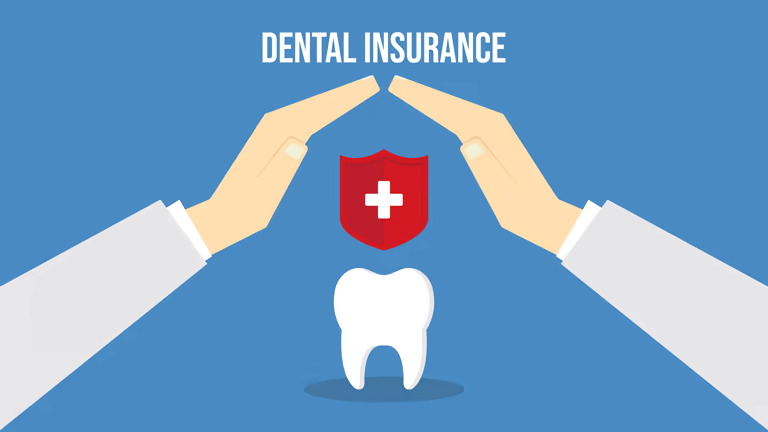
Maintaining a healthy workforce requires more than routine medical care. Oral health is an often-overlooked pillar of overall well-being, and by providing comprehensive dental benefits like dental insurance through employer programs, companies significantly strengthen their teams. Not only does a robust dental plan enhance the appeal of an employer’s offerings, but it also improves employees’ overall health and productivity.
When employees have access to routine dental care through employer-sponsored insurance, they are more likely to seek preventive care. This approach leads to earlier identification of problems, which supports both individual health and company performance. By investing in oral health, companies demonstrate a commitment to their workers and help reduce unnecessary healthcare costs in the long term.
Moreover, dental issues, left untreated, can result in recurring pain, lower morale, and ultimately time away from the office. A thoughtful dental plan fills in crucial gaps for employees, reducing out-of-pocket costs and supporting a more stable, engaged workforce. For companies looking to gain a competitive advantage in recruiting and retaining talent, dental benefits are a key differentiator that combines value, care, and loyalty into a single package.
Multiple studies have shown a relationship between access to dental insurance and long-term savings in healthcare costs. This not only benefits employees’ pockets but also helps companies optimize expenses and reduce health-related workplace disruptions. According to the American Dental Association, employees who regularly use their dental benefits report higher satisfaction and improved wellness outcomes. For more insights into the comprehensive impact of dental health, visit this CDC resource.
The Importance of Dental Health in the Workplace
Oral health goes far beyond a bright smile. Research consistently shows that untreated oral health issues can contribute to systemic diseases such as cardiovascular disease, diabetes, and respiratory infections. Poor dental health can also affect individuals’ self-esteem and ability to communicate clearly, further impacting workplace dynamics.
When employees ignore dental symptoms due to cost constraints, seemingly minor problems like cavities or gum disease can escalate into major health concerns. This not only compromises individual wellness but also leads to increased sick days, reduced productivity, and potential long-term disability claims.
Benefits of Employer-Sponsored Dental Insurance
Providing dental insurance signals to employees that their holistic well-being matters. These plans typically cover a range of services, including preventive care, fillings, crowns, and, in some cases, orthodontics. Regular dental visits catch issues early, reduce emergency room visits, and prevent costly treatments later. Employees who feel cared for are more likely to stay with their employer, boosting retention and job satisfaction.
Employer dental coverage also provides education and outreach to help employees establish healthier habits, which can translate into lower health costs and better long-term wellness outcomes.
Impact on Employee Productivity and Absenteeism
When dental issues cause pain or distress, employees frequently miss work or struggle to perform at their best. The National Institute of Dental and Craniofacial Research reports that adults miss over 164 million hours of work each year due to dental diseases. By providing comprehensive dental insurance, companies support their team’s daily functioning and reduce absenteeism and presenteeism (being present but not fully functional).
Cost Savings for Employers
Cost control is a constant concern for most businesses. Preventive dental coverage can make a significant difference by catching problems early. For example, treating tooth decay or gum disease in its early stages is much less expensive than managing advanced oral health complications or emergency dental procedures. In turn, these savings reduce overall company healthcare expenses and help control year-over-year insurance premium increases.
Healthy employees require fewer sick days, reducing productivity losses. Lower turnover, in part due to attractive benefits, also means lower costs for recruiting and onboarding new hires.
Designing Effective Dental Insurance Plans
An effective dental insurance plan balances affordability for both employer and employee with a comprehensive range of covered services. Preventive visits, such as cleanings and exams, should be fully covered to encourage frequent use. A broad provider network increases accessibility, while tiered options let employees select the plan that best fits their needs.
Transparency about coverage levels, co-pays, and out-of-pocket expenses prevents confusion and frustration, improving employees’ confidence in using their benefits. In some industries, voluntary dental plans or flexible spending accounts (FSAs) provide further coverage.
Challenges and Solutions in Implementing Dental Benefits
Employers sometimes struggle with the perceived extra cost of offering dental insurance, especially for small and mid-sized businesses. Education is key to overcoming these hurdles. When companies communicate the long-term return on investment and provide real-world examples of cost savings and improved productivity, employees are more likely to participate.
Negotiation with insurance carriers can also unearth unique solutions, such as bundled medical and dental plans, or custom programs that suit the workforce’s demographic and health needs.
Case Studies: Successful Employer Dental Insurance Programs
Numerous organizations have demonstrated the value of proactive dental coverage. For example, Delta Dental’s Future Workforce Fund invests millions annually to increase awareness of oral health careers and provide access for underserved populations, fostering both current employee health and a stronger future talent pipeline. Companies that prioritize dental benefits often see quantifiable improvements in employee engagement and overall satisfaction, creating a positive feedback loop for both parties.
Conclusion
Employer-sponsored dental insurance is a cornerstone of a modern workplace benefits package. Its positive impact on employee health, productivity, and financial well-being makes it an essential investment for forward-thinking companies. By placing value on dental health, employers not only reduce costs but also cultivate a loyal, healthier, and more productive workforce, ensuring long-term organizational resilience and success.
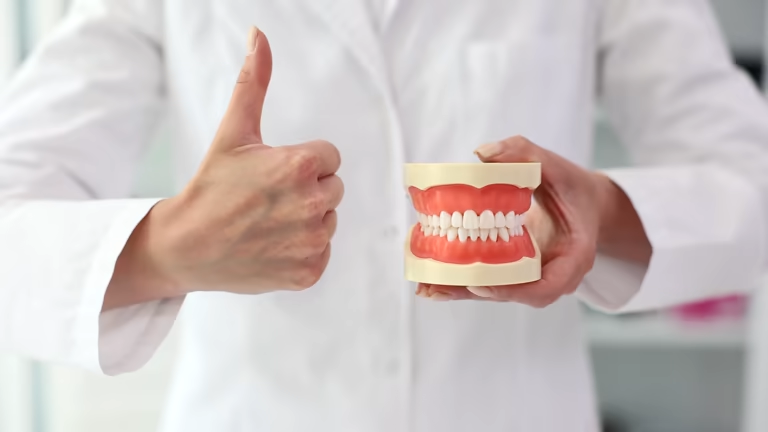
Introduction to Smiles 2 Ledgewood
When it comes to maintaining excellent oral health, choosing the right dental clinic is essential. Smiles 2 Ledgewood has become a recognized name for individuals and families seeking reliable, modern, and patient-centered dental care. Whether you’re looking for routine checkups, cosmetic enhancements, or advanced dental procedures, this clinic offers a comprehensive approach designed to meet diverse needs.
In today’s fast-paced world, people are increasingly aware of how oral health affects overall well-being. That’s where smiles 2 ledgewood stands out—by combining advanced technology, skilled professionals, and a comfortable environment to deliver outstanding dental services.
Why Choose Smiles 2 Ledgewood for Your Dental Needs
Selecting a dental provider is not just about convenience; it’s about trust, expertise, and long-term care. Smiles 2 Ledgewood focuses on creating a patient-first experience that emphasizes comfort and transparency.
Patient-Centered Approach
One of the key highlights of smiles 2 ledgewood is its commitment to personalized care. Every patient receives attention tailored to their unique dental concerns, ensuring better outcomes and satisfaction.
Modern Technology and Equipment
Dental care has evolved significantly over the years. Clinics like smiles 2 ledgewood utilize modern diagnostic tools and treatment techniques, which improve accuracy, reduce discomfort, and speed up recovery times.
Experienced Dental Professionals
Behind every successful dental clinic is a team of qualified professionals. The expertise available at smiles 2 ledgewood ensures that patients receive high-quality care, whether it’s a simple cleaning or a complex procedure.
Services Offered at Smiles 2 Ledgewood
A major advantage of smiles 2 ledgewood is the wide range of dental services available under one roof. This eliminates the need for referrals and provides convenience for patients.
General Dentistry at Smiles 2 Ledgewood
Routine dental care is the foundation of good oral health. Services typically include:
- Regular checkups and cleanings
- Fillings and cavity treatments
- Preventive care and oral hygiene guidance
With consistent visits to smiles 2 ledgewood, patients can prevent major dental issues before they arise.
Cosmetic Dentistry at Smiles 2 Ledgewood
A confident smile can transform your appearance and self-esteem. Cosmetic treatments may include:
- Teeth whitening
- Veneers
- Smile makeovers
Smiles 2 ledgewood focuses on enhancing aesthetics while maintaining natural-looking results.
Restorative Dentistry at Smiles 2 Ledgewood
For patients dealing with damaged or missing teeth, restorative procedures are essential. These may include:
- Dental crowns and bridges
- Implants
- Dentures
The goal at smiles 2 ledgewoods is to restore both functionality and appearance.
Emergency Dental Care at Smiles 2 Ledgewood
Dental emergencies can happen unexpectedly. Whether it’s severe pain, a broken tooth, or an infection, smiles 2 ledgewoods provides prompt attention to minimize discomfort and prevent complications.
The Patient Experience at Smiles 2 Ledgewood
Comfort plays a major role in dental care. Many people avoid visiting dentists due to anxiety or fear. Smiles 2 ledgewoods addresses these concerns by creating a welcoming and stress-free environment.
Friendly and Supportive Staff
From the moment patients walk in, they are greeted by a caring team that prioritizes their comfort. This positive atmosphere makes visits to smiles 2 ledgewoods more pleasant.
Clear Communication
Patients are fully informed about their treatment options, costs, and procedures. Transparency is a key factor that builds trust in smiles 2 ledgewoods.
Comfortable Treatment Environment
Modern dental chairs, soothing interiors, and advanced tools ensure that patients feel relaxed during procedures.
Benefits of Regular Visits to Smiles 2 Ledgewood
Maintaining consistent dental appointments is essential for long-term health. Visiting smiles 2 ledgewoods regularly offers several benefits.
Early Detection of Problems
Routine checkups help identify issues like cavities, gum disease, or infections early. This reduces the need for expensive treatments later.
Improved Oral Hygiene
Professional cleanings at smiles 2 ledgewoods remove plaque and tartar buildup that cannot be eliminated through regular brushing alone.
Enhanced Confidence
A healthy and attractive smile boosts confidence in both personal and professional settings.
How Smiles 2 Ledgewood Stands Out from Competitors
There are many dental clinics available, but smiles 2 ledgewoods differentiates itself in several ways.
Comprehensive Care
Unlike clinics that specialize in only one area, smiles 2 ledgewoods offers a full spectrum of services, making it a one-stop solution.
Focus on Preventive Dentistry
Preventive care is a core principle at smiles 2 ledgewoods, helping patients avoid complex treatments.
Use of Advanced Techniques
From digital imaging to minimally invasive procedures, the clinic embraces innovation to improve patient outcomes.
Tips for Maintaining Your Smile Between Visits to Smiles 2 Ledgewood
While professional care is important, maintaining oral health at home is equally crucial.
Practice Daily Oral Hygiene
Brush your teeth twice a day and floss regularly to keep your smile healthy.
Follow a Balanced Diet
Limit sugary foods and beverages, as they contribute to tooth decay.
Stay Hydrated
Drinking water helps wash away food particles and bacteria.
Schedule Regular Checkups
Even if you don’t have any noticeable issues, routine visits to smiles 2 ledgewoods are essential.
Common Dental Issues Addressed by Smiles 2 Ledgewood
Many people experience dental problems at some point. Smiles 2 ledgewoods is equipped to handle a wide range of issues.
Tooth Decay
Cavities are one of the most common dental problems. Early treatment at smiles 2 ledgewoods prevents further damage.
Gum Disease
Gingivitis and periodontitis can lead to serious complications if untreated. Professional care ensures proper management.
Tooth Sensitivity
Sensitive teeth can make eating and drinking uncomfortable. Smiles 2 ledgewoods provides solutions to reduce discomfort.
Missing Teeth
Dental implants and other restorative options help patients regain their smile and functionality.
The Importance of Choosing the Right Dental Clinic
Your dental health is closely linked to your overall health. Choosing a trusted provider like smiles 2 ledgewoods ensures that you receive consistent, high-quality care.
Factors to consider when selecting a dental clinic include:
- Reputation and reviews
- Range of services
- Technology and facilities
- Patient experience
Smiles 2 ledgewoods meets these criteria, making it a reliable choice for individuals and families.
Future of Dental Care at Smiles 2 Ledgewood
Dental care continues to evolve with advancements in technology and treatment methods. Smiles 2 ledgewoods is committed to staying ahead by adopting innovative solutions that improve patient outcomes.
From digital dentistry to personalized treatment plans, the future looks promising for patients seeking care at smiles 2 ledgewoods.
Conclusion: Why Smiles 2 Ledgewood is the Right Choice
In summary, smiles 2 ledgewoods offers a comprehensive, patient-focused approach to dental care. With modern technology, experienced professionals, and a commitment to comfort, it stands out as a trusted provider for individuals seeking quality dental services.
Whether you need routine care, cosmetic improvements, or emergency treatment, smiles 2 ledgewoods ensures that your oral health is in capable hands. Choosing the right dental clinic can make a significant difference in your overall well-being—and this is where smiles 2 ledgewoods truly excels.
FAQs About Smiles 2 Ledgewood
1. What services are available at smiles 2 ledgewood?
Smiles 2 ledgewoods offers general, cosmetic, restorative, and emergency dental services to meet a wide range of patient needs.
2. Is smiles 2 ledgewood suitable for families?
Yes, smiles 2 ledgewoods provides care for patients of all ages, making it an excellent choice for families.
3. How often should I visit smiles 2 ledgewood?
It is recommended to visit smiles 2 ledgewoods at least twice a year for routine checkups and cleanings.
4. Does smiles 2 ledgewood offer cosmetic treatments?
Yes, cosmetic procedures such as teeth whitening and veneers are available at smiles 2 ledgewoods.
5. What should I do in a dental emergency?
If you experience a dental emergency, contact smiles 2 ledgewoods immediately for prompt care and treatment.


FeedBuzzard Code Explained: What It Means and How It Works

Why Does Ozdikenosis Kill You? Hidden Truths Explained Simply

Goralblue.com: Travel, Lifestyle & SEO Content Guide
-

 Entertainment9 years ago
The final 6 ‘Game of Thrones’ episodes might feel like a full season
-
Fashion9 years ago
According to Dior Couture, this taboo fashion accessory is back
-
Entertainment9 years ago
The old and New Edition cast comes together to perform
-

 lifestyle5 months ago
Creative Conference Room Ideas to Enhance Productivity and Collaboration in 2026
-
Business9 years ago
Uber and Lyft are finally available in all of New York State
-
Business9 years ago
The 9 worst mistakes you can ever make at work
-
Entertainment9 years ago
Disney’s live-action Aladdin finally finds its stars
-
Sports9 years ago
Steph Curry finally got the contract he deserves from the Warriors