
Blogs
Decreto Supremo 160: A Comprehensive Guide to Chile’s Landmark Fuel Safety Regulation


In the complex world of energy infrastructure and industrial safety, few regulations carry as much weight as Decreto Supremo 160. This executive decree, formally issued by Chile’s government, stands as a cornerstone of public protection, environmental stewardship, and operational excellence in the liquid fuels sector. Whether you operate a fuel storage facility, manage transportation logistics, or simply want to understand how governments safeguard communities from hazardous materials, grasping the full scope of this regulation is essential in today’s regulatory landscape.
Decreto Supremo 160 was promulgated on May 26, 2008, by the Ministry of Economy, Development, and Reconstruction (now under the Ministry of Energy) and published in the Official Gazette on July 7, 2009. It replaced earlier, less comprehensive rules such as Decreto Supremo 90 of 1996, incorporating decades of operational experience, technological advancements, and lessons from real-world incidents. At its heart, the decree establishes minimum safety standards for every stage of the liquid fuels lifecycle—from production and refining to transportation, storage, distribution, and end-user supply. It explicitly covers petroleum-derived fuels and biocombustibles like biodiesel and bioethanol, reflecting Chile’s push toward more sustainable energy sources.
Historical Context and Evolution of Decreto Supremo 160
To appreciate why Decreto Supremo 160 matters, it helps to look back at the regulatory gaps it filled. Prior to 2009, Chile’s fuel safety framework relied on fragmented norms that struggled to keep pace with growing industrial activity, urbanization, and the introduction of new fuel types. High-profile incidents worldwide, combined with domestic growth in the energy sector, highlighted the need for a unified, risk-based approach.
The decree emerged from close collaboration between the Superintendencia de Electricidad y Combustibles (SEC) and industry stakeholders. It draws on international best practices from organizations like the American Petroleum Institute (API), American Society of Mechanical Engineers (ASME), and ASTM International. By referencing these global standards where local rules fall short, Decreto Supremo 160 ensures Chilean facilities meet world-class benchmarks without reinventing the wheel.
Over the years, the regulation has evolved through targeted modifications. Notable updates occurred in 2014 (reclassifying fuel flammability), 2016, 2019 (strengthening tank abandonment rules and loading procedures), 2020, and most recently in September 2025 via Decreto 26 of the Ministry of Energy. These changes reflect ongoing commitments to technological adaptation, environmental protection, and alignment with broader national goals like reducing atmospheric pollution and enhancing emergency preparedness.
Core Objectives and Scope of Decreto Supremo 160
The primary goal of Decreto Supremo 160 is straightforward yet critical: prevent accidents that could endanger lives, damage property, or harm the environment. It applies to all installations and operations involving liquid combustibles (CL) except for specific exclusions—oil production fields, direct aircraft refueling, and maritime transport.
Key objectives include:
- Controlling risks throughout the fuel supply chain
- Mandating professional risk assessments and safety manuals
- Requiring certified experts in risk prevention
- Establishing clear responsibilities for owners, operators, and contractors
- Promoting preventive maintenance and emergency response planning
The regulation classifies fuels by flash point (Class I, II, and III) and tailors requirements accordingly, recognizing that gasoline poses different hazards than diesel or biodiesel.
Key Provisions: Storage, Design, and Installation Standards
One of the most detailed sections of Decreto Supremo 160 addresses storage tanks and related infrastructure. Facilities must follow rigorous design, construction, and maintenance protocols for both aboveground and underground tanks. Requirements cover venting systems, spill containment, cathodic protection for buried tanks, and fire suppression systems.
Tanks older than 30 years or out of service for over a year must be permanently closed or removed—an update introduced in the 2019 modifications to eliminate hidden risks. Installation inside buildings faces extra scrutiny, including vapor recovery and separation distances from ignition sources.
Electrical installations in classified hazardous areas must comply with strict zoning rules to prevent sparks. The decree also mandates detailed piping network standards, including material selection, pressure testing, and corrosion protection.
Transportation and Distribution Requirements Under Decreto Supremo 160
Transportation receives equally thorough attention. Chapter VI outlines rules for road tankers, pipelines, and ship-to-shore transfers. Trucks must meet construction standards, carry proper signage, fire extinguishers, and emergency equipment. Loading and unloading procedures emphasize bottom-loading where possible to reduce vapor emissions and spill risks.
The 2019 updates introduced stricter checks before loading different fuel classes, mandatory driver rest periods, and documentation of compatibility between compartments. Pipeline operators must implement integrity management programs, including regular inspections and leak detection systems.
Distribution terminals and service stations face operational rules covering signage (“No Smoking,” “Turn Off Engine”), customer safety, and restrictions on fueling certain vehicles while passengers remain aboard. Self-service stations must display clear instructions and emergency shutdown mechanisms.
Responsibilities, Compliance, and Oversight
Decreto Supremo 160 places clear accountability on multiple parties. Facility owners must maintain a Manual de Seguridad de Combustibles Líquidos (MSCL) and appoint qualified prevention experts. Operators bear responsibility for daily compliance, training staff, and conducting drills.
The Superintendencia de Electricidad y Combustibles (SEC) serves as the primary enforcement body. Companies must notify the SEC before starting construction or operations and obtain approvals for significant modifications. Inspections occur regularly, with severe penalties for non-compliance, including fines, operational shutdowns, or criminal liability in cases of negligence leading to accidents.
Smaller installations—such as agricultural or industrial sites—follow simplified but still mandatory rules for on-site storage and handling, ensuring even remote operations meet baseline safety levels.
Environmental Protection and Public Health Impacts
Beyond technical requirements, Decreto Supremo 160 delivers substantial environmental benefits. By preventing spills and controlling vapors, it protects groundwater, soil, and air quality. Spill response plans must integrate with national environmental laws, and facilities in sensitive areas face enhanced monitoring.
Public health gains are equally significant. Reduced exposure to hazardous fumes and lower accident rates translate to fewer respiratory issues and emergency incidents. Communities near fuel facilities benefit from buffer zones, emergency notification systems, and transparent reporting.
In an era of climate awareness, the decree’s inclusion of biocombustibles supports Chile’s transition to greener fuels while maintaining rigorous safety oversight.
Recent Updates and Relevance in 2026
The September 2025 modification (Decreto 26) represents the latest refinement to Decreto Supremo 160. While specific technical details continue to evolve through SEC guidance, the update focuses on strengthening operational controls, aligning with updated international standards, and improving emergency coordination.
As of 2026, facilities across Chile are adapting to these changes. Digital reporting tools, advanced leak detection technologies, and training programs incorporating the latest modifications help operators stay ahead. Businesses that proactively implement these updates often report improved efficiency and reduced insurance costs.
Practical Guidance: How to Achieve Full Compliance
Navigating Decreto Supremo 160 requires a systematic approach. Start with a gap analysis of your current installations against the regulation’s requirements. Engage certified professionals to prepare or update your safety manual. Schedule regular inspections and maintain meticulous records.
For new projects, early engagement with the SEC streamlines approvals. Training programs should cover everything from basic hazard recognition to advanced emergency response. Technology investments—such as automated monitoring systems—often pay for themselves through prevented incidents.
Small and medium enterprises should explore government support programs and industry associations that offer compliance workshops and shared resources.
Challenges and Future Outlook
Implementing such a comprehensive regulation isn’t without hurdles. Smaller operators sometimes struggle with upfront costs for upgrades, while rapid technological changes require ongoing adaptation. However, the long-term benefits—fewer accidents, stronger environmental credentials, and enhanced public trust—far outweigh these challenges.
Looking ahead, Decreto Supremo 160 will likely continue evolving to address emerging issues like hydrogen blending, advanced biofuels, and climate resilience. Chile’s commitment to sustainable development suggests future amendments will balance innovation with unwavering safety standards.
In conclusion, Decreto Supremo 160 represents far more than bureaucratic paperwork. It embodies a national commitment to protecting lives, preserving the environment, and supporting a responsible energy sector. By setting clear, enforceable standards across the entire fuel supply chain, this regulation has prevented countless incidents and continues to shape safer practices in 2026 and beyond. Whether you manage large-scale infrastructure or a local service station, understanding and embracing Decreto Supremo 160 isn’t just a legal obligation—it’s an investment in a safer, more sustainable future for Chile and its people.
5 Relevant FAQs
1. What exactly is Decreto Supremo 160? Decreto Supremo 160 is the Chilean regulation (promulgated in 2008 and updated through 2025) that sets minimum safety standards for all stages of liquid fuel production, refining, transportation, storage, distribution, and supply. It aims to prevent accidents and environmental damage through detailed technical and operational requirements.
2. Who needs to comply with Decreto Supremo 160? Any individual or company operating facilities or conducting activities involving liquid fuels—such as storage tanks, transport trucks, pipelines, service stations, or industrial sites—must comply. This includes large refineries and smaller agricultural or commercial users, with the Superintendencia de Electricidad y Combustibles overseeing enforcement.
3. How has Decreto Supremo 160 changed in recent years? Significant modifications occurred in 2019 (tank closure rules and loading procedures) and September 2025 (further safety enhancements). These updates reflect technological advances, environmental priorities, and lessons from operational experience while maintaining core protection principles.
4. What are the main penalties for non-compliance? Violations can result in substantial fines, mandatory corrective actions, temporary or permanent closure of facilities, and in severe cases involving negligence or harm, potential criminal charges. The SEC conducts regular inspections and responds swiftly to reported risks.
5. Does Decreto Supremo 160 apply to biofuels or only traditional petroleum fuels? The regulation explicitly covers both petroleum-derived fuels and biocombustibles such as biodiesel and bioethanol. This inclusive approach supports Chile’s sustainable energy goals while applying the same rigorous safety standards across all liquid combustible types.


The phrase menseekingmenindy has gained attention online as more people search for ways to connect with others who share similar interests and lifestyles in Indianapolis. Whether individuals are exploring friendships, relationships, or social networking opportunities, platforms and communities associated with menseekingmenindy have become increasingly popular.
In today’s digital world, online communities help people find meaningful connections faster and more conveniently than ever before. The growth of location-based searches has made it easier for people in specific cities to discover local networks that match their preferences. As a result, menseekingmenindy has become a commonly searched term for those looking to meet like-minded individuals in the Indianapolis area.
Understanding the Meaning of Menseekingmenindy
At its core, menseekingmenindy is a search phrase used online by people looking for connections between men in the Indianapolis area. The term combines three elements:
-
Men seeking men – indicating the type of connection being searched for
-
Indy – a common nickname for Indianapolis
-
Online search behavior – reflecting how people use keywords to find local communities
Many online users rely on such keywords to locate platforms, social groups, or discussion boards where they can interact with others who share similar interests.
Why Keywords Like Menseekingmenindy Are Popular
Search terms like menseekingmenindy reflect a broader trend in digital communication. Instead of browsing randomly, people now search for specific phrases that quickly guide them to relevant platforms.
Reasons for the popularity of such terms include:
-
Localized online communities
-
Increased use of niche search phrases
-
Growth of online dating and networking platforms
-
Easier access to location-based connections
These factors have made keywords like menseekingmenindy more visible in search results and online discussions.
The Rise of Local Online Communities
The internet has dramatically changed the way people meet and interact. Before digital platforms existed, meeting people with shared interests often depended on social circles, events, or local organizations.
Today, location-focused communities allow users to connect with people nearby without leaving their homes.
Benefits of Localized Online Networking
Communities built around terms like menseekingmenindy often provide several advantages:
-
Convenience – People can connect instantly through online platforms.
-
Local focus – Users can interact with individuals who live in the same city.
-
Shared interests – Members typically join communities aligned with their preferences.
-
Privacy options – Many platforms allow users to control their visibility and communication settings.
These benefits explain why location-specific keywords continue to grow in popularity.
Where People Find Menseekingmenindy Communities
When people search for menseekingmenindy, they usually encounter several types of online platforms. Each platform offers different features and user experiences.
1. Online Dating Platforms
Dating platforms are one of the most common places where people connect through searches like menseekingmenindy. Many modern apps allow users to filter matches based on location, preferences, and interests.
Typical features include:
-
Profile creation
-
Location-based matching
-
Messaging systems
-
Privacy settings
These tools make it easier for users to connect with others in their local area.
2. Social Media Groups
Another place where menseekingmenindy searches may lead is social media communities. Many platforms host private or public groups dedicated to local networking.
Members often use these groups to:
-
Share experiences
-
Meet new people
-
Discuss events happening in their city
-
Exchange recommendations
Social media communities can feel more casual and conversational compared to dedicated dating platforms.
3. Online Forums and Discussion Boards
Discussion forums have long been places where people gather to talk about shared interests. Some forums allow users to create regional threads where individuals can connect with others from the same city.
Forums often focus on:
-
Community discussions
-
Advice and experiences
-
Local recommendations
-
Event sharing
These spaces provide a less formal environment for communication.
Safety Tips When Using Menseekingmenindy Platforms
While online communities can be valuable for meeting people, safety and privacy should always remain a priority. Anyone using platforms connected to menseekingmenindy should follow responsible online practices.
Protect Your Personal Information
Avoid sharing sensitive personal details such as:
-
Home address
-
Financial information
-
Workplace location
-
Private contact details
Keeping personal data secure helps reduce risks associated with online interactions.
Verify Profiles Before Meeting
If a conversation leads to plans for meeting in person, it is important to verify that the person is genuine.
Helpful steps include:
-
Reviewing their profile history
-
Checking for consistent information
-
Communicating through the platform before sharing external contact details
Verification helps ensure safer interactions.
Choose Public Meeting Places
If individuals decide to meet offline, public locations are always the safest option. Popular choices include:
-
Cafés
-
Restaurants
-
Public parks
-
Busy shopping areas
Meeting in public spaces helps maintain safety and comfort for both parties.
Why Menseekingmenindy Searches Continue to Grow
The increasing popularity of searches like menseekingmenindy reflects broader digital and cultural trends.
1. Expansion of Online Dating Culture
Over the past decade, online dating and networking have become mainstream. Millions of people now use digital platforms to form friendships, relationships, and social connections.
As a result, location-based keywords are becoming more common.
2. Increased Acceptance of Diverse Communities
Modern society has become more open and inclusive, allowing people to explore communities that match their identities and interests.
This shift encourages individuals to search for local connections that align with their preferences.
3. Improved Search Engine Technology
Search engines now provide highly personalized results based on location and search intent. When someone searches for a phrase like menseekingmenindy, algorithms prioritize content related to Indianapolis and local communities.
This technology makes it easier for people to discover relevant platforms quickly.
How to Build Meaningful Connections Online
While online communities can introduce people to many potential contacts, meaningful relationships require effort and communication.
Create an Authentic Profile
Honesty and clarity in profiles help others understand who you are. A well-written profile often includes:
-
Interests and hobbies
-
Personality traits
-
What you are looking for in connections
-
Clear but respectful communication
Authentic profiles tend to attract more genuine conversations.
Communicate Respectfully
Successful online interactions depend on mutual respect. When connecting with others through menseekingmenindy communities, it is important to:
-
Use polite language
-
Respect boundaries
-
Avoid pressuring others for personal information
-
Maintain positive communication
Respectful behavior helps build stronger connections.
Take Time to Get to Know People
Rushing conversations can lead to misunderstandings. Instead, allow discussions to develop naturally.
Spending time learning about someone’s interests, lifestyle, and goals helps create more meaningful relationships.
The Future of Menseekingmenindy Communities
Online networking will likely continue evolving as technology improves. Communities associated with menseekingmenindy may benefit from several future developments.
Better Privacy Tools
Many platforms are investing in advanced privacy features, allowing users to control how their profiles appear and who can contact them.
Improved Matching Algorithms
Artificial intelligence is increasingly used to suggest compatible connections. These systems analyze interests, communication patterns, and preferences to improve match quality.
Stronger Community Moderation
Moderation tools help maintain respectful environments by preventing harassment, spam, or unsafe behavior.
These improvements can make online communities safer and more enjoyable for users.
Strong Conclusion
The growing popularity of menseekingmenindy highlights how digital communities have transformed the way people connect locally. By combining location-based searches with online networking platforms, individuals can easily find others who share similar interests within the Indianapolis area.
However, while the internet offers convenience and opportunity, it also requires responsibility. Protecting personal information, communicating respectfully, and prioritizing safety are essential steps when engaging with any online community.
As technology continues to evolve, communities built around searches like menseekingmenindy will likely become even more advanced, offering better tools for meaningful connections and safer interactions. With the right approach, these platforms can serve as valuable spaces for building friendships, expanding social networks, and forming lasting relationships.
FAQs
1. What does menseekingmenindy mean?
Menseekingmenindy is a search term people use online to find communities or platforms where men can connect with other men in the Indianapolis area.
2. Where can people find menseekingmenindy communities?
People typically find these communities on dating platforms, social media groups, and online forums that focus on local connections.
3. Is it safe to use menseekingmenindy platforms?
Yes, but users should follow safety practices such as protecting personal information, verifying profiles, and meeting in public places if they decide to meet offline.
4. Why do people search for menseekingmenindy online?
Many people prefer location-based searches because they help them find nearby communities and individuals who share similar interests.
5. How can someone create a good profile on menseekingmenindy platforms?
A strong profile usually includes honest information about interests, clear communication about expectations, and respectful interaction with other users.
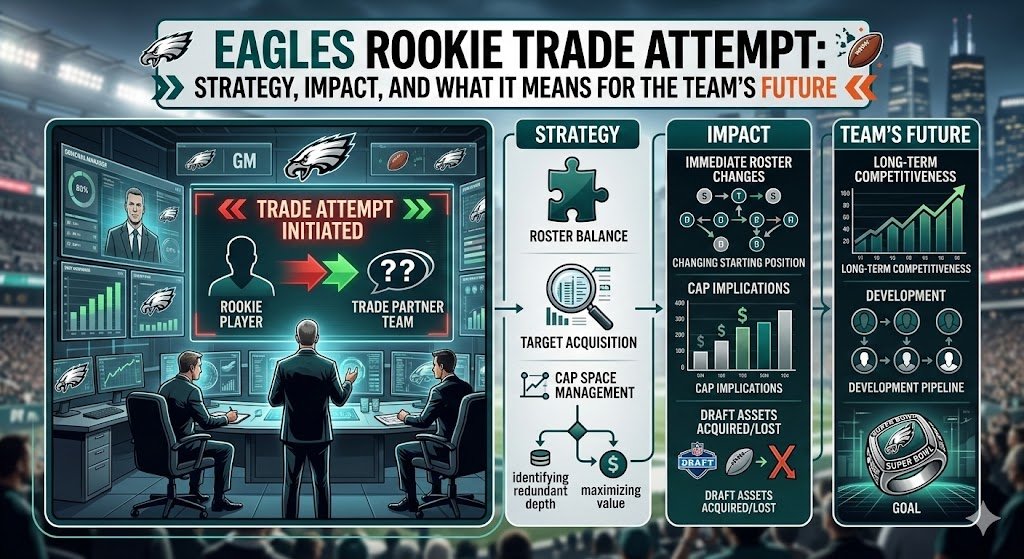
Introduction
The eagles rookie trade attempt has become a widely discussed topic among football fans, analysts, and sports media. In the modern NFL, roster building requires a combination of scouting talent, smart financial decisions, and aggressive front-office strategies. One of the most interesting tactics teams use is attempting to trade rookie players shortly after the draft or during their first season.
For the Philadelphia Eagles, rookie trades are not simply random decisions. They are usually part of a larger strategic plan designed to improve depth, create salary flexibility, or acquire players who better fit the team’s system. When the eagles rookie trade attempt enters the conversation, it often sparks debates about development timelines, player value, and the risks of moving young talent too early.
This article explores what an eagles rookie trade attempt means, why teams consider such moves, and how these decisions can influence the team’s future.
Understanding the Eagles Rookie Trade Attempt
An eagles rookie trade attempt refers to the situation where the Eagles organization considers trading a newly drafted or first-year player to another team. While this might sound unusual to casual fans, it is not uncommon in professional football.
Why Rookie Trades Happen
Rookie trades can occur for several reasons:
-
Roster balance: Teams sometimes realize that a rookie does not fit the system they envisioned.
-
Depth chart competition: If multiple players perform well at the same position, trading one may make sense.
-
Draft capital strategy: Teams may exchange a rookie for future draft picks.
-
Immediate needs: Injuries or unexpected weaknesses can force teams to acquire different talent quickly.
In the case of the Eagles, these decisions are typically part of a larger roster-building philosophy.
The Eagles’ Front Office Strategy
The Eagles have built a reputation for being aggressive in roster management. Their front office constantly evaluates talent and looks for opportunities to strengthen the team.
A Culture of Strategic Moves
The team’s leadership is known for:
-
Evaluating player value constantly
-
Using trades to maximize draft capital
-
Building a roster capable of competing immediately
Because of this philosophy, the eagles rookie trade attempt sometimes becomes part of the conversation during the offseason or preseason.
Balancing Youth and Experience
While rookie players represent the future of a franchise, experienced players often provide immediate results. Teams must balance the potential of young athletes with the reliability of veterans.
Sometimes this balance leads to trade discussions involving rookies.
Why Teams Consider Trading Rookie Players
Many fans assume rookies are untouchable assets. However, in professional football, every player has a potential value in the trade market.
1. Scheme Fit Issues
A rookie may have strong athletic ability but might not perfectly match the team’s offensive or defensive system. When this happens, trading the player can benefit both teams.
2. Unexpected Roster Depth
During training camp, teams sometimes discover surprising talent from undrafted players or backups. This depth can make a rookie expendable.
3. Financial Flexibility
Although rookie contracts are relatively affordable, teams sometimes make trades to free roster space or manage long-term salary planning.
4. Draft Pick Opportunities
Trading a rookie may allow a team to gain additional draft selections in future years.
Potential Benefits of an Eagles Rookie Trade Attempt
If executed properly, a rookie trade attempt can produce several benefits for a franchise.
Improving Team Fit
The biggest advantage is finding players who fit the system more effectively. A team might exchange a rookie for someone who immediately contributes.
Building Future Draft Capital
Some trades bring additional draft picks, which help teams continue building their roster.
Addressing Immediate Needs
If injuries strike or a position becomes weak, a trade can bring in help quickly.
Creating Competition
Trades can also increase competition within the roster, pushing players to perform better.
Risks Associated With Trading Rookie Players
While there are advantages, an eagles rookie trade attempt also carries significant risks.
Losing Long-Term Potential
Rookies often need time to develop. Trading them too early might mean losing a future star.
Fan and Media Criticism
Fans tend to form emotional attachments to draft picks. If a traded rookie succeeds elsewhere, criticism can follow.
Development Challenges
Young players benefit from stability. Moving them early in their career can slow development.
Historical Context of Rookie Trades in the NFL
Across the league, rookie trades have occurred many times. Some have worked out well, while others have become cautionary tales.
Successful Rookie Trades
Occasionally, teams trade rookies who later thrive in new environments while the original team gains valuable assets.
These situations demonstrate that success often depends on system fit and opportunity.
Trades That Backfired
There are also cases where teams traded rookies who later became star players. These examples remind teams to carefully evaluate potential before making such decisions.
How Fans React to an Eagles Rookie Trade Attempt
Whenever trade rumors emerge, fans quickly analyze the possible outcomes.
Social Media Discussion
Fans often debate whether the trade would benefit the team. Social media platforms become filled with speculation and opinions.
Media Analysis
Sports analysts typically break down the trade’s potential impact on team performance, roster depth, and future draft plans.
Emotional Attachment to Draft Picks
Fans spend months analyzing draft prospects, so seeing a rookie traded early can create frustration or confusion.
Evaluating Rookie Trade Value
When teams consider trading a rookie, they analyze several factors.
Player Performance Metrics
Teams review:
-
Training camp performance
-
Preseason game statistics
-
Practice evaluations
Positional Importance
Certain positions carry more value in trade discussions, such as quarterback, offensive line, or defensive pass rushers.
Market Demand
The trade market also plays a role. If another team needs a player at a specific position, the value of that rookie may increase.
How the Eagles Build Around Young Talent
Despite occasional trade attempts, the Eagles still prioritize developing young players.
Strong Coaching Staff
Young players benefit from structured coaching and development programs designed to help them transition to professional football.
Player Development Programs
Rookies receive:
-
Film study sessions
-
Strength and conditioning programs
-
Mentorship from veteran players
Patience and Growth
While trades sometimes happen, most rookies remain with the team long enough to develop their skills.
Future Outlook for Rookie Trades
The concept of rookie trades will likely continue evolving.
Increasing Importance of Analytics
Modern teams rely heavily on data and analytics when evaluating player performance. These tools can influence trade decisions.
Faster Roster Adjustments
Teams today move more quickly to adjust their rosters compared to previous decades.
Competitive Pressure
With playoff competition becoming more intense, teams cannot afford to keep players who do not fit their systems.
This environment means that situations like the eagles rookie trade attempt will remain part of NFL roster management discussions.
Conclusion
The eagles rookie trade attempt highlights the complex decisions NFL teams must make when building a competitive roster. While rookies represent potential and future success, teams must also consider immediate needs, system compatibility, and long-term strategy.
For the Eagles, any decision involving a rookie trade would likely come from careful analysis rather than impulsive action. The front office evaluates player performance, roster depth, and market opportunities before making such moves.
Ultimately, rookie trades are part of the modern NFL landscape. When handled wisely, they can strengthen a team’s roster, improve flexibility, and position the franchise for long-term success. However, these decisions always involve a balance between patience and opportunity—one that teams must manage carefully to remain competitive.
FAQs
1. What does the term “eagles rookie trade attempt” mean?
The phrase refers to a situation where the Philadelphia Eagles consider trading a newly drafted or first-year player to another team as part of roster management or strategic planning.
2. Why would a team trade a rookie player?
Teams may trade rookies due to roster depth, system fit issues, draft capital opportunities, or immediate team needs that require different players.
3. Are rookie trades common in the NFL?
While they are not extremely frequent, rookie trades do happen across the league, especially during preseason or when teams adjust their rosters.
4. What risks are involved in trading a rookie?
The biggest risk is losing a player who might develop into a star in the future. Teams must carefully evaluate potential before making such decisions.
5. How do fans usually react to rookie trade rumors?
Fans often debate the decision heavily, especially if they were excited about the player during the draft. Media and analysts also analyze the potential impact on the team’s future.

In today’s fast-paced world, speed and efficiency are more important than ever. Businesses, government agencies, and individuals rely on rapid solutions to meet urgent needs. One concept that has gained significant attention is servicio inmediato nacional. This term refers to services that are delivered quickly and efficiently across an entire country without delays or complicated processes.
The growing demand for servicio inmediato nacional is largely driven by digital transformation, increasing customer expectations, and the need for instant access to services. From logistics and customer support to government assistance and emergency services, nationwide immediate service systems are changing how organizations operate and how people access important resources.What Is Servicio Inmediato Nacional?
Servicio inmediato nacional refers to a service model designed to deliver immediate support or assistance across a national territory. The main goal is to ensure that people or organizations receive the help they need without long waiting times.
In many industries, this concept focuses on providing quick response systems that function efficiently throughout the entire country. These services can be physical, digital, or a combination of both.
For example, companies that offer fast technical support, emergency services, or rapid delivery systems often rely on servicio inmediato nacional to ensure customers receive prompt assistance regardless of location.
The idea behind this system is simple: minimize delays while maximizing accessibility and efficiency.
Why Servicio Inmediato Nacional Is Becoming More Important
The demand for faster services has grown significantly in recent years. Customers no longer want to wait days or weeks to resolve issues. Instead, they expect immediate results.
Several factors have contributed to the rising importance of servicio inmediato nacional:
1. Increasing Customer Expectations
Modern consumers are accustomed to instant solutions. With digital platforms providing quick responses, the same expectations now apply to many traditional services.
2. Nationwide Connectivity
Advances in technology have made it easier to offer services across an entire country without physical barriers.
3. Business Competition
Companies that offer faster service often gain a competitive advantage. Implementing servicio inmediato nacional can improve customer satisfaction and loyalty.
4. Emergency and Public Services
In critical situations, immediate nationwide support can save time, money, and even lives.
How Servicio Inmediato Nacional Works
To deliver fast nationwide services, organizations typically rely on several key systems. These systems ensure that servicio inmediato nacional operates smoothly and efficiently.
Centralized Service Platforms
Many organizations use centralized platforms that manage service requests from across the country. These systems allow teams to track and respond to requests quickly.
Digital Communication Channels
Modern servicio inmediato nacional systems often use multiple communication channels, including:
-
Online platforms
-
Mobile applications
-
Customer service hotlines
-
Automated service portals
These channels make it easy for users to request help instantly.
Distributed Service Networks
To support nationwide coverage, companies may operate regional service centers or partner with local providers. This network allows services to be delivered quickly regardless of location.
Automation and AI Tools
Automation technologies help streamline processes by instantly routing requests to the right departments. This reduces waiting times and improves response speed.
Key Industries Using Servicio Inmediato Nacional
The concept of servicio inmediato nacional is used in many industries. Each sector adapts the model to meet its specific needs.
Logistics and Delivery
Shipping companies often rely on nationwide service networks to provide fast deliveries. A strong servicio inmediato nacional system ensures packages move quickly between cities and regions.
Telecommunications
Telecommunication providers use immediate nationwide support to resolve network issues, activate services, and assist customers.
Financial Services
Banks and financial institutions offer quick nationwide assistance for transactions, account management, and security issues.
Healthcare
In healthcare systems, servicio inmediato nacional can help provide rapid medical support, telemedicine consultations, and emergency response services.
Government Services
Many governments are adopting digital platforms to offer immediate services such as document processing, applications, and public assistance programs.
Benefits of Servicio Inmediato Nacional
Implementing a nationwide immediate service model provides several important advantages for both organizations and users.
Faster Response Times
The biggest advantage of servicio inmediato nacional is speed. Requests are processed quickly, reducing waiting periods and improving overall efficiency.
Improved Customer Satisfaction
When people receive fast assistance, their experience improves significantly. This leads to higher satisfaction levels and stronger trust in the service provider.
Nationwide Accessibility
With this system, services are available to users in different regions without requiring physical visits or long travel distances.
Increased Efficiency
Automation, centralized systems, and digital platforms help organizations handle more service requests while maintaining quality.
Better Resource Management
By organizing services through a national system, organizations can allocate resources more effectively and reduce operational costs.
Challenges of Implementing Servicio Inmediato Nacional
While the benefits are significant, implementing servicio inmediato nacional can also present certain challenges.
Infrastructure Requirements
Providing nationwide immediate services requires strong infrastructure, including digital platforms, communication networks, and skilled staff.
Data Security Concerns
Handling large volumes of service requests often involves sensitive data. Organizations must ensure strong cybersecurity measures.
Operational Costs
Setting up and maintaining a nationwide service network can require substantial investment.
Service Consistency
Ensuring consistent service quality across all regions can be difficult, especially in large countries with diverse populations.
Despite these challenges, many organizations consider the benefits of servicio inmediato nacional worth the effort.
Future Trends in Servicio Inmediato Nacional
The concept of immediate nationwide services continues to evolve. Several trends are shaping the future of servicio inmediato nacional.
Artificial Intelligence Integration
AI technologies are helping organizations respond to requests more quickly through automated chat systems and predictive analytics.
Mobile-First Services
More services are now optimized for mobile devices, allowing users to request help anytime and anywhere.
Cloud-Based Infrastructure
Cloud technology enables organizations to manage nationwide service platforms more efficiently.
Real-Time Data Systems
Advanced data tools allow companies to monitor service requests in real time and improve response strategies.
These innovations will continue to strengthen the effectiveness of servicio inmediato nacional in the coming years.
Best Practices for Delivering Servicio Inmediato Nacional
Organizations that want to implement effective servicio inmediato nacional systems should follow several best practices.
Invest in Technology
Modern platforms and automation tools are essential for delivering fast nationwide services.
Train Support Teams
Employees should be trained to respond quickly and handle service requests efficiently.
Optimize Communication Channels
Offering multiple ways to request assistance ensures that users can access services easily.
Monitor Performance Metrics
Tracking response times and customer feedback helps organizations improve service quality.
Focus on User Experience
The overall experience should be simple, fast, and convenient for users across the country.
Conclusion
The demand for fast and reliable services continues to grow in the modern world. Servicio inmediato nacionals has emerged as an essential solution that allows organizations to provide quick assistance across an entire country. By combining digital technology, nationwide networks, and efficient service management systems, businesses and institutions can meet the expectations of modern users.
As technology advances, the importance of servicio inmediato nacionals will continue to increase. Organizations that invest in immediate nationwide service systems will not only improve operational efficiency but also build stronger relationships with customers. In an era where speed and accessibility are critical, adopting a well-structured servicio inmediato nacionals strategy can be a powerful step toward long-term success.
Frequently Asked Questions (FAQs)
1. What does servicio inmediato nacional mean?
Servicio inmediato nacionals refers to a system designed to provide fast services or assistance across an entire country. It focuses on minimizing waiting times and improving accessibility for users.
2. Which industries use servicio inmediato nacional?
Many industries use this model, including logistics, telecommunications, financial services, healthcare, and government services.
3. Why is servicio inmediato nacional important?
It improves response times, enhances customer satisfaction, and ensures that services are accessible nationwide.
4. How do companies implement servicio inmediato nacional?
Organizations usually implement this system by using centralized platforms, digital communication channels, distributed service networks, and automation tools.
5. What is the future of servicio inmediato nacional?
The future will likely include advanced technologies such as artificial intelligence, cloud infrastructure, and mobile-based services to make nationwide immediate service even faster and more efficient.


Brand Name Normalization Rules: A Complete Guide for Businesses

Quizizz Time Limit: Everything You Need to Know About Managing Time in Quizzes

petir108win.online – The Complete Guide to Features, Benefits, and Safe Usage
-

 Entertainment9 years ago
The final 6 ‘Game of Thrones’ episodes might feel like a full season
-
Fashion9 years ago
According to Dior Couture, this taboo fashion accessory is back
-
Entertainment9 years ago
The old and New Edition cast comes together to perform
-
Business9 years ago
Uber and Lyft are finally available in all of New York State
-
Entertainment9 years ago
Disney’s live-action Aladdin finally finds its stars
-
Sports9 years ago
Steph Curry finally got the contract he deserves from the Warriors
-
Entertainment9 years ago
Mod turns ‘Counter-Strike’ into a ‘Tekken’ clone with fighting chickens
-
Fashion9 years ago
Your comprehensive guide to this fall’s biggest trends