Connect with us

Blogs

379+ Ice or Snow Names: Cool Winter Name Picks

Published

on

379+ ice or snow names and cool winter-inspired names

If you are looking for 379+ ice or snow names, you have plenty of ways to capture the feeling of winter. Some names directly mean snow, ice, frost, or a related natural element, while others are inspired by winter landscapes, cold weather, glaciers, crystals, and seasonal imagery.

Popular examples include Yuki, which can mean “snow” in Japanese depending on the kanji used, Eira, which means “snow” in Welsh, and Neve, which is directly associated with “snow” in Italian.

This collection brings together direct winter names, culturally rooted choices, nature-inspired names, and creative options. Because name meanings can change between languages and spelling traditions, the lists below distinguish established meanings from names that are simply inspired by ice and snow.

What Makes a Name an Ice or Snow Name?

An ice or snow name does not always literally translate to “ice” or “snow.” There are several ways a name can have a winter connection.

A name may:

  • Directly mean snow or ice.
  • Refer to frost, winter, hail, or a snowstorm.
  • Describe a glacier, mountain, or cold landscape.
  • Refer to something white, pale, crystalline, or sparkling.
  • Come from a culture where snow or winter has strong natural associations.
  • Simply evoke a cold, elegant, or wintry atmosphere.

This distinction matters because online baby-name lists sometimes present an associated word as though it were the literal historical meaning of a name. For example, Yuki can mean “snow” when written with the Japanese kanji 雪, but the same pronunciation can have other meanings with different kanji.

Likewise, Bora is sometimes included in winter-name collections because of its association with strong winds and northern weather, but its Turkish meaning is “storm” or “squall,” not literally “snow.”

379+ Ice or Snow Names

The following collection combines established names with winter-inspired choices. Where a name has a direct snow or winter meaning, that connection is identified. More imaginative choices are described as winter-inspired rather than presented as historical translations.

Snow Names for Girls

  1. Eira — snow, Welsh
  2. Eirwen — white snow, Welsh
  3. Gwyneira — white snow, Welsh
  4. Eirlys — snowdrop, Welsh
  5. Yuki — snow, Japanese
  6. Miyuki — beautiful snow or beautiful happiness, depending on kanji
  7. Yukiko — snow child, with the appropriate kanji
  8. Neve — snow, Italian
  9. Nieves — snows, Spanish
  10. Lumi — snow, Finnish
  11. Aster — winter-flowering association
  12. Bianca — white
  13. Crystal — crystal
  14. Winter — winter season
  15. Wynter — winter-inspired spelling
  16. Snow — direct English word name
  17. Snowy — snow-inspired
  18. Frostine — frost-inspired
  19. Icelyn — ice-inspired modern name
  20. Glacia — glacier-inspired
  21. Glacielle — glacier-inspired
  22. Frostella — frost-inspired
  23. Wintera — winter-inspired
  24. Snowelle — snow-inspired
  25. Snowlyn — snow-inspired
  26. Nevia — snow-inspired
  27. Nevara — snow-inspired
  28. Eirlys — snowdrop
  29. Eirwen — white snow
  30. Aneira — Welsh winter-associated name
  31. Alba — white/bright association
  32. Pearl — white gemstone association
  33. Opal — pale gemstone association
  34. Iris — winter garden association
  35. Holly — winter plant
  36. Ivy — evergreen winter plant
  37. Noelle — Christmas-season association
  38. Noel — winter holiday association
  39. Estelle — star association
  40. Stella — star
  41. Luna — moon
  42. Selene — moon
  43. Celeste — heavenly
  44. Aurora — dawn and northern-light association
  45. Skye — sky-inspired
  46. Misty — mist-inspired
  47. Storm — storm-inspired
  48. Stormy — storm-inspired
  49. Hailie — hail-inspired spelling
  50. Haila — hail-inspired
  51. Crystaline — crystal-inspired
  52. Diamond — icy sparkle association
  53. Pearlina — pearl-inspired
  54. Silver — winter-metal association
  55. Sterling — silver association
  56. Aspen — snowy mountain association
  57. Alpine — mountain-inspired
  58. Sierra — mountain range association
  59. Everest — high-mountain association
  60. Montana — mountain association
  61. Alaska — northern landscape association
  62. Nevada — snow-capped association
  63. Skadi — Norse winter and mountain association
  64. Rime — frost-inspired
  65. Icicle — direct winter imagery
  66. Glimmer — icy sparkle association
  67. Shimmer — snow-light association
  68. Frostia — frost-inspired
  69. Snowdrop — winter flower
  70. Heather — cold-climate landscape association
  71. Willow — winter landscape association
  72. Aspenelle — aspen-inspired
  73. Arctic — polar-inspired
  74. Polar — polar-inspired
  75. Borealis — northern-light inspired

Ice and Snow Names for Boys

  1. Yuki — snow, Japanese
  2. Yukio — Japanese name using yuki in certain kanji combinations
  3. Edur — snow, Basque
  4. Fannar — snowdrift, Old Norse association
  5. Ayaz — frost/cold weather association in Turkish
  6. Frost — English word name
  7. Winter — winter season
  8. Storm — storm-inspired
  9. Blizzard — snowstorm-inspired
  10. Glacier — ice-inspired
  11. Everest — mountain-inspired
  12. Alpine — alpine landscape
  13. Aspen — snowy mountain-region association
  14. Boreas — north wind in Greek mythology
  15. Boreal — northern-region inspired
  16. North — directional winter association
  17. Nordic — northern association
  18. Arctic — polar association
  19. Polar — polar association
  20. Ice — direct English word name
  21. Snow — direct English word name
  22. Hail — weather-inspired
  23. Rime — frost-inspired
  24. Frost — frost
  25. Flint — cold stone association
  26. Slate — stone-inspired
  27. Stone — frozen-landscape association
  28. Crystal — crystalline ice association
  29. Diamond — icy sparkle association
  30. Silver — winter-metal association
  31. Sterling — silver association
  32. Ash — winter landscape association
  33. Birch — cold-climate tree
  34. Pine — evergreen association
  35. Fir — winter evergreen
  36. Cedar — evergreen association
  37. Rowan — cold-climate tree association
  38. Oak — winter woodland association
  39. Heath — northern landscape association
  40. Stormer — storm-inspired
  41. Snowden — snow-inspired surname-style choice
  42. Snowdon — mountain association
  43. Winterson — winter-inspired surname
  44. Froston — frost-inspired
  45. Frostley — frost-inspired
  46. Glacer — glacier-inspired
  47. Glacian — glacier-inspired
  48. Cryon — cold-inspired
  49. Cryo — cold/ice-inspired
  50. Boreal — northern
  51. Tundra — polar landscape
  52. Summit — mountain peak
  53. Peak — mountain-inspired
  54. Ridge — mountain landscape
  55. Cliff — cold mountain imagery
  56. Fjord — northern landscape
  57. Glacier — ice formation
  58. Iceberg — frozen-water imagery
  59. Snowfall — winter imagery
  60. Snowstorm — winter weather
  61. Snowdrift — snow formation
  62. Snowcap — snow-covered mountain imagery
  63. Whiteout — winter-weather inspired
  64. Chill — cold-weather inspired
  65. Chiller — cold-inspired
  66. Colden — cold-inspired
  67. Northwind — northern wind
  68. Wind — winter weather
  69. Gale — strong wind
  70. Blizzard — snowstorm
  71. Sleet — winter precipitation
  72. Flurry — snowfall-inspired
  73. Drizzle — precipitation-inspired
  74. Nimbus — cloud association
  75. Cirrus — high-cloud association

Unisex  Names

  1. Snow
  2. Frost
  3. Winter
  4. Ice
  5. Storm
  6. Blizzard
  7. Glacier
  8. Crystal
  9. Silver
  10. Aspen
  11. Alpine
  12. Arctic
  13. Polar
  14. North
  15. Boreal
  16. Rime
  17. Hail
  18. Flurry
  19. Snowfall
  20. Snowdrop
  21. Snowflake
  22. Snowcap
  23. Iceberg
  24. Tundra
  25. Summit
  26. Ridge
  27. Skye
  28. Misty
  29. Aurora
  30. Diamond
  31. Pearl
  32. Winterly
  33. Frosty
  34. Snowy
  35. Icy
  36. Chilly
  37. Glimmer
  38. Shimmer
  39. Silvermist
  40. Frostwind
  41. Snowwind
  42. Northwind
  43. Winterlake
  44. Frostlake
  45. Snowlake
  46. Icefall
  47. Snowfall
  48. Icewind
  49. Frostfall
  50. Winterfall

Cute Snow Names

  1. Snowy
  2. Frosty
  3. Flurry
  4. Snowflake
  5. Snowball
  6. Snowdrop
  7. Icy
  8. Chilly
  9. Winter
  10. Frost
  11. Crystal
  12. Sparkle
  13. Twinkle
  14. Shimmer
  15. Glimmer
  16. Pearl
  17. Sugar
  18. Marshmallow
  19. Powder
  20. Puff
  21. Cloud
  22. Misty
  23. Snowbell
  24. Snowberry
  25. Frosty
  26. Icicle
  27. Snowpea
  28. Snowbun
  29. Snowpop
  30. Frostbite
  31. Frostie
  32. Snowie
  33. Icey
  34. Snowkiss
  35. Winterberry
  36. Frostberry
  37. Snowdrop
  38. Snowglow
  39. Iceglow
  40. Frostglow

Cool Names Inspired by Ice

  1. Glacier
  2. Ice
  3. Frost
  4. Arctic
  5. Polar
  6. Boreal
  7. Winter
  8. Blizzard
  9. Storm
  10. Avalanche
  11. Iceberg
  12. Cryo
  13. Rime
  14. Hail
  15. Sleet
  16. Tundra
  17. North
  18. Northstar
  19. Frostfire
  20. Icefire
  21. Frostborn
  22. Iceborn
  23. Winterborn
  24. Snowborn
  25. Frostbane
  26. Icebane
  27. Frostblade
  28. Iceblade
  29. Frostfang
  30. Icefang
  31. Snowfang
  32. Frostwind
  33. Icewind
  34. Snowwind
  35. Winterwind
  36. Frostpeak
  37. Icepeak
  38. Snowpeak
  39. Froststone
  40. Icestone

Winter Names Inspired by Nature

  1. Aspen
  2. Birch
  3. Pine
  4. Fir
  5. Cedar
  6. Holly
  7. Ivy
  8. Rowan
  9. Willow
  10. Heather
  11. Alpine
  12. Sierra
  13. Everest
  14. Summit
  15. Ridge
  16. Fjord
  17. Tundra
  18. Glacier
  19. Mountain
  20. Valley
  21. River
  22. Brook
  23. Lake
  24. Mist
  25. Cloud
  26. Sky
  27. Moon
  28. Luna
  29. Stella
  30. Aurora
  31. Borealis
  32. North
  33. Northstar
  34. Star
  35. Solstice
  36. Equinox
  37. December
  38. January
  39. Noel
  40. Noelle

Elegant Names With a Winter Feel

  1. Eira
  2. Eirwen
  3. Eirlys
  4. Gwyneira
  5. Yuki
  6. Miyuki
  7. Yukiko
  8. Neve
  9. Nieves
  10. Lumi
  11. Aurora
  12. Celeste
  13. Stella
  14. Luna
  15. Bianca
  16. Alba
  17. Crystal
  18. Pearl
  19. Opal
  20. Silver
  21. Sterling
  22. Skye
  23. Aspen
  24. Winter
  25. Noelle
  26. Holly
  27. Ivy
  28. Snow
  29. Frost
  30. Borealis

Fantasy Ice Names

  1. Frostara
  2. Icelia
  3. Glacira
  4. Glacielle
  5. Snowara
  6. Snowelle
  7. Eirath
  8. Eirwyn
  9. Frostwyn
  10. Wintera
  11. Winteryn
  12. Snowlyn
  13. Frostlyn
  14. Icewyn
  15. Glacien
  16. Frostiel
  17. Snowriel
  18. Iceriel
  19. Frostiel
  20. Snoweth
  21. Winteriel
  22. Crysera
  23. Cryelle
  24. Glacira
  25. Frostara
  26. Snowvella
  27. Icevella
  28. Winterra
  29. Frostelle

These final fantasy-style choices are creative constructions rather than established traditional names. They can work particularly well for fictional characters, games, fantasy stories, usernames, or world-building, but they should not be presented as historical names with verified linguistic meanings.

The Most Authentic Names That Literally Connect to Snow

If your priority is a name with a documented linguistic connection to snow rather than simply a winter aesthetic, the shortlist becomes much smaller.

Name Language Snow connection
Eira Welsh “Snow”
Yuki Japanese “Snow” with 雪 kanji
Neve Italian “Snow”
Lumi Finnish “Snow”
Edur Basque “Snow”
Eirwen Welsh “White snow”
Gwyneira Welsh “White snow”
Eirlys Welsh “Snowdrop”
Nieves Spanish “Snows”
Yukiko Japanese Can incorporate “snow child” through kanji
Miyuki Japanese Can incorporate “beautiful snow” through kanji
Winter English Name taken from the winter season
Frost English Name taken from the word for frozen surface ice

Sources such as Behind the Name document Eira as Welsh for “snow” and list related Welsh names such as Eirwen, Eirlys, and Gwyneira.

The same source explains that Japanese Yuki can use 雪 for “snow,” but different kanji can give the same pronunciation a different meaning.

That is one of the most useful details to remember when choosing a culturally specific name: the pronunciation alone does not always determine the meaning.

Best Ice or Snow Names by Style

Choosing a name becomes easier when you decide what kind of winter feeling you want.

Style Strong choices
Literal snow Eira, Yuki, Neve, Lumi, Edur
White snow Eirwen, Gwyneira
Snowdrop Eirlys
Traditional winter Winter, Noel, Noelle
Strong and dramatic Frost, Storm, Blizzard
Nature-inspired Aspen, Pine, Birch, Alpine
Elegant Eira, Neve, Lumi, Aurora
Cute Snowy, Flurry, Snowdrop
Fantasy Frostara, Glacira, Icelia
Username style Frostwind, Icefall, Snowglow
Pet name Snowy, Frosty, Flurry, Blizzard
Character name Frost, Eira, Yuki, Winter, Glacien

Names That Feel Like Ice Without Literally Meaning Ice

A common mistake in name lists is treating every winter-associated word as a literal translation of “ice.” A better approach is to separate literal meanings from associations.

For example, Bora has a genuine weather meaning in Turkish, but it refers to a storm or squall rather than snow. It is therefore a good winter-weather name, but not technically a name meaning “snow.”

Similarly, Aurora creates a strong polar-winter association because of the northern lights, but its meaning is connected to dawn rather than ice.

This distinction gives you more choices without sacrificing accuracy.

How to Choose the Right Winter Name

Start by deciding whether you want the name to have a literal meaning or simply a winter atmosphere.

For a baby name

Choose an established name with a documented linguistic background. Eira, Yuki, Neve, Lumi, Eirwen, and Eirlys are stronger choices if meaning and cultural origin matter.

For a fictional character

You have more freedom. Names such as Frostara, Glacira, Icelia, Frostwyn, and Snowriel can create an immediate fantasy impression.

For a pet

Short names are usually easier to call repeatedly. Frost, Snowy, Yuki, Lumi, Flurry, and Frosty are simple options.

For a username

Compound names can create a stronger visual identity. Examples include Frostwind, Snowglow, Icefall, Frostpeak, and Winterborn.

Why Ice and Snow Names Have Such Strong Symbolism

Ice and snow can represent several different ideas at once.

Snow often suggests:

  • Purity
  • Quietness
  • Fresh beginnings
  • Beauty
  • Stillness
  • Transformation

Ice can suggest:

  • Strength
  • Resilience
  • Clarity
  • Endurance
  • Coolness
  • Mystery

Winter also has a dual character. It can represent harsh conditions and survival, but it can equally suggest peace, rest, beauty, and renewal.

That flexibility makes winter-inspired names useful for many different purposes.

A Note About Name Meanings and Online Lists

Name meanings are not always as simple as a one-word translation.

A name may have:

  1. A historical linguistic meaning.
  2. A later cultural association.
  3. A modern interpretation.
  4. A spelling that was created recently.
  5. Several meanings depending on language or writing system.

For example, Yuki is particularly clear evidence of this issue because its meaning depends partly on the kanji used.

Neve also illustrates why context matters. It is directly connected to “snow” in Italian, while the same spelling can have unrelated surname histories in other languages.

Therefore, if you are choosing a name for legal use, a baby, publication, or another permanent purpose, verify the spelling, pronunciation, language, and cultural context instead of relying only on a generic name generator.

Winter Names That Are Especially Distinctive

If you want something recognizable without being overly common, consider:

  • Eira
  • Eirwen
  • Gwyneira
  • Eirlys
  • Lumi
  • Neve
  • Edur
  • Yuki
  • Fannar
  • Frost
  • Winter
  • Borealis
  • Aspen
  • Alpine
  • Rime
  • Snowdrop
  • Solstice
  • Northstar
  • Glacier
  • Aurora

Several of these have established linguistic or cultural roots, while others are nature or winter word names. The distinction is worth keeping in mind when presenting the name’s meaning.

Frequently Asked Questions

What is a name that literally means snow?

Several names have a direct connection to snow. Eira means “snow” in Welsh, while Yuki can mean “snow” in Japanese when written with 雪. Neve is the Italian word for snow and is also used as a name. Lumi is Finnish for snow.

What girl name means snow?

Eira is one of the clearest choices because it means “snow” in Welsh. Other options include Eirwen, meaning “white snow,” Gwyneira, also connected with “white snow,” and Eirlys, meaning “snowdrop.” These Welsh names have documented connections to the Welsh word eira.

What boy name means snow?

Yuki can mean “snow” in Japanese, depending on the kanji. Edur is another option associated directly with snow in Basque. Yukio can incorporate the yuki element in Japanese names, although the exact meaning depends on the kanji used.

What is a cool name that means ice?

Frost is one of the simplest English word names associated with ice. Glacier, Ice, Rime, and Crystal also create strong icy imagery. However, not every one of these is a traditional personal name or literal translation of “ice,” so they are best described as ice-inspired choices.

What name means winter?

Winter is the most direct English word name for the season. Wynter is a variant spelling that also draws from the English word “winter.” Other choices such as Frost, Snow, and Blizzard create a winter association without literally meaning the season itself.

Is Yuki a boy or girl name?

Yuki can be used as both a feminine and masculine Japanese name. Its meaning depends on the kanji. For example, 雪 means “snow,” while 幸 means “happiness.” Other kanji combinations can produce additional meanings, so the written form matters when determining the intended meaning.

Is Eira a real name?

Yes. Eira is a Welsh name meaning “snow.” Behind the Name identifies it as a feminine Welsh name, while Welsh linguistic sources also document eira as the Welsh word for snow.

What is a unique winter name?

For an established name, Eira, Eirwen, Lumi, Neve, Edur, and Fannar offer distinctive winter connections. For fictional or creative use, names such as Frostara, Glacira, Snowriel, and Winterwyn can provide a more unusual fantasy style. The latter group should be treated as creative constructions rather than traditional etymologies.

Final Thoughts

The best choice from these 379+ ice or snow names depends on whether you want a literal meaning, a cultural connection, or simply a cool winter atmosphere. Names such as Eira, Yuki, Neve, Lumi, Edur, and Eirwen have particularly strong documented connections to snow, while choices such as Frost, Glacier, Winter, Snow, and Blizzard offer a more direct English winter aesthetic.

For permanent naming decisions, the safest approach is to check the original language, spelling, pronunciation, and historical meaning. That extra step helps separate genuine linguistic meanings from modern interpretations and invented name-list definitions.

Continue Reading
Click to comment

Leave a Reply

Your email address will not be published. Required fields are marked *

Blogs

299+ Names That Mean Lost Soul: Deep & Mysterious

Published

on

299+ names that mean lost soul with deep and mysterious meanings

Names that mean lost soul often appeal to people looking for something beyond a simple definition. They can suggest wandering, solitude, mystery, forgotten memories, exile, darkness, searching, or a spirit caught between worlds. However, there is an important distinction: very few established names literally translate to “lost soul.” Some, such as Perdita and Diggory, have direct connections to being lost, while others gain their mysterious quality through mythology, literature, symbolism, or related meanings.

That distinction matters when choosing a baby name, character name, pen name, username, or fantasy identity. A name can have a dark or mysterious association without actually carrying a literal “lost soul” translation.

This collection brings together 299 names connected with lost, wandering, solitude, shadow, mystery, forgotten places, tragic mythology, spiritual searching, and otherworldly imagery. The list also explains which names have a direct meaning and which ones simply evoke the lost-soul theme.

What Does “Lost Soul” Mean in a Name?

The phrase “lost soul” is usually symbolic rather than a traditional dictionary-style name meaning. It can describe someone who feels disconnected, wanders without a clear destination, searches for identity, or exists between familiar worlds.

In naming traditions, these ideas can appear through several different concepts:

  • Lost or forgotten — someone separated from a known path
  • Wanderer or exile — a person without a permanent home
  • Solitude — someone alone or independent
  • Mystery — something hidden or difficult to understand
  • Darkness — night, shadow, or the unknown
  • Tragedy — names associated with sorrowful stories
  • The underworld — mythological journeys involving spirits or death
  • Searching — a person looking for belonging or direction

This broader interpretation explains why search results often contain names that do not literally mean “lost soul.” Some naming websites also make this distinction, describing the phrase as a thematic idea involving wandering, mystery, and spiritual searching.

The Few Names That Literally Connect to Being Lost

Before exploring the larger list, it helps to separate genuine etymology from creative interpretation.

1. Perdita — “lost”

Perdita is one of the clearest established names connected with the concept of being lost. It comes from Latin perditus, meaning “lost.” Shakespeare used the name for an abandoned child in The Winter’s Tale.

2. Diggory — possibly “lost one”

Diggory is an uncommon English name probably derived from Degaré, the subject of a medieval poem. Its meaning may come from French égaré, meaning “lost.” The etymology is considered uncertain, so it is better described as possibly meaning “lost one” rather than presenting the translation as absolute fact.

3. Doran — “exile, wanderer”

Doran comes from an Irish surname derived from Deoradhán, connected with the Irish word deoradh, meaning “exile” or “wanderer.” That makes Doran a strong choice for the wandering side of the lost-soul concept.

4. Lethe — “forgetfulness, oblivion”

Lethe comes from Ancient Greek lēthē, meaning “forgetfulness” or “oblivion.” In Greek mythology, Lethe is associated with the river of forgetfulness in the underworld.

These names provide a stronger linguistic foundation than simply taking any dark-sounding name and assigning it the meaning “lost soul.”

299 Names That Mean Lost Soul or Evoke the Theme

The following list intentionally separates literal meanings from symbolic associations. That approach prevents a common naming mistake: treating mythology, literary associations, and actual etymology as if they were the same thing.

Names Connected With Lost, Wandering, or Exile

  1. Perdita — lost; Latin literary name
  2. Diggory — possibly “lost one”
  3. Digory — variant associated with “lost one”
  4. Degory — rare form associated with Diggory
  5. Doran — exile or wanderer
  6. Errant — wandering; literary word-name
  7. Wayfarer — traveler or wanderer
  8. Wander — one who travels without a fixed destination
  9. Nomad — wandering traveler
  10. Exul — Latin-inspired exile concept
  11. Stray — one who has wandered away
  12. Rover — wanderer or traveler
  13. Drifter — one who moves without a fixed destination
  14. Journey — symbolic path or search
  15. Quest — search for something unknown
  16. Odyssey — long journey
  17. Pilgrim — traveler on a spiritual journey
  18. Sojourner — temporary traveler
  19. Traveler — one who journeys
  20. Waylon — often associated with a road or way in modern interpretations
  21. Aerin — sometimes interpreted through wandering or travel imagery
  22. Kaito — sea-related name with an oceanic drifting association
  23. Mariner — sailor or sea traveler
  24. Sailor — one who travels by sea
  25. Voyager — long-distance traveler

Names Associated With Solitude or Being Alone

  1. Einar — “one, alone” + warrior elements
  2. Alone — direct English word-name
  3. Solus — Latin for alone
  4. Solo — alone or independent
  5. Onesimus — biblical name with a distinct historical background
  6. Lone — solitary
  7. Lonan — Irish name associated with a little blackbird
  8. Soleil — sun; can symbolize solitary light
  9. Isolde — tragic literary association
  10. Isolde — legendary figure associated with doomed love
  11. Tristan — strongly connected with medieval tragic romance
  12. Mélisande — literary and mysterious association
  13. Desdemona — tragic Shakespearean association
  14. Cordelia — literary association with exile and tragedy
  15. Cassandra — tragic prophetic figure in Greek mythology
  16. Dido — abandoned queen in classical mythology
  17. Ariadne — associated with abandonment and the labyrinth
  18. Calypso — isolated figure in Greek mythology
  19. Narcissus — mythological figure associated with isolation and self-absorption
  20. Echo — mythological figure associated with loss and repetition

Dark and Shadow-Themed Names

  1. Nyx — Greek personification of night
  2. Erebus — Greek primordial darkness
  3. Caligo — Latin word associated with darkness or mist
  4. Umbra — Latin for shadow
  5. Tenebrae — Latin associated with darkness
  6. Nox — Latin for night
  7. Noctis — Latin-derived night imagery
  8. Nocturne — night-inspired word name
  9. Raven — dark bird symbolism
  10. Corbin — raven-associated surname/name
  11. Corvin — raven-related association
  12. Corvus — Latin for raven
  13. Sable — black or dark imagery
  14. Onyx — black gemstone association
  15. Obsidian — dark volcanic glass
  16. Shadow — direct symbolic association
  17. Shade — shadow or spectral association
  18. Dusk — fading light
  19. Gloom — darkness or melancholy
  20. Eclipse — disappearance of light
  21. Night — direct darkness imagery
  22. Midnight — deepest part of night
  23. Storm — turbulent atmosphere
  24. Tempest — violent storm
  25. Ash — remains after fire
  26. Ember — remaining glow after fire
  27. Cinder — burned remnant
  28. Smoke — something fading from view
  29. Mist — obscured or hidden
  30. Fog — limited visibility and uncertainty

Mythological Names With a Lost-Soul Atmosphere

Mythology provides some of the strongest imagery for this theme because many ancient stories involve journeys into unknown realms, separation, death, transformation, or searching.

  1. Orpheus — legendary musician who journeys into the underworld
  2. Eurydice — figure associated with Orpheus and the underworld
  3. Acheron — underworld river associated with the passage of souls
  4. Lethe — forgetfulness and oblivion
  5. Styx — mythological underworld river
  6. Hades — Greek underworld deity
  7. Persephone — underworld queen
  8. Charon — ferryman of the dead
  9. Thanatos — personification of death
  10. Hypnos — personification of sleep
  11. Morpheus — figure associated with dreams
  12. Moirai — the Fates of Greek mythology
  13. Nemesis — Greek goddess associated with retribution
  14. Hecate — goddess associated with crossroads and night
  15. Morrigan — Irish mythological figure associated with war and fate
  16. Badb — Irish mythological figure
  17. Rhiannon — Welsh mythological figure
  18. Arawn — ruler of Annwn in Welsh mythology
  19. Ankou — Breton personification of death
  20. Hel — Norse ruler associated with the realm of the dead
  21. Odin — Norse god strongly connected with death, wisdom, and wandering
  22. Loki — Norse trickster figure
  23. Fenrir — monstrous wolf in Norse mythology
  24. Balder — Norse figure whose death is central to mythology
  25. Freya — Norse goddess associated with death as well as love and fertility

Tragic Literary Names

  1. Ophelia — tragic Shakespearean character
  2. Hamlet — Shakespearean figure associated with grief and uncertainty
  3. Othello — Shakespearean tragic protagonist
  4. Desdemona — tragic Shakespearean character
  5. Macbeth — tragic Shakespearean figure
  6. Banquo — Macbeth character with a supernatural association
  7. Cordelia — tragic figure in King Lear
  8. Lear — tragic king in Shakespeare
  9. EdgarKing Lear character
  10. Edmund — tragic King Lear character
  11. Romeo — tragic romantic figure
  12. Juliet — tragic romantic heroine
  13. Tybalt — Shakespearean tragic character
  14. MercutioRomeo and Juliet character
  15. Despair — literary word-name
  16. Sorrow — symbolic word-name
  17. Melancholy — literary emotional association
  18. Dorian — linked strongly with The Picture of Dorian Gray
  19. Basil — literary connection through Basil Hallward
  20. Gray — associated with Dorian Gray and faded imagery

Mysterious Girl Names

  1. Morgana — Arthurian mystery and magic
  2. Morgaine — Arthurian variant
  3. Morrigan — Irish mythology
  4. Lilith — powerful mythological and literary associations
  5. Nyx — night
  6. Vesper — evening or evening star association
  7. Vespera — Latin-inspired evening imagery
  8. Ravenna — dark, gothic literary feel
  9. Raven — mysterious bird symbolism
  10. Sable — dark imagery
  11. Onyx — dark gemstone
  12. Ophelia — tragic literary association
  13. Isolde — tragic romance
  14. Ariadne — labyrinth and abandonment imagery
  15. Calypso — isolated mythological figure
  16. Circe — Greek enchantress
  17. Hecate — crossroads and night
  18. Selene — moon imagery
  19. Luna — moon
  20. Elara — celestial association
  21. Lyra — constellation and musical imagery
  22. Andromeda — mythological and celestial association
  23. Cassiopeia — mythological queen and constellation
  24. Anthea — classical Greek name
  25. Estelle — star
  26. Astrid — traditionally associated with divine beauty
  27. Seren — Welsh for star
  28. Aster — Greek-rooted star name
  29. Celeste — heavenly or celestial
  30. Celestia — celestial imagery

Mysterious Boy Names

  1. Orpheus — underworld journey
  2. Acheron — underworld river
  3. Erebus — darkness
  4. Charon — ferryman of the dead
  5. Thanatos — death personification
  6. Morpheus — dreams
  7. Hypnos — sleep
  8. Hades — underworld
  9. Arawn — Welsh otherworld association
  10. Ankou — death figure in Breton tradition
  11. Odin — wandering and wisdom associations
  12. Loki — mystery and transformation
  13. Dorian — literary darkness
  14. Tristan — tragic romance
  15. Leander — tragic Greek romance
  16. Corbin — raven association
  17. Corvin — raven association
  18. Corvus — raven
  19. Draven — modern gothic-style name
  20. Lucian — light-associated name with strong literary associations
  21. Damian — dark literary associations
  22. Alastor — Greek mythological name associated with vengeance
  23. Caspian — sea and distant-land imagery
  24. Lachlan — Scottish association with the land of the lakes
  25. Marlow — surname-style name with literary character
  26. Sylas — variant of Silas
  27. Silas — biblical and literary associations
  28. Evander — Greek-rooted heroic name
  29. Theron — Greek-rooted name
  30. Evren — Turkish name associated with the universe

Names Inspired by Forgotten Memories

  1. Echo — repetition of a vanished voice
  2. Remy — familiar modern name with literary versatility
  3. Memory — direct word-name
  4. Memoir — literary word-name
  5. Recall — memory-inspired word-name
  6. Remnant — something remaining
  7. Relic — surviving object from the past
  8. Vestige — trace or remaining evidence
  9. Trace — mark left behind
  10. Legacy — what remains after someone
  11. Reverie — dreamlike thought
  12. Dream — dream imagery
  13. Somnus — Roman personification of sleep
  14. Morpheus — dream association
  15. Hypnos — sleep association
  16. Lethe — forgetting
  17. Oblivion — forgetting or disappearance
  18. Forget-Me-Not — remembrance symbolism
  19. Remembrance — memory
  20. Yesterday — past-oriented word-name

Nature Names With a Lonely or Wandering Feel

  1. River — constantly moving water
  2. Ocean — vastness and uncertainty
  3. Sea — open distance
  4. Storm — turbulence
  5. Rain — melancholy natural imagery
  6. Winter — cold and isolation
  7. Frost — coldness
  8. Snow — quiet winter imagery
  9. Wind — movement without a visible path
  10. Zephyr — west wind
  11. Gale — strong wind
  12. Breeze — drifting air
  13. Cloud — shifting and temporary
  14. Moon — solitary night imagery
  15. Shadow — absence of direct light
  16. Mist — uncertainty
  17. Fog — obscurity
  18. Ash — aftermath
  19. Ember — fading fire
  20. Cinder — remaining fragment
  21. Thorn — protection and pain symbolism
  22. Briar — wild growth
  23. Raven — mystery
  24. Crow — dark bird symbolism
  25. Wolf — solitary wilderness symbolism

Names That Suggest Mystery and the Unknown

  1. Mystery — direct word-name
  2. Enigma — mystery or puzzle
  3. Secret — hidden information
  4. Veil — something concealed
  5. Rune — mysterious written symbol
  6. Oracle — prophetic mystery
  7. Sphinx — ancient riddle symbolism
  8. Cipher — code or hidden meaning
  9. Shadow — hidden presence
  10. Unknown — direct conceptual name
  11. Hidden — concealed
  12. Whisper — quiet, secretive sound
  13. Hush — silence
  14. Silence — absence of sound
  15. Enigma — puzzle or mystery
  16. Obscura — darkness or obscurity
  17. Arcane — mysterious or secret
  18. Esoteric — understood by a small group
  19. Occult — hidden or concealed
  20. Veiled — concealed
  21. Phantom — ghostly figure
  22. Wraith — ghost-like figure
  23. Specter — apparition
  24. Ghost — supernatural or symbolic presence
  25. Apparition — supernatural appearance

Dark Fantasy Names for Characters

  1. Riven — split or torn imagery
  2. Ravyn — stylized raven-inspired name
  3. Nyxen — modern night-inspired creation
  4. Veyra — fantasy-style mysterious name
  5. Zareth — fantasy-style dark name
  6. Vael — fantasy-style short name
  7. Veylan — fantasy-style wanderer name
  8. Kaelen — fantasy-style character name
  9. Draeven — gothic fantasy construction
  10. Mavren — dark fantasy-style construction
  11. Varyn — fantasy-style name
  12. Soren — Scandinavian-associated name
  13. Sorren — alternate spelling with a darker visual style
  14. Kieran — Irish-rooted name
  15. Ronan — Irish-rooted name
  16. Ciaran — Irish form associated with “dark”
  17. Donovan — Irish surname-name
  18. Draven — modern gothic association
  19. Lucius — Latin-rooted classical name
  20. Valerian — ancient Roman name
  21. Azrael — angelic and death-related literary association
  22. Malachi — biblical name with serious tone
  23. Abaddon — biblical/apocalyptic association
  24. Balthazar — ancient biblical tradition
  25. Lazarus — resurrection and death symbolism

Gender-Neutral Names With a Deep or Lost-Soul Feel

  1. River — flowing and wandering
  2. Raven — dark bird symbolism
  3. Winter — cold, quiet atmosphere
  4. Storm — turbulent energy
  5. Rain — melancholy nature imagery
  6. Shadow — mystery
  7. Echo — memory and absence
  8. Onyx — dark gemstone
  9. Sable — dark imagery
  10. Ember — fading fire
  11. Ash — remnant after fire
  12. Rune — mysterious symbol
  13. Vesper — evening
  14. Sky — vastness
  15. Ocean — distance and depth
  16. Sol — sun; contrasting light in darkness
  17. Vale — valley imagery
  18. Haven — refuge after wandering
  19. Quest — searching
  20. Journey — travel and discovery
  21. Wren — small bird imagery
  22. Sage — wisdom and reflection
  23. True — authenticity and identity
  24. Myst — shortened fantasy-style form of “mist”

How to Choose a Name With a Lost-Soul Meaning

A name connected to mystery does not have to sound obviously dark. In fact, the strongest choices often use symbolism rather than a literal translation.

Choose a direct meaning if accuracy matters

If the name’s actual meaning is important, prioritize names such as:

Name Core meaning or association Best use
Perdita Lost Literary, character, distinctive name
Diggory Possibly “lost one” Rare character or unusual name
Doran Exile, wanderer Personal or character name
Lethe Forgetfulness, oblivion Mythological or fantasy name
Einar One/alone + warrior Strong solitary theme
Nyx Night Mythological, short name
Acheron River of woe/underworld association Fantasy or literary character
Echo Mythological and memory symbolism Character or creative identity
Raven Raven symbolism Modern, gender-neutral use
Vesper Evening Elegant mysterious choice

The table also shows why “lost soul” should not be treated as one fixed linguistic category. Some names have direct meanings, while others derive their emotional impact from stories, symbols, or mythology.

Consider whether the name is for a real person or fiction

A name that works beautifully for a fictional character may be difficult as a legal first name.

For example, Perdita has a genuine “lost” meaning, but its literary history gives it a very distinctive tone. Lethe has an equally strong connection with forgetting and the underworld. Those qualities can be excellent for fiction but may feel unusually dramatic for everyday use.

For a baby, names such as Raven, River, Winter, Vesper, Ash, Sage, or Dorian may provide mystery without making the meaning overwhelmingly dark.

For a fantasy character, names such as Acheron, Erebus, Nyx, Lethe, Morrigan, Orpheus, or Hecate can establish the character’s atmosphere immediately.

A Common Mistake: Dark Association Is Not the Same as Name Meaning

This is one of the most important details when researching names.

Ophelia, for example, is often included in lists of names associated with loss because Shakespeare’s character experiences a tragic story. But the name itself comes from Greek opheleia, meaning “help” or “advantage.” Its tragic association comes from literature, not from the original etymology.

The same principle applies to many other names.

A name may be:

  1. Directly connected to the word “lost.”
  2. Associated with wandering or exile.
  3. Connected to darkness or night.
  4. Associated with a tragic myth.
  5. Used in literature for a troubled character.
  6. Simply evocative of mystery.

These categories should not be presented as interchangeable.

That distinction is particularly useful for parents who want a meaningful name but do not want to accidentally choose a name with a completely different traditional meaning.

Names That Work Best for a Gothic or Mysterious Character

If your goal is character naming rather than baby naming, the strongest options depend on the personality you want to create.

For a wandering character

Consider:

Doran, Diggory, Perdita, Wander, Wayfarer, Nomad, Rover, Journey, Quest, Voyager

These names suggest movement, displacement, or an unresolved path.

For a tragic character

Consider:

Ophelia, Tristan, Isolde, Desdemona, Dido, Romeo, Juliet, Orpheus, Eurydice, Ariadne

These choices gain much of their emotional power from mythology and literature rather than literal etymology.

For a supernatural character

Consider:

Nyx, Erebus, Acheron, Lethe, Hades, Charon, Thanatos, Hecate, Arawn, Hel, Morrigan

These names immediately connect a character with mythology, darkness, death, or the supernatural.

For a subtle mysterious character

Consider:

Vesper, Raven, Echo, Winter, River, Ash, Sage, Onyx, Vale, Rune

These choices create atmosphere without directly announcing that the character is “lost.”

Why “Lost” Does Not Always Have a Negative Meaning

The word “lost” can describe uncertainty, but it can also represent exploration.

Someone who is lost may be searching for a new destination. A wanderer may be independent rather than helpless. A person who has left an old identity behind may be in the middle of transformation.

That gives these names several possible interpretations:

  • Searching for identity
  • Breaking away from the past
  • Living outside conventional expectations
  • Exploring unfamiliar territory
  • Leaving one world and entering another
  • Carrying memories from the past
  • Finding meaning after uncertainty

This broader interpretation can make a lost-soul name much more versatile.

Lesser-Known Detail: Mythology Can Change a Name’s Emotional Meaning

A name’s dictionary meaning is only one part of its identity.

Lethe, for example, is directly associated with forgetfulness and oblivion, but its mythological connection to the underworld gives it a much stronger atmosphere than the translation alone suggests.

Similarly, Acheron is associated with the underworld and the passage of the dead. Its commonly cited interpretation as “stream of woe” has some etymological uncertainty, so responsible naming resources should avoid presenting that explanation as completely settled.

This is why researching the history and usage of a name, rather than just copying a one-word translation, can produce a much better result.

Best Names That Mean Lost Soul at a Glance

If you want the strongest options from the entire collection, these are worth considering first:

Perdita — the clearest established “lost” meaning
Diggory — possibly “lost one”
Doran — exile or wanderer
Lethe — forgetfulness and oblivion
Einar — solitude and warrior imagery
Nyx — night
Erebus — darkness
Acheron — underworld river
Orpheus — legendary underworld journey
Echo — loss, memory, and repetition
Raven — mystery and transformation
Vesper — evening and twilight
Winter — cold, quiet atmosphere
River — movement and wandering
Onyx — dark gemstone
Shadow — hidden presence
Rune — mystery and symbolism
Ariadne — labyrinth and abandonment
Isolde — tragic romance
Tristan — tragic literary association

Frequently Asked Questions

What name literally means “lost”?

Perdita is one of the clearest established names meaning “lost.” It comes from the Latin perditus, meaning “lost,” and Shakespeare used it for a character in The Winter’s Tale. Diggory is another possibility, although its proposed connection to French égaré, “lost,” is considered uncertain.

Is there a name that literally means “lost soul”?

There is no widely established traditional given name that literally translates as the complete phrase “lost soul.” Instead, names connected with “lost,” “wanderer,” “exile,” “forgetfulness,” darkness, or spiritual searching are often grouped under this theme. Perdita, Diggory, Doran, and Lethe are stronger linguistic choices than names that are merely dark-sounding.

What girl name means lost?

Perdita is the strongest established choice because its Latin origin directly means “lost.” For a more symbolic interpretation, Ariadne, Ophelia, Isolde, Dido, Echo, and Lethe can evoke loss, abandonment, tragedy, or mystery through mythology and literature rather than through their literal etymology.

What boy name means lost or wandering?

Diggory may mean “lost one,” although the etymology is uncertain. Doran is more securely connected with “exile” and “wanderer” through its Irish origin. For a broader wandering theme, names such as Orpheus, Acheron, River, Wayfarer, Voyager, and Nomad can work depending on whether the name is intended for a person or fictional character.

Is Ophelia a name that means lost soul?

Not literally. Ophelia comes from Greek opheleia, meaning “help” or “advantage.” Its association with a lost or tragic soul comes primarily from Shakespeare’s Hamlet, where Ophelia experiences severe grief and eventually dies. Therefore, Ophelia is better described as a literary name associated with tragedy, not a name whose etymology means “lost soul.”

What name means forgotten or oblivion?

Lethe is one of the strongest choices. The Ancient Greek word lēthē means “forgetfulness” or “oblivion,” and Lethe is also the personification of forgetfulness in Greek mythology. The mythological river Lethe is associated with forgetting in the underworld.

What is a good mysterious name for a character?

The best choice depends on the character. Nyx, Erebus, Acheron, Lethe, Hecate, and Morrigan suit supernatural or mythological characters. Vesper, Raven, Echo, Winter, Onyx, and Rune create a mysterious atmosphere without sounding as explicitly mythological. For a character defined by wandering, Doran, Diggory, Perdita, or Orpheus may be stronger.

Conclusion

The best 299+ Names That Mean Lost Soul: Deep & Mysterious are not necessarily names that literally translate to the complete phrase “lost soul.” Only a small number have a direct connection to being lost, including Perdita, Diggory, and Doran. Others, such as Lethe, Nyx, Acheron, Orpheus, Echo, Raven, and Vesper, create the theme through mythology, symbolism, darkness, memory, wandering, or mystery.

For the most etymologically accurate choice, start with the names whose meanings are directly documented. If atmosphere matters more than literal translation, the wider collection gives you far more flexibility. A truly memorable lost-soul name should not only sound mysterious—it should also have a meaning or story that fits the identity you are creating.

Continue Reading

Blogs

300+ Mysterious Names: Unique & Powerful Picks

Published

on

300+ mysterious names with unique and powerful name ideas

Choosing a name with an air of mystery can make it feel more memorable, distinctive, and intriguing. These 300+ mysterious names include elegant, dark, magical, mythological, nature-inspired, and powerful options for babies, fictional characters, usernames, gaming profiles, stories, and creative projects.

However, a name does not have to literally translate to “mystery” to create a mysterious impression. Some names are associated with night, shadows, secrets, mythology, the moon, hidden knowledge, unusual nature, or ancient legends. That distinction matters because many online name lists mix direct meanings with names that simply have a mysterious sound or association.

This collection therefore separates different styles so you can find a name that fits the mood you want rather than choosing a name based only on how unusual it looks.

What Makes a Name Feel Mysterious?

A mysterious name usually leaves something unexplained. It may sound ancient, reference mythology, suggest darkness, or have an unusual linguistic background.

For example, Nyx is strongly associated with night in Greek mythology, while Rune can evoke hidden knowledge and ancient symbols. Vesper has an evening association, giving it a quieter and more atmospheric quality.

Mystery can also come from sound. Short names such as Nyx, Vail, Rune, Sable, and Onyx can feel enigmatic without literally meaning “mystery.”

That is why mysterious names generally fall into several groups:

  • Names directly connected with mystery or secrecy
  • Mythological names
  • Night and shadow-inspired names
  • Celestial names
  • Nature-based mysterious names
  • Magical and fantasy names
  • Elegant and sophisticated names
  • Strong names with darker associations
  • Invented or creative names

Name databases also show that some names are explicitly described as mysterious, while others gain their mysterious character from mythology, darkness, secrecy, or unusual symbolism.

300+ Mysterious Names: Unique & Powerful Picks

The following names are organized by style rather than treating every name as having the literal dictionary meaning “mysterious.” This makes the list more useful for real naming decisions.

1. Mysterious Names With a Direct Secret or Enigma Feel

These choices work especially well when you want the meaning or concept of secrecy, hidden knowledge, or mystery to be central.

# Name Mystery association
1 Enigma Mystery or puzzle
2 Arcana Secret or hidden knowledge
3 Cipher Secret code
4 Rune Ancient symbolic knowledge
5 Cryptic Hidden or difficult to understand
6 Mystique Air of mystery
7 Secret Direct secrecy association
8 Riddle Puzzle or mystery
9 Veil Something concealed
10 Whisper Quietly hidden information
11 Arcane Mysterious or obscure knowledge
12 Occult Hidden or esoteric
13 Enigmae Enigma-inspired creative form
14 Sphinx Ancient symbol of riddles
15 Oracle Hidden knowledge and prophecy
16 Secreta Secret-inspired name
17 Mystery Direct thematic choice
18 Esoteria Hidden-knowledge inspired
19 Clue Suggestion of an unexplained mystery
20 Labyrinth Complex and mysterious path
21 Obscura Darkness or obscurity
22 Crypta Hidden or concealed feel
23 Runa Rune-inspired choice
24 Arcadia Enigmatic fantasy atmosphere
25 Enigmus Enigma-inspired masculine style

Names such as Enigma, Cipher, Arcana, Rune, and Mystique are especially suitable for fictional characters, usernames, fantasy settings, and creative identities because their associations are immediately recognizable.

2. Mysterious Girl Names

Some feminine names create mystery through mythology, nature, moon imagery, literature, or unusual sounds.

# Name Style or association
26 Nyx Greek night mythology
27 Selene Moon mythology
28 Luna Moon
29 Elara Celestial association
30 Vesper Evening
31 Raven Dark bird symbolism
32 Sable Dark, elegant tone
33 Ophelia Literary and dramatic
34 Isolde Medieval legend
35 Morgana Arthurian magic
36 Circe Greek mythology
37 Hecate Greek goddess associated with magic
38 Persephone Greek mythology
39 Andromeda Greek mythology and astronomy
40 Pandora Mythological mystery
41 Calypso Greek mythology
42 Ariadne Greek mythology
43 Cassandra Prophecy and mythology
44 Rhiannon Welsh mythology
45 Lorelei German legend
46 Asteria Greek mythology and stars
47 Astraea Star-associated mythology
48 Lyra Constellation
49 Bellatrix Star name
50 Andromeda Constellation and mythology
51 Seraphina Angelic and dramatic tone
52 Lilith Mythological and literary associations
53 Aradia Folklore-inspired
54 Ravenna Dark, gothic sound
55 Elysia Mythic, otherworldly tone
56 Isabeau Medieval elegance
57 Celeste Celestial
58 Estelle Star-related
59 Nocturne Night-inspired
60 Azura Blue, celestial atmosphere
61 Amaris Soft, unusual sound
62 Elowen Nature-inspired
63 Morwenna Welsh/Cornish atmosphere
64 Seren Welsh for “star”
65 Niamh Irish traditional name
66 Aisling Irish “dream” or “vision”
67 Isabeau Romantic and medieval
68 Delphine Elegant, oceanic association
69 Cosima Unusual and sophisticated
70 Zinnia Distinctive floral name

3. Mysterious Boy Names

For a stronger or darker impression, these names draw on mythology, literature, nature, history, and celestial imagery.

# Name Style or association
71 Orion Constellation and mythology
72 Atlas Greek mythology
73 Orion Celestial mystery
74 Raven Dark symbolism
75 Silas Classic, atmospheric sound
76 Dorian Literary association
77 Caspian Sea and literary atmosphere
78 Alaric Historical and powerful
79 Lucian Light and shadow contrast
80 Soren Scandinavian-style elegance
81 Evander Greek literary/mythological history
82 Leander Greek mythology
83 Tristan Medieval legend
84 Mordecai Ancient biblical name
85 Ambrose Classic and unusual
86 Damian Dark literary associations
87 Ronan Irish origin
88 Caius Ancient Roman feel
89 Cassian Ancient Roman association
90 Draven Modern dark fantasy feel
91 Theron Ancient Greek name
92 Evren Turkish name associated with the universe
93 Zephyr West wind
94 Oberon Shakespearean/fairy mythology
95 Merlin Arthurian legend
96 Corvin Raven-inspired sound
97 Leif Nordic association
98 Magnus Strong and traditional
99 Gideon Biblical and historical
100 Lazarus Ancient biblical association
101 Bastian Literary and European feel
102 Alistair Traditional and refined
103 Ambrose Elegant and old-fashioned
104 Orion Cosmic imagery
105 Caelum Latin word associated with sky
106 Altair Bright star
107 Sirius Bright star
108 Oberon Mythic/fantasy association
109 Fenrir Norse mythology
110 Loki Norse mythology

4. Dark Mysterious Names

Dark does not necessarily mean evil. It can describe names associated with night, shadows, ravens, storms, deep colors, or gothic aesthetics.

  1. Shadow
  2. Onyx
  3. Raven
  4. Sable
  5. Noir
  6. Ebony
  7. Midnight
  8. Dusk
  9. Eclipse
  10. Storm
  11. Tempest
  12. Obsidian
  13. Night
  14. Noctis
  15. Nocturne
  16. Shade
  17. Phantom
  18. Specter
  19. Wraith
  20. Vanta
  21. Umbra
  22. Tenebris
  23. Ash
  24. Ember
  25. Cinder
  26. Thorn
  27. Nightshade
  28. Blackwood
  29. Grim
  30. Salem
  31. Ravenwood
  32. Darkling
  33. Duskwin
  34. Moonshadow
  35. Nightfall
  36. Blackthorn
  37. Stormborn
  38. Shadowmere
  39. Void
  40. Hollow

These options are particularly useful for fantasy characters, gaming identities, gothic usernames, stories, and fictional worlds. Some are ordinary words rather than traditional given names, so they should be treated as creative naming choices rather than conventional personal names.

5. Powerful Mysterious Names

If you want mystery combined with strength, consider names with royal, mythological, warrior, celestial, or commanding associations.

  1. Titan
  2. Atlas
  3. Ares
  4. Odin
  5. Thor
  6. Fenrir
  7. Apollo
  8. Zeus
  9. Leon
  10. Magnus
  11. Rex
  12. Victor
  13. Valerian
  14. Maximus
  15. Alaric
  16. Constantine
  17. Caius
  18. Cassius
  19. Octavian
  20. Hadrian
  21. Lucius
  22. Aurelius
  23. Leonidas
  24. Draven
  25. Mordecai
  26. Dante
  27. Lucifer
  28. Azrael
  29. Orion
  30. Draco
  31. Sirius
  32. Altair
  33. Arcturus
  34. Solaris
  35. Everest
  36. Sterling
  37. Falcon
  38. Wolf
  39. Storm
  40. Onyx

A powerful name does not need to sound aggressive. Names such as Atlas, Orion, Valerian, Cassius, and Aurelius can feel strong while still retaining an elegant quality.

6. Magical and Fantasy Mysterious Names

Fantasy names work especially well for characters, novels, role-playing games, usernames, and fictional worlds.

  1. Aerion
  2. Altheris
  3. Ardyn
  4. Aeloria
  5. Caelith
  6. Elarion
  7. Elowyn
  8. Evandor
  9. Faelith
  10. Galadriel
  11. Isilwen
  12. Kaelith
  13. Lorian
  14. Lyrian
  15. Maelith
  16. Nythara
  17. Orielle
  18. Raelith
  19. Seraphiel
  20. Sylvaris
  21. Thalorin
  22. Vaelora
  23. Velorian
  24. Xandriel
  25. Zephyria
  26. Avaris
  27. Eldrith
  28. Elsinor
  29. Faeryn
  30. Lorien
  31. Myrith
  32. Nymeria
  33. Ravaryn
  34. Selvarin
  35. Valora

These names are creative or fantasy-style constructions, so they should not be presented as established historical names with verified traditional meanings. That distinction is useful when choosing a name for a character because invented names give you more freedom without creating confusion about their linguistic origin.

7. Celestial Mysterious Names

The night sky naturally creates a sense of distance and mystery. As a result, celestial names are a strong choice for anyone looking for something unusual but recognizable.

  1. Luna
  2. Selene
  3. Nyx
  4. Orion
  5. Lyra
  6. Vega
  7. Altair
  8. Sirius
  9. Arcturus
  10. Elara
  11. Andromeda
  12. Cassiopeia
  13. Astra
  14. Asteria
  15. Astraea
  16. Nova
  17. Sol
  18. Solaris
  19. Celeste
  20. Estelle
  21. Stella
  22. Nebula
  23. Eclipse
  24. Comet
  25. Zenith

Celestial names can feel mysterious without relying on dark imagery. For example, Lyra sounds delicate while also connecting to a constellation, whereas Orion has a much stronger mythological and astronomical presence.

8. Nature-Inspired Mysterious Names

Nature provides another route to mystery. Fog, forests, storms, oceans, ravens, and twilight all create strong visual associations.

  1. Willow
  2. Rowan
  3. Raven
  4. Aspen
  5. Briar
  6. Fern
  7. Ivy
  8. Hazel
  9. River
  10. Rain
  11. Storm
  12. Mist
  13. Frost
  14. Winter
  15. Ocean
  16. Cove
  17. Wren
  18. Fox
  19. Wolf
  20. Hawk
  21. Falcon
  22. Thorn
  23. Ash
  24. Ember
  25. Flint
  26. Onyx
  27. Sable
  28. Cedar
  29. Cypress
  30. Moon
  31. Dawn
  32. Dusk
  33. Twilight
  34. Solstice
  35. Zephyr

These names are especially versatile because they can work for real people, pets, fictional characters, brands, usernames, or creative projects depending on the context.

9. Elegant and Sophisticated Mysterious Names

Not every mysterious name needs a dark or fantasy style. Elegant names can create intrigue through history, rarity, sound, and cultural associations.

  1. Aurelia
  2. Seraphina
  3. Ophelia
  4. Isolde
  5. Vivienne
  6. Celeste
  7. Evangeline
  8. Arabella
  9. Anastasia
  10. Valentina
  11. Cordelia
  12. Genevieve
  13. Octavia
  14. Lavinia
  15. Cosima
  16. Delphine
  17. Eleonora
  18. Lucienne
  19. Rosamund
  20. Gwendolyn
  21. Cassandra
  22. Rhiannon
  23. Morgana
  24. Estelle
  25. Aveline

These names are useful when you want something mysterious without making the name sound obviously dark. That makes them suitable for character naming as well as real-world naming.

10. Short Mysterious Names

Short names are often memorable because they are easy to pronounce and visually clean.

  1. Nyx
  2. Lux
  3. Rune
  4. Vail
  5. Vale
  6. Ash
  7. Wren
  8. Rain
  9. Dusk
  10. Noir
  11. Nyx
  12. Sol
  13. Fox
  14. Wolf
  15. Mist
  16. Onyx
  17. Sage
  18. Echo
  19. Nova
  20. Star

For usernames, gaming profiles, and fictional characters, short names can have an advantage because they are easier to remember. Availability, however, can be a challenge because short usernames are often already claimed.

11. Mysterious Unisex Names

If you prefer a name that does not strongly suggest one gender, these options offer a broader range.

  1. Rowan
  2. Raven
  3. River
  4. Sage
  5. Sky
  6. Storm
  7. Phoenix
  8. Orion
  9. Nova
  10. Echo
  11. Onyx
  12. Ash
  13. Ember
  14. Winter
  15. Rain
  16. Wren
  17. Vale
  18. Arden
  19. Quinn
  20. Blair

Some of these are established given names, while others are nature or word names. Their flexibility makes them particularly useful for characters and online identities.

12. Rare-Sounding Mysterious Names

If your priority is uniqueness, these choices have less familiar sounds or a more unusual visual appearance.

  1. Zephyra
  2. Aeloria
  3. Vaelith
  4. Nymera
  5. Elvaris
  6. Ardyn
  7. Caelith
  8. Virelia
  9. Nythara
  10. Sylvara
  11. Elarion
  12. Maevora
  13. Isilwen
  14. Velmora
  15. Aerith
  16. Ravena
  17. Lorien
  18. Elsinor
  19. Thalira
  20. Avariel

For a real baby name, however, rarity should not be the only consideration. Pronunciation, spelling, cultural context, and how easily the name works in everyday situations can matter just as much.

How to Choose the Right Mysterious Name

A good mysterious name should fit its purpose. A name that works beautifully for a fantasy villain may feel inappropriate as a child’s everyday name.

Before choosing one, consider these factors:

Meaning

Check whether the name actually has the meaning you want. Online lists sometimes describe a name as “mysterious” because of its sound or association rather than its original linguistic meaning. Name resources themselves show significant differences between names that literally mean mystery and those that merely evoke it.

Pronunciation

A complicated spelling may look unique but become frustrating if people constantly mispronounce it.

Cultural Origin

If a name comes from a particular language, religion, mythology, or culture, research its original context before using it. This is especially important for names taken from mythology or traditional naming systems.

Purpose

Ask where the name will appear:

Purpose Best style
Baby name Established, meaningful names
Fictional character Mythological or fantasy names
Gaming username Short, memorable names
Social username Distinctive and easy-to-type names
Fantasy novel Invented or mythological names
Pet name Short and expressive names
Brand/project Memorable, distinctive words

Long-Term Use

A name that sounds impressive today may not feel equally suitable later. Consider how it sounds when spoken aloud and how it looks in writing.

Names That Literally Mean Mystery vs. Names That Feel Mysterious

This is one of the most frequently overlooked parts of choosing a mystery-themed name.

There is a meaningful difference between these categories:

Type Example Why it feels mysterious
Direct mystery meaning Enigma Directly represents a mystery
Secret association Cipher Connected to hidden information
Mythological Nyx Connected with ancient mythology
Celestial Orion Connected with stars and mythology
Dark imagery Shadow Suggests secrecy and obscurity
Nature Mist Creates an atmospheric feeling
Fantasy Vaelith Unusual invented sound
Elegant Isolde Historical and literary associations

This distinction helps prevent a common naming mistake: assuming that every unusual name has a documented meaning connected to mystery.

Some online name collections include names that are genuinely associated with mystery, while others broaden the category to include names connected with darkness, mythology, secrecy, or an unusual atmosphere.

Unique Insights: Why Mysterious Names Stand Out

The strongest mysterious names usually do not explain themselves immediately.

A name such as Cipher tells you something about secrecy. A name such as Orion creates mystery through mythology and the night sky. Meanwhile, Mist creates an atmosphere without directly mentioning secrecy.

This gives you three useful approaches:

  1. Literal mystery — choose a word or name directly connected with secrecy.
  2. Symbolic mystery — use mythology, night, stars, shadows, or hidden knowledge.
  3. Atmospheric mystery — choose a name that simply sounds unusual, elegant, or enigmatic.

The third approach is especially useful for writers and creators. A character does not necessarily need a name that translates to “mystery.” Instead, the name can support the character’s personality and setting.

For example, a quiet investigator might suit Vesper, while a powerful fantasy ruler might fit Alaric. A celestial character could use Lyra, Orion, or Astra, while a darker fictional identity could use Onyx, Umbra, or Noctis.

Common Mistakes When Choosing a Mysterious Name

A mysterious name can lose its appeal when it becomes too complicated.

Avoid these common problems:

  • Choosing a name solely because it looks unusual
  • Assuming an online list provides a verified etymology
  • Ignoring the original cultural meaning
  • Using an invented name while presenting it as historical
  • Choosing an extremely difficult spelling
  • Selecting a name that clashes with the character or purpose
  • Confusing a symbolic association with a literal translation

If accuracy matters, verify the name’s origin and meaning through more than one reputable naming or linguistic source.

Are Mysterious Names Suitable for Baby Names?

Yes, but the best choices depend on how strongly you want the mysterious theme to appear.

For everyday use, names such as Raven, Luna, Rowan, Lyra, Orion, Selene, and Vesper offer recognizable options with atmospheric qualities. More literal choices such as Enigma, Cipher, or Shadow may work better as character names, usernames, or creative identities.

The key difference is practicality. A fictional character can have an unusual name without worrying about school forms, pronunciation, professional documents, or everyday introductions.

Frequently Asked Questions

What are some of the best mysterious names?

Some strong choices include Nyx, Vesper, Raven, Rune, Onyx, Selene, Orion, Elara, Sable, Cipher, Arcana, and Morgana. The best choice depends on whether you want a dark, elegant, mythological, celestial, magical, or secretive style.

What names mean mystery or secret?

Names and words associated directly with mystery or secrecy include Enigma, Cipher, Arcana, Mystique, Rune, Arcane, and Oracle. However, not every name described online as “mysterious” literally means mystery in its original language. Always check the etymology when the exact meaning matters.

What is a mysterious girl name?

Popular mysterious girl-name choices include Nyx, Selene, Luna, Vesper, Morgana, Circe, Isolde, Ophelia, Raven, Elara, and Astraea. These names create mystery through mythology, night imagery, literature, astronomy, or distinctive sounds.

What is a mysterious boy name?

Good options include Orion, Silas, Dorian, Caspian, Alaric, Cassian, Lucian, Soren, Atlas, Merlin, Fenrir, and Draven. Some are established historical or mythological names, while others have a modern or fictional feel.

What are some short mysterious names?

Short options include Nyx, Rune, Ash, Lux, Vale, Vail, Wren, Rain, Dusk, Mist, Noir, Echo, Nova, and Onyx. Short names can be particularly effective for usernames, fictional characters, and gaming profiles.

Are mysterious names good for fictional characters?

Yes. Mystery-themed names work particularly well for characters whose personalities involve secrets, magic, mythology, investigation, darkness, or hidden identities. A writer can also choose a subtle name such as Vesper instead of using an obviously dark name such as Shadow.

What makes a name unique?

Uniqueness can come from rarity, pronunciation, cultural origin, historical background, spelling, or symbolism. An uncommon name is not automatically better, though. A strong choice should also fit its intended purpose and remain understandable and usable.

Final Thoughts

These 300+ mysterious names cover a wide range of styles, from direct mystery-inspired choices such as Enigma and Cipher to mythological names such as Nyx and Morgana, celestial choices such as Orion and Lyra, and atmospheric names such as Vesper, Raven, and Onyx.

The most important point is to separate a name’s verified meaning from the feeling it creates. Some names genuinely relate to secrecy or mystery, while others become mysterious through mythology, darkness, nature, astronomy, or sound. That distinction makes the naming process more accurate and gives you more choices.

Whether you need a baby name, fictional character name, gaming identity, username, or creative alias, the best mysterious name is the one that matches the personality and purpose behind it.

Continue Reading

Blogs

What Does LMY Mean in Text? A Complete Guide

Published

on

What does LMY mean in text and texting

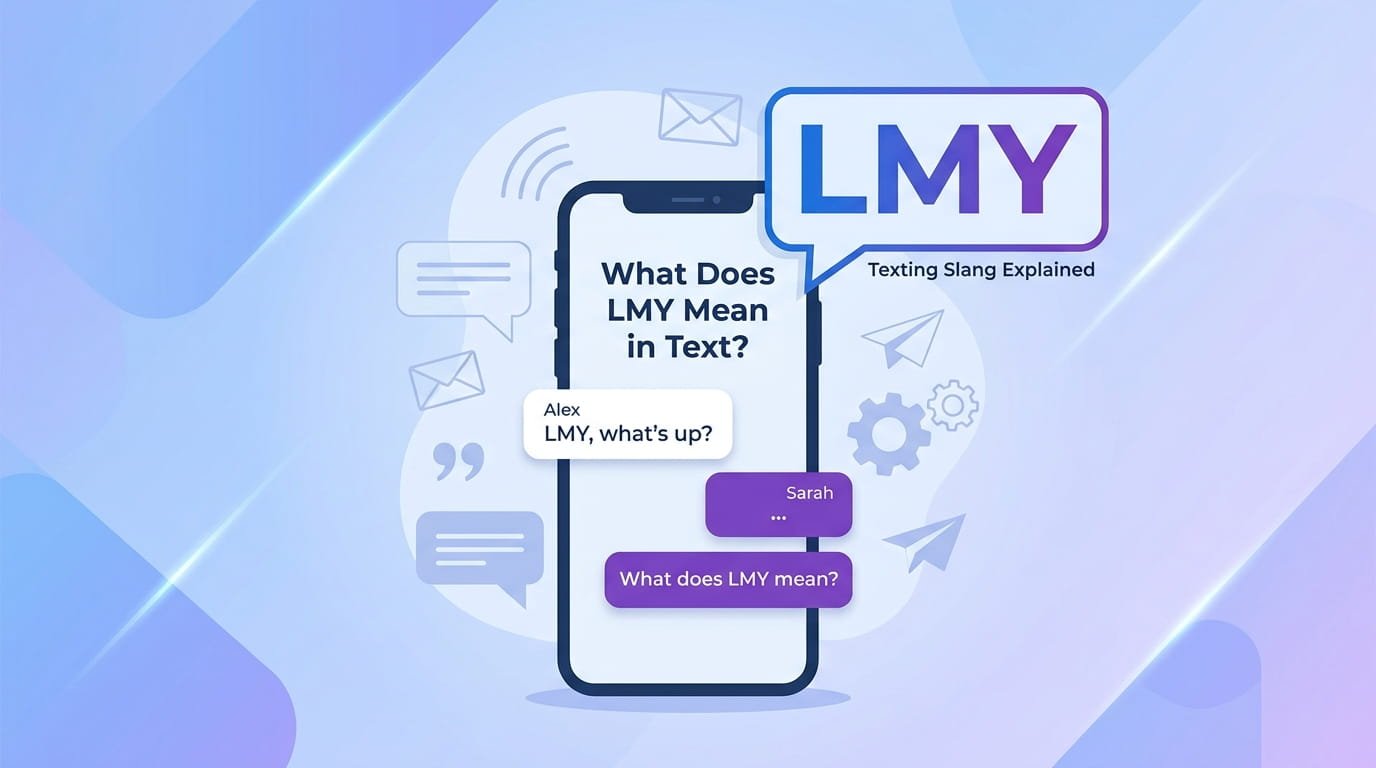
If you are wondering what does LMY mean in text, the answer depends on the conversation. One established texting meaning is “Love and Miss You,” while some people and slang sites use LMY differently, including affectionate variations such as “Love You More.” Dictionary.com specifically records LMY as “love and miss you,” making that a strong interpretation when the conversation is personal or emotional.

Because texting abbreviations do not always have one universal definition, you should look at the words surrounding LMY before deciding what the sender means. A message such as “Goodnight, LMY ❤️” is very different from a message where LMY appears in a planning conversation.

This guide explains the main meanings of LMY, how to identify the intended meaning, where the abbreviation appears, and how to respond without creating an awkward misunderstanding.

What Does LMY Mean in Text?

In personal texting, LMY most commonly refers to “Love and Miss You.” It combines affection with the feeling of missing someone.

For example:

“Haven’t seen you in weeks. LMY ❤️”

Here, the sender is expressing that they care about the recipient and miss spending time with them.

Dictionary.com lists “love and miss you” as the meaning of LMY and provides examples of the abbreviation being used in personal messages.

However, LMY does not have the same level of standardization as abbreviations such as LOL, BRB, or IDK. Different people may create or interpret abbreviations differently. Several contemporary slang references also list alternative interpretations, which is why context matters.

Quick meaning guide

LMY interpretation Typical context Tone
Love and Miss You Personal conversations Affectionate
Love/Miss You Friends, family, partners Warm
Love You More Affectionate replies Playful or romantic
Let Me Know / Let Me Know, Yeah Casual conversations Informal
Personal or group-specific meaning Niche chats Depends on context

The first two are particularly relevant when LMY appears in an emotional conversation, while other interpretations may occur in specific communities or personal texting styles.

Why Can LMY Have More Than One Meaning?

Texting language is flexible. Unlike formal vocabulary, abbreviations often develop organically within communities.

A person may shorten a phrase because:

  • It saves typing time.
  • The people in the conversation already understand it.
  • The abbreviation fits the casual tone of texting.
  • It communicates emotion quickly.
  • Friends or online communities give an abbreviation their own meaning.

That flexibility creates a problem: the same three letters can mean different things to different people.

For example, one person might read “LMY ❤️” as “Love and Miss You,” while another person could interpret it as “Love You More” if that is how their social circle uses the abbreviation.

This is why blindly expanding every abbreviation can produce the wrong answer.

LMY Meaning: “Love and Miss You”

The most clearly documented interpretation of LMY in texting is “Love and Miss You.” Dictionary.com records this definition and describes LMY as a textspeak acronym.

This meaning works particularly well when the conversation involves distance, separation, affection, or emotional support.

Examples

Example 1:

“I wish you were here tonight. LMY ❤️”

Meaning: “I love you and miss you.”

Example 2:

“Drive safely and text me when you get home. LMY!”

The abbreviation adds affection to an otherwise practical message.

Example 3:

“It was so good seeing you today. LMY already 😂”

Here, the sender uses LMY in a warm and casual way.

Example 4:

“Goodnight! Sleep well. LMY ❤️”

This is a natural setting for the affectionate interpretation.

Is LMY Romantic?

Not necessarily.

“Love and Miss You” can sound romantic, but people also use affectionate language with family members and close friends. The relationship between the sender and recipient is therefore important.

For example:

  • A partner may use LMY romantically.
  • A parent may use it with a child.
  • Siblings may use it affectionately.
  • Close friends may use it after being separated for a while.

The surrounding conversation usually provides more information than the abbreviation itself.

If someone you have just met sends “LMY ❤️,” the message may deserve clarification because the emotional meaning could be stronger than you expected.

LMY Meaning as “Love You More”

Another interpretation found in online slang references is “Love You More.” This version is generally playful and affectionate.

It often works as a response to “I love you.”

For example:

Person A: “Love you!”

Person B: “LMY ❤️”

In this context, it can mean “Love You More.”

This interpretation is easy to confuse with “Love and Miss You” because both are emotionally affectionate.

How can you tell the difference?

Look at the previous message.

If someone writes:

“I miss you so much. LMY.”

“Love and Miss You” makes more sense.

If the conversation goes:

“I love you.”

“LMY 😘”

“Love You More” may be the intended meaning.

The emoji and conversational flow can also provide clues, although neither is a guaranteed indicator.

Can LMY Mean “Let Me Know”?

Some online slang sources also interpret LMY as a variation of “Let Me Know” or “Let Me Know, Yeah.”

This interpretation is much easier to recognize from context.

For example:

“If you decide to come tonight, LMY.”

If the conversation concerns plans or decisions, the sender is likely asking for an update rather than expressing affection.

Another example:

“LMY when you get there.”

Here, the intended meaning is essentially “Let me know when you get there.”

This demonstrates why context is more reliable than treating LMY as a fixed dictionary abbreviation.

How to Determine What LMY Means in a Message

When you receive LMY and are unsure what it means, use these clues.

1. Look at the previous message

The preceding sentence often gives the strongest clue.

If the previous message discusses missing someone, LMY may mean “Love and Miss You.”

If the previous message says “I love you,” “Love You More” becomes a possible interpretation.

If the conversation involves plans, “Let Me Know” may make more sense.

2. Consider your relationship

Think about who sent the message.

A romantic partner, close friend, sibling, or parent may naturally use affectionate meanings.

A coworker is less likely to use LMY to express romantic or emotional affection.

3. Look at emojis

Emojis are not definitive, but they can provide useful context.

For example:

  • ❤️ may support an affectionate interpretation.
  • 😘 can suggest romantic or playful affection.
  • 😂 may indicate a joking use.
  • 📅 or 👍 may fit a planning conversation.

Still, do not rely on an emoji alone.

4. Read the entire conversation

A single abbreviation can be ambiguous. A full conversation usually is not.

Instead of asking, “What does LMY always mean?” ask:

“What meaning makes sense in this particular message?”

That approach prevents many misunderstandings.

LMY in Text Messages: Real Examples

Here are examples showing how the surrounding context can change the likely interpretation.

Message Likely meaning Why
“Goodnight, LMY ❤️” Love and Miss You Emotional context
“I love you!” — “LMY 😘” Love You More Direct affectionate reply
“I wish you were here. LMY.” Love and Miss You Missing someone
“LMY when you know your schedule.” Let Me Know Planning context
“Travel safe! LMY ❤️” Love and Miss You Affectionate goodbye
“You said you loved me first 😂 LMY” Love You More Playful relationship context

These examples show why the same abbreviation cannot always be interpreted in isolation.

LMY Meaning on Snapchat, Instagram, WhatsApp and Other Apps

LMY does not become a completely different abbreviation simply because it appears on another messaging platform.

You may encounter abbreviations like LMY in:

  • SMS text messages
  • Instagram DMs
  • Snapchat
  • WhatsApp
  • Facebook Messenger
  • TikTok messages
  • Discord chats

The platform can influence the style of communication, but the conversation itself remains the strongest clue.

For example, an Instagram DM between close friends may use LMY casually, while a workplace message may use the same letters differently.

There is no universal rule saying that LMY has one definition on Snapchat and another on Instagram.

Is LMY Formal or Informal?

LMY is informal texting language.

It is suitable for casual digital communication when you know the recipient understands the abbreviation.

It is generally better to avoid it in:

  • Formal business emails
  • Job applications
  • Academic assignments
  • Professional reports
  • Official letters
  • Customer-service communication

Instead of writing:

“LMY if you need anything.”

A professional version would be:

“Please let me know if you need anything.”

Writing the full phrase removes ambiguity and makes the message appropriate for a wider audience.

LMY vs Similar Text Abbreviations

LMY can be confused with other short forms because several texting abbreviations express affection.

Abbreviation Common meaning Main difference
LMY Love and Miss You Combines affection and missing someone
ILY I Love You Expresses love
IMY I Miss You Expresses missing someone
ILY2 I Love You Too Direct response to “I love you”
LYM Love You More Similar affectionate meaning
LOL Laughing Out Loud Indicates amusement
IDK I Don’t Know Expresses uncertainty
LMK Let Me Know Requests information or an update

One useful distinction is LMY vs. LMK.

LMY can be affectionate depending on context, while it is commonly understood as “Let Me Know.” If someone writes “LMK when you arrive,” there is little ambiguity.

Common Mistakes People Make With LMY</h2>

Assuming there is only one meaning

This is the biggest mistake.

Although “Love and Miss You” is a documented meaning, online usage is not completely standardized. Other sources associate it with different expressions, including “Love You More” and “Let Me Know” variants.

Assuming it is always romantic

“Love and Miss You” can appear between family members and close friends as well as romantic partners.

Treating every slang website as equally authoritative

Online slang changes quickly, and user-generated definitions can conflict. A definition supported by an established reference such as Dictionary.com provides stronger evidence than an unexplained claim on an anonymous slang page.

Using LMY in professional communication

Even if the recipient understands it, abbreviations can make professional writing appear unnecessarily casual or ambiguous.

How to Respond When Someone Says LMY</h2>

Your response should match the meaning you think the sender intended.

ata-end=”12006″>If LMY means “Love and Miss You”

You could reply:

  • “Love and miss you too ❤️”
  • “Miss you too!”
  • “Aww, same here ❤️”
  • “I miss you too. Take care!”

ata-end=”12159″>If LMY means “Love You More”

You could respond playfully:

  • “No way 😂”
  • “You wish!”
  • “Love you most ❤️”
  • “Not a chance 😘”

ata-end=”12291″>If LMY means “Let Me Know”

A simple response works:

  • “Sure, I will.”
  • “Absolutely.”
  • “I’ll let you know.”
  • “Got it.”

If you genuinely cannot determine the meaning, asking is better than making an awkward assumption.

Why Context Matters More Than the Acronym

Text communication removes many of the signals people use in face-to-face conversations, such as facial expressions, voice tone, gestures, and immediate reactions.

That makes short abbreviations particularly dependent on context.

Consider:

“LMY.”

On its own, the message is ambiguous.

Now compare:

“I haven’t seen you since your trip. LMY ❤️”

The emotional meaning is much clearer.

Or:

“Are you free Friday? LMY when you know.”

The planning context points toward “Let me know.”

This is a useful general rule for texting slang: interpret the complete message, not just the abbreviation.

One of the most useful distinctions is between documented meaning and personal usage.

An abbreviation does not need to have a single official definition to be understandable. People frequently create shorthand that makes sense within a particular friendship, family, gaming group, or online community.

That means a sender could technically use it to mean something completely different from the common interpretations.

If the abbreviation appears repeatedly in a private conversation and its meaning does not fit the standard definitions, the sender may have established their own shorthand.

In such cases, context or clarification is more reliable than any online abbreviation list.

Should You Use LMY Yourself?

You can use it when you are communicating casually with someone who understands texting shorthand.

It works particularly well when:

  • You are messaging a close friend.
  • You are talking with a family member.
  • You are communicating with a romantic partner.
  • The conversation is already informal.
  • The recipient regularly uses abbreviations.

Avoid it when the recipient may not understand texting slang or when the message needs to be precise.

For example, “Love and miss you” is clearer than LMY when communicating with someone unfamiliar with abbreviations.

Frequently Asked Questions

end=”14539″>What does LMY mean in text?

LMY is documented as a texting abbreviation for “love and miss you.” It is generally used in personal or affectionate conversations. However, some people use it differently, including interpretations such as “Love You More” or “Let Me Know.” The surrounding conversation, relationship, and wording should determine which meaning is most likely.

data-end=”14926″>Does LMY mean “Love You More”?

It can. Some online texting references use it as an abbreviation for “Love You More,” particularly as a playful response to “I love you.” However, “Love and Miss You” is also a documented meaning, so you should use the preceding message and context to determine the intended interpretation.

ata-end=”15283″>Is LMY romantic?

LMY can be romantic, but it is not exclusively romantic. If it means “Love and Miss You,” close friends and family members can use it too. The relationship between the sender and recipient matters. A heart emoji or romantic conversation may make a romantic interpretation more likely.

end=”15606″>What does LMY mean on Snapchat?

It does not have one officially assigned Snapchat meaning. In an affectionate conversation, it may mean “Love and Miss You,” while some users may interpret it as “Love You More.” If it appears during a conversation about plans, another interpretation may be intended. Always consider the surrounding messages.

ata-end=”15947″>Is LMY the same as ILY?

No. ILY commonly means “I Love You,” while it can mean “Love and Miss You” or another context-dependent phrase. It may therefore communicate both affection and missing someone, depending on how the sender uses it.

How should I reply to LMY?

Your reply should match the context. If the sender means “Love and Miss You,” you might say “Love and miss you too ❤️.” If they mean “Love You More,” a playful response such as “Not a chance 😂” may work. If they mean “Let Me Know,” simply respond with the requested information or say you will update them.

data-end=”16548″>Can LMY have a different meaning?

Yes. Texting abbreviations are not always standardized, and different communities may use the same letters differently. Current online sources list several interpretations of it. When none of the common meanings fits the conversation, asking the sender is the safest way to clarify.

Conclusion

So, end=”16923″>what does LMY mean in text? The strongest documented meaning is “Love and Miss You,” particularly in personal and affectionate conversations. However, it can also appear as “Love You More” or other context-specific shorthand.

The key is not to treat it as a fixed formula. Look at the surrounding message, the relationship between the people communicating, and the tone of the conversation. When the context remains unclear, a quick clarification is better than assuming the wrong meaning.

Continue Reading

Trending

Contact Us Email:- Team3brothers.uk@gmail.com