
Blogs
Time Management Tips for New Parents: A Practical Guide




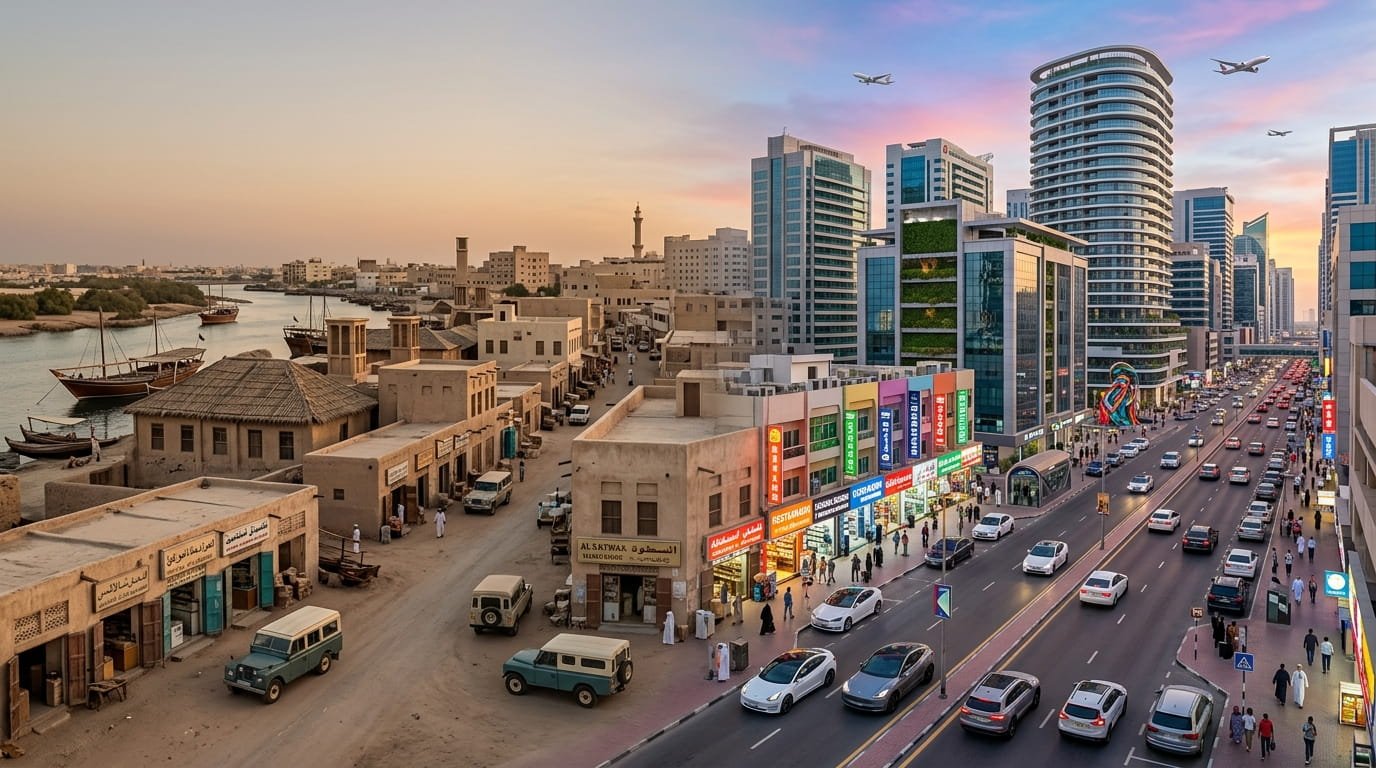
The Complete History of Al Satwa: From 1970s to 2026 tells the story of one of Dubai’s most distinctive neighbourhoods. Located between Jumeirah, Bur Dubai and Sheikh Zayed Road, Al Satwa developed from a relatively low-rise residential district into a dense, multicultural urban community. Its history is closely connected with Dubai’s rapid expansion after the discovery of oil, the growth of national housing, changing patterns of migration and the city’s ambitious redevelopment plans.
Unlike Dubai’s newer districts, Satwa still carries visible traces of an earlier urban landscape. Narrow streets, low-rise buildings, independent shops, tailors, restaurants, mosques and small businesses sit close to major roads and modern skyscrapers. As a result, the neighbourhood provides an unusual view of how Dubai changed from the 1970s onward without completely losing its older street-level character.
The story is also more complicated than a simple transformation from “old Dubai” to “modern Dubai.” Satwa experienced demographic change, redevelopment pressure, demolition and displacement, while its commercial and cultural life continued to attract new communities. By 2026, it remains one of central Dubai’s best-known low-rise neighbourhoods.
Where Is Al Satwa?
Al Satwa is a compact central Dubai community positioned between established districts including Jumeirah and Bur Dubai, with Sheikh Zayed Road forming its southern boundary. Its location has always influenced its development because the neighbourhood sits close to some of Dubai’s most important transport routes and urban centres.
The area is relatively small compared with many newer Dubai communities. Yet its central location gives it an importance that goes beyond its size.
The neighbourhood is associated with several recognizable places and roads, including:
- Al Satwa Road
- 2nd December Street
- Satwa Grand Mosque
- Al Satwa bus station
- Iranian Hospital
- Satwa Park
- The Union House and the wider 2nd December Street area
The combination of residential streets and commercial corridors is one of Satwa’s defining characteristics.
Al Satwa Before the 1970s
The early history of Satwa is less thoroughly documented than the history of Dubai’s creek-side settlements.
Some modern websites describe the land as a sparsely developed area before Dubai’s rapid urban expansion, while local accounts associate the wider area with early Emirati settlement and traditional activities. However, detailed claims about the exact number of families living in Satwa before the 1970s should be treated cautiously because publicly available historical documentation is limited.
What is much clearer is that Dubai’s urban structure changed dramatically during the late 1960s and early 1970s.
Oil revenues gave the government greater resources for infrastructure and housing. At the same time, Dubai adopted new planning approaches designed to support rapid population and economic growth. Academic research into Dubai’s urban development identifies 1971–1993 as a major period of suburban growth.
Satwa became part of that transformation.
The 1970s: The Beginning of Modern Satwa
The 1970s are central to the Complete History of Al Satwa because this was the period when the neighbourhood became increasingly integrated into Dubai’s expanding urban system.
Research into Dubai’s national housing policies shows that the government began implementing a housing scheme in the late 1960s. Al Satwa was among the areas where land was provided to Emirati citizens as part of this broader housing approach.
This was significant because the neighbourhood was not initially conceived as one of the high-rise developments that would later define Dubai.
Instead, Satwa developed around relatively modest housing forms, including courtyard-style homes, low-rise structures and narrow streets. The resulting urban pattern was very different from the towers and master-planned communities that would appear elsewhere in Dubai decades later.
Local memories provide another perspective on this period.
A shopkeeper interviewed by Khaleej Times recalled arriving in Satwa in 1975, when there were few roads and water was scarce. Residents reportedly relied on water tanks, while the neighbourhood had a meat market and an open-air cinema showing Bollywood films.
These recollections are particularly useful because they show what Satwa looked and felt like at street level rather than simply describing it through planning documents.
Satwa in the Late 1970s
By the end of the 1970s, commercial activity was beginning to become an important part of Satwa’s identity.
One well-known example is Ravi Restaurant. Its owner told Khaleej Times that he opened the restaurant in 1978, when Satwa was still largely sandy and had only one market.
The story illustrates a broader pattern.
Small businesses could establish themselves in a neighbourhood that was still developing. As Dubai expanded, these businesses benefited from increasing numbers of residents, workers and visitors.
Consequently, Satwa gradually became more than a residential district. Shops, restaurants and everyday services became part of its identity.
The 1980s: Infrastructure and Community Growth
During the 1980s, Dubai continued to expand rapidly.
Road infrastructure improved, housing became more established and commercial activity increased. Satwa benefited from its central position because it was close to the growing Jumeirah area and the major road corridors connecting different parts of Dubai.
The neighbourhood’s low-rise character also became more firmly established.
Rather than developing as a single large project, Satwa evolved incrementally. Shops, homes, services and community facilities grew around existing streets.
That gradual development helps explain why Satwa can feel different from newer Dubai districts. Many newer communities were designed around a unified master plan, whereas Satwa accumulated layers over time.
The 1990s: A Major Demographic Change
The 1990s marked an important turning point in Satwa’s social history.
Academic research on the neighbourhood describes how many Emirati families moved toward newer suburban housing areas during the period. As a result, older national housing districts such as Satwa increasingly became occupied by expatriate workers and other residents.
At the same time, Dubai’s construction, service and retail sectors were expanding.
The city needed large numbers of workers, and migration from South Asia and the Philippines contributed significantly to the changing population of areas such as Satwa. Research describes the mid-1990s as an important period in this demographic transition.
This shift had lasting consequences.
Satwa gradually became known for its multicultural population, particularly its Indian, Pakistani, Bangladeshi, Filipino and Arab communities. Khaleej Times later described the neighbourhood as a multicultural area whose population had changed significantly from its earlier character.
Why Satwa Became Known as “Mini-Manila”
One of Satwa’s most recognizable modern descriptions is “Mini-Manila.”
The nickname reflects the neighbourhood’s strong Filipino community and the presence of Filipino-oriented businesses and services. However, Satwa is not exclusively Filipino.
Its streets also serve Indian, Pakistani, Bangladeshi, Arab and other communities. That broader diversity is one of the neighbourhood’s defining features.
The nickname therefore describes one important layer of Satwa’s identity rather than the entire neighbourhood.
This distinction matters because Satwa’s multicultural character developed through several waves of migration rather than a single community replacing another.
The 2000s: Dubai’s Rapid Transformation Reaches Satwa
The early 2000s brought an enormous change to Dubai.
High-rise developments, new roads and major commercial projects transformed the city’s skyline. Satwa’s location suddenly became even more valuable because it was close to emerging central business and luxury districts.
However, this strategic position also created pressure.
Satwa’s low-rise traditional urban fabric occupied land that could potentially support much larger developments. As Dubai became increasingly focused on large-scale redevelopment, the future of older neighbourhoods became a major question.
This was not simply a cosmetic change.
Researchers describe Satwa as an important case of urban redevelopment because traditional neighbourhood structures were demolished and residents were displaced during redevelopment efforts.
The 2007–2008 Redevelopment Controversy
One of the most significant chapters in the Complete History of Al Satwa concerns redevelopment plans announced during the late 2000s.
Academic research records that a large portion of Satwa was allocated to a semi-government developer in 2007 with plans to transform the area into a luxury district. Compensation was provided to local owners, and demolition began.
In 2008, a substantial part of the area was demolished.
However, the global financial crisis interrupted the redevelopment project. Researchers describe the project as being halted after the demolition of a large section of the neighbourhood.
This produced an unusual urban landscape.
Parts of the older neighbourhood disappeared, while other parts survived. The result was neither a complete preservation of old Satwa nor a total replacement with a new luxury district.
Why the 2008 Redevelopment Matters
The Satwa redevelopment story is important beyond the neighbourhood itself.
Urban researchers have used Satwa as a case study of how rapid redevelopment can affect:
- Housing
- Community networks
- Cultural identity
- Traditional urban form
- Residents’ attachment to place
- Low-income workers
- Local businesses
Khaled Alawadi’s peer-reviewed research describes displacement and the destruction of cultural fabric as major consequences of redevelopment in Al Satwa. The research draws on government and historical documents, field observations and interviews with 30 Satwa residents.
This makes Satwa particularly valuable for understanding Dubai’s urban history.
The neighbourhood demonstrates that development is not simply about replacing old buildings with new ones. It can also reshape who lives in an area, how people interact and what kinds of businesses survive.
Satwa’s Commercial Identity
Despite redevelopment pressure, Satwa retained a strong street-level commercial culture.
The main roads are lined with restaurants, cafés, tailoring shops, fabric stores, supermarkets, electronics businesses, mobile-phone shops and other everyday services.
This commercial environment differs from Dubai’s large shopping malls.
Satwa’s businesses are often smaller and more specialized. Many are closely connected to the daily needs of residents and workers.
Tailoring is particularly associated with the neighbourhood. Food is another major attraction, with restaurants serving South Asian, Filipino and other cuisines.
As a result, Satwa became known not simply as a place to live but as a place where people from different parts of Dubai could shop, eat and access services.
Satwa and 2nd December Street
2nd December Street is one of the most historically significant roads associated with the area.
The street was formerly known as Diyafah Street and is closely connected to the wider history of the UAE. The Union House, where the UAE’s founding leaders signed the federation agreement in 1971, is located in the wider area.
That gives Satwa a geographical relationship with one of the most important moments in UAE history.
The road also became an important commercial corridor, with restaurants, cafés and shops contributing to the area’s everyday identity.
Al Satwa in the 2010s
During the 2010s, Satwa continued to experience the tension between preservation and modernization.
The neighbourhood remained low-rise in many sections, even as skyscrapers grew around it.
That contrast became one of Satwa’s most recognizable visual characteristics: older residential streets could exist within minutes of Dubai’s modern financial and tourism districts.
Local reporting from 2018 highlighted Satwa’s multicultural population and its collection of shops and restaurants. Residents interviewed for the report also recalled earlier decades, offering a living connection between the neighbourhood’s past and present.
Preserving Satwa’s Memory
Satwa’s history has increasingly been documented through photography, oral histories and cultural projects.
A notable example is “Satwa Stories,” a spoken-word and photographic project that documented characters and places associated with the neighbourhood.
More recently, a Dubai photography exhibition explored memories of older neighbourhoods and the changes brought by redevelopment. The National reported on the exhibition in 2023, highlighting the role of photography in preserving parts of Dubai’s urban memory that might otherwise disappear.
This is significant because buildings are not the only historical records.
A restaurant, shop, mosque, street corner or familiar business can also represent decades of community history.
Al Satwa From 2020 to 2026
By the 2020s, Satwa remained a mature central Dubai neighbourhood with a mixture of older buildings, commercial streets and newer development pressures.
Current area guides continue to describe it as a low-rise mixed-use community with apartments, villas, shops, offices and local services.
Its central location remains one of its biggest advantages.
Satwa is close to major parts of Dubai, including Jumeirah and the central business districts. At the same time, it maintains a more traditional street-level atmosphere than many surrounding areas.
Current descriptions also emphasize its continued multicultural character and lively retail environment.
What Makes Al Satwa Different in 2026?
Several characteristics continue to distinguish Satwa.
| Characteristic | Al Satwa in 2026 |
|---|---|
| Urban form | Mostly low-rise and compact |
| Main identity | Residential and commercial |
| Population | Highly multicultural |
| Retail | Independent shops and local services |
| Food | Strong South Asian, Filipino and other cuisines |
| Location | Central Dubai near Jumeirah and Sheikh Zayed Road |
| History | Strong links to Dubai’s 20th-century urban expansion |
| Development | Older fabric alongside modernization |
| Community character | Dense, active and street-oriented |
| Historical challenge | Balancing redevelopment with local identity |
The most important point is that Satwa has not remained frozen in the past.
Instead, it has repeatedly adapted to Dubai’s changing economy and population.
What Competitors Often Miss About Satwa’s History
One of the biggest weaknesses in simplified accounts of Satwa is that they treat the neighbourhood as either an “old Dubai” relic or simply a multicultural shopping district.
Neither description is complete.
Satwa’s history contains several overlapping phases.
First came the development of national housing and low-rise residential areas. Then came demographic change as Emirati families moved toward newer suburban housing. After that, the neighbourhood became increasingly important to expatriate workers and businesses. Finally, redevelopment pressure brought demolition and displacement while other parts of Satwa continued to survive.
This means Satwa’s identity is not based on one population or one architectural style.
Its identity comes from layers.
An older street may sit beside a newer building. A decades-old restaurant may operate near a modern business. A Filipino service shop may stand beside an Indian restaurant and an Emirati community institution.
That mixture is precisely what makes the neighbourhood historically interesting.
Why Al Satwa Still Matters to Dubai’s History
Satwa offers a useful alternative to the familiar story of Dubai’s development through skyscrapers and mega-projects.
The Burj Khalifa, Dubai Marina and other major developments represent one side of the city’s transformation.
Satwa represents another.
It shows what happened at the neighbourhood level as Dubai expanded. It demonstrates how housing policies, migration, commerce, road development and redevelopment affected an existing community.
In that sense, Satwa is not outside Dubai’s modernization story.
It is part of it.
Frequently Asked Questions
When did Al Satwa develop?
Al Satwa’s modern urban development is closely associated with the late 1960s and 1970s, when Dubai expanded its housing and infrastructure systems. Academic research identifies Al Satwa as one of the areas involved in the government’s national housing scheme during this period. Local residents also recall the neighbourhood as relatively undeveloped in the mid-1970s.
What was Al Satwa like in the 1970s?
According to resident recollections, Satwa in the 1970s had fewer roads and buildings than it does today. Water availability was more limited, and residents used shared water tanks. The neighbourhood also had a meat market and an open-air cinema that showed Bollywood films.
Why is Al Satwa famous?
Al Satwa attracts residents and visitors with its central location, low-rise urban character, multicultural population, independent shops, tailoring businesses, restaurants, and vibrant street life.
It is also historically important because of its connection to Dubai’s early urban expansion and its proximity to 2nd December Street and Union House.
Why is Satwa called Mini-Manila?
People associate the nickname “Mini-Manila” with Satwa’s large Filipino community and its concentration of Filipino-oriented businesses and services. However, the neighbourhood is much more diverse than the nickname suggests, with Indian, Pakistani, Bangladeshi, Arab and other communities also contributing to its identity.
What happened to Al Satwa during the 2008 redevelopment?
A major redevelopment plan led to the demolition of a substantial portion of Satwa in 2008. The planned transformation into a luxury district was subsequently interrupted during the global financial crisis. Academic research has examined the resulting displacement and loss of traditional neighbourhood fabric.
Is Al Satwa still a low-rise neighbourhood in 2026?
Yes, significant parts of Satwa continue to have a low-rise character. Current area guides describe the district as a mixed-use community containing low-rise residential buildings, villas, shops, offices and local services. At the same time, redevelopment and newer construction continue to influence the wider area.
Is Al Satwa historically important to Dubai?
Yes. Satwa is important because it reflects several stages of Dubai’s urban development, including national housing, suburban expansion, demographic change, expatriate migration, commercial growth and redevelopment. Its history also provides an example of the social and cultural effects that can accompany rapid urban transformation.
Conclusion
The Complete History of Al Satwa: From 1970s to 2026 is ultimately a history of adaptation.
Satwa developed during Dubai’s early period of rapid urban expansion, grew through the 1980s and 1990s, became increasingly multicultural, faced major redevelopment pressure in the 2000s and continued evolving through the 2010s and 2020s.
Yet the neighbourhood has retained something that many newer districts do not: a strong street-level identity built around small businesses, established communities and layers of urban history.
By 2026, Al Satwa is neither simply an old neighbourhood nor an untouched example of Dubai’s past. It is a living part of the city where older streets, multicultural commerce and modern development continue to exist alongside one another.
That layered character is what makes Satwa particularly valuable when understanding how Dubai changed from the 1970s to the present.



Nicole Johag: Age, Wealth, Partner, Children and Career

Who is Katja Streso married to? Child, Net worth, Career Explained

Bernd Fuchs: Wife, Age, Height, Net Worth & Career
-

 Entertainment9 years ago
The final 6 ‘Game of Thrones’ episodes might feel like a full season
-

 lifestyle6 months ago
Creative Conference Room Ideas to Enhance Productivity and Collaboration in 2026
-
Fashion9 years ago
According to Dior Couture, this taboo fashion accessory is back
-
Entertainment9 years ago
The old and New Edition cast comes together to perform
-
Business9 years ago
The 9 worst mistakes you can ever make at work
-
Business9 years ago
Uber and Lyft are finally available in all of New York State
-
Entertainment9 years ago
Disney’s live-action Aladdin finally finds its stars
-
Entertainment9 years ago
Mod turns ‘Counter-Strike’ into a ‘Tekken’ clone with fighting chickens