Connect with us

Business

Why Data Centers Are Becoming a Huge Business in 2026

Published

on

Why data centers are becoming a huge business in 2026 driven by AI, cloud computing and rising power demand

Data centers used to be one of the least visible parts of the technology industry. Most people interacted with websites, cloud apps, streaming platforms, search engines, and software without thinking about the buildings and infrastructure operating behind them.

That is changing rapidly.

In 2026, why data centers are becoming a huge business has a surprisingly simple answer: almost every major technology trend now requires enormous amounts of computing infrastructure.

Artificial intelligence is accelerating that demand. Cloud computing continues to expand it. At the same time, companies need more storage, networking, cybersecurity, digital services, and processing capacity.

As a result, data centers are no longer just buildings filled with servers. They are becoming a critical part of the global economy, linking technology companies with electricity providers, construction firms, semiconductor manufacturers, networking companies, cooling specialists, real estate investors, and financial markets.

JLL estimates that nearly 100 gigawatts of new data center capacity could be added globally between 2026 and 2030, potentially doubling global capacity. The firm also estimates that the sector could grow at roughly a 14% compound annual growth rate through 2030 and require about $3 trillion of investment for 100 GW of new supply.

That helps explain why data centers are becoming a huge business rather than remaining a niche technology segment.

Why Data Centers Are Becoming a Huge Business in 2026

The biggest change is the amount of computing required to run modern digital services.

A traditional website might need relatively modest server capacity. An AI model, however, can require thousands of specialized processors operating simultaneously. Training large models requires massive computational resources, while serving AI responses to millions of users creates a continuous inference workload.

Consequently, businesses need more than just servers.

They need:

  • High-performance processors
  • High-bandwidth memory
  • Networking equipment
  • Electricity
  • Backup power
  • Advanced cooling
  • Physical buildings
  • Fiber connectivity
  • Security systems
  • Storage
  • Monitoring and automation
  • Skilled technicians and engineers

This creates an unusually broad economic opportunity.

A new data center can generate demand for equipment before construction even begins. Developers need land, permits, power connections, transformers, generators, cooling equipment, construction materials and network connectivity.

Once the facility becomes operational, another ecosystem takes over.

Cloud providers lease capacity. Hardware companies supply processors. Networking companies connect servers. Energy companies provide electricity. Cooling specialists manage heat. Maintenance providers keep critical systems operating.

Therefore, the data center economy extends far beyond the companies that actually own the servers.

AI Is Turning Data Centers Into Strategic Infrastructure

Artificial intelligence is the strongest force behind the current expansion.

Modern AI systems require enormous computational resources. Training is only one part of the equation. Once an AI model becomes popular, millions of users may interact with it continuously.

That creates sustained demand for inference capacity.

This distinction matters.

Earlier technology investment often focused on building enough infrastructure for websites, enterprise software and conventional cloud workloads. AI introduces a much more compute-intensive workload.

According to Gartner, worldwide data center electricity consumption is expected to reach 565 terawatt-hours in 2026, up 26% from 2025. Gartner also estimates that AI-optimized servers will account for 31% of data center power consumption in 2026.

In other words, AI is not simply another application running inside existing facilities.

It is changing the physical design of those facilities.

Higher-performance processors generate more heat. Higher rack densities require more sophisticated cooling. Faster processors also require increasingly capable networking systems.

That is why why data centers are becoming a huge business cannot be separated from the AI infrastructure boom.

AI Requires a Different Kind of Data Center

Traditional server environments often focused on relatively predictable workloads.

AI clusters are different.

Large AI systems can concentrate enormous amounts of computing power inside relatively small physical areas. As rack power density increases, the supporting infrastructure becomes increasingly important.

Uptime Institute’s 2026 global survey found that rack densities continue to rise, with a growing number of operators reporting peak rack densities of 30 kW or higher. The organization also identified power availability, costs, supply-chain limitations and staffing shortages as major industry concerns.

This creates a new engineering challenge.

A company cannot simply install more GPUs and expect an old facility to handle them.

The building must support the electrical load. The cooling system must remove the additional heat. Networking must move data quickly enough to keep processors productive. Backup systems must protect the workload from interruptions.

As a result, why data centers are becoming a huge business also comes down to the rising value of specialized infrastructure.

Power Has Become One of the Most Valuable Data Center Resources

For years, companies mainly asked where they could find suitable land for a data center.

Now they increasingly ask a different question:

Where can we secure enough electricity?

That change is significant.

A data center can be constructed relatively quickly compared with major energy infrastructure. However, electricity generation, transmission lines, substations and grid upgrades can take years to plan and build.

The International Energy Agency expects global data center electricity consumption to more than double to around 945 TWh by 2030. It also estimates that data center electricity use could grow around 15% annually from 2024 through 2030.

That means electricity is becoming a strategic competitive advantage.

A developer with a ready power connection can potentially move faster than a competitor that has land but no confirmed energy supply.

Consequently, data center development is increasingly connected to:

  • Utility infrastructure
  • Renewable energy
  • Natural gas
  • Nuclear power
  • Battery storage
  • Transmission networks
  • On-site generation
  • Long-term power contracts

The relationship between technology and energy is becoming much stronger.

Why Data Centers Are Becoming a Huge Business for Energy Companies

The growing electricity requirement creates another investment opportunity.

Data centers need reliable power around the clock. Unlike many ordinary commercial buildings, a large computing facility cannot simply tolerate frequent interruptions.

Therefore, operators increasingly care about both how much electricity they can obtain and how reliably they can obtain it.

This is already influencing energy investment.

For example, Google announced in September 2026 that it plans to invest more than $15 billion in AI infrastructure in Finland while also supporting electricity-grid, clean-energy and battery projects. Google also signed a long-term agreement involving the Loviisa nuclear plant.

The broader lesson is important.

The future data center market is not just about server buildings. It is also about securing the energy ecosystem around those buildings.

Cooling Is Becoming a Major Business Opportunity

Electricity creates another problem: heat.

The more computing power a facility operates, the more heat engineers must remove.

Traditional air cooling remains useful, but high-density AI infrastructure is pushing operators toward more advanced approaches, including liquid cooling.

Liquid cooling can move heat away from high-performance components more efficiently than conventional air-based systems in certain high-density environments.

This creates opportunities for companies involved in:

  • Cooling equipment
  • Heat exchangers
  • Pumps
  • Cooling distribution systems
  • Thermal management
  • Liquid cooling infrastructure
  • Monitoring and controls

Uptime Institute notes that rising rack densities and AI workloads are increasing the importance of cooling, while its research also highlights growing interest in automation for cooling operations.

Therefore, why data centers are becoming a huge business involves an entire thermal-management industry that many consumers rarely notice.

The Data Center Supply Chain Is Much Larger Than the Building

A common mistake is to think of a data center as a real estate project.

It is much more complicated.

A modern facility requires an interconnected supply chain.

1. Land and real estate

Developers need suitable locations with access to electricity, water or cooling resources, fiber networks and transportation.

2. Construction

Large facilities require specialized construction teams, electrical contractors, mechanical contractors and equipment suppliers.

3. Electrical infrastructure

Transformers, switchgear, backup generators, batteries and distribution systems become critical components.

4. Computing hardware

AI accelerators, CPUs, GPUs, memory and storage equipment provide the actual computing capability.

5. Networking

High-speed switches, optical connections and cables allow thousands of processors to communicate.

6. Cooling

Advanced thermal systems prevent high-density hardware from overheating.

7. Operations

Once a facility becomes operational, technicians, engineers and monitoring systems keep it available.

Each layer represents a separate commercial opportunity.

That is why the economic impact of data center growth can spread across many industries simultaneously.

Hyperscalers Are Driving Enormous Capital Spending

Amazon, Microsoft, Google and Meta are among the largest buyers of data center capacity in the world.

These companies operate enormous cloud platforms, and AI is increasing their infrastructure requirements.

The business model is straightforward.

More users and more AI workloads require more computing capacity. Computing capacity requires more servers. Servers require more data center space, electricity, cooling and networking.

That creates a feedback loop.

More AI adoption → more computing demand → more infrastructure → more data center investment.

However, companies cannot build unlimited infrastructure instantly.

They face permitting delays, grid constraints, construction bottlenecks and equipment shortages.

This creates scarcity.

And scarcity can increase the value of available capacity.

Why Data Center Operators Can Become Valuable Infrastructure Businesses

The economics of data centers have similarities with other infrastructure industries.

A facility requires large upfront capital investment. However, once constructed and occupied, it can generate recurring revenue over many years.

Customers may lease capacity under long-term agreements. That can provide relatively predictable revenue compared with some purely consumer-facing technology businesses.

The exact economics vary considerably by location, facility type, customer and financing structure.

Still, the basic attraction remains clear.

Investors are increasingly treating digital infrastructure as a real asset class rather than simply another technology subsector.

JLL’s 2026 outlook reinforces that shift, describing data centers as a rapidly expanding infrastructure market requiring trillions of dollars of investment over the coming years.

Why Data Centers Are Becoming a Huge Business for Real Estate Investors

Data center real estate is different from ordinary office or retail property.

Location matters enormously, but the most valuable characteristics may not be traditional real-estate features.

Investors care about:

  • Available electrical capacity
  • Speed of grid connection
  • Fiber connectivity
  • Land availability
  • Cooling conditions
  • Regulatory environment
  • Tax policy
  • Water availability
  • Disaster risk
  • Proximity to major cloud markets

A large piece of inexpensive land is not automatically valuable if it cannot receive enough electricity.

Conversely, land with secured power and strong connectivity can become extremely attractive.

This explains why some markets are becoming data center hotspots despite having little history as traditional technology hubs.

The Grid Could Become the Biggest Limitation

The biggest threat to rapid data center expansion may not be demand.

It may be infrastructure.

The IEA highlights the mismatch between the speed of technology development and the longer timelines required to build energy infrastructure. A data center may become operational in two to three years, while power infrastructure can require much longer planning and construction periods.

That creates a bottleneck.

Imagine a company has financing, land, customers and servers ready to deploy.

If the local utility cannot provide sufficient power, the entire project can remain delayed.

Uptime Institute similarly identifies power availability as one of the industry’s increasingly important constraints.

Consequently, the next phase of data center competition could depend less on who can build the biggest building and more on who can secure reliable power first.

Renewable Energy and Nuclear Power Could Become More Important

Data center operators face another challenge: sustainability.

Large technology companies have made environmental commitments, while governments increasingly scrutinize electricity consumption and emissions.

At the same time, AI workloads are increasing power requirements.

This creates a difficult balancing act.

Renewable energy can provide large amounts of electricity, but generation can vary with weather and time. Batteries can help manage that variability. Natural gas can provide dispatchable power, while nuclear energy offers another low-carbon source of reliable generation.

The IEA expects renewables and natural gas to play major roles in meeting future data center demand, while nuclear power and emerging technologies could also contribute.

Therefore, future data center development may increasingly involve energy partnerships rather than simple electricity purchases.

Networking Is Another Hidden Data Center Opportunity

AI processors are powerful, but they do not operate in isolation.

Large AI clusters require enormous amounts of data to move between processors and storage systems.

That makes networking infrastructure critical.

High-speed switches, optical transceivers, fiber connections and specialized networking technologies help prevent communication bottlenecks.

In some AI systems, improving networking can be almost as important as improving individual processors.

This creates opportunities beyond the famous AI chip companies.

Companies supplying networking equipment, optical technology and connectivity infrastructure can benefit as AI clusters become larger and more interconnected.

Semiconductor Companies Also Benefit From Data Center Expansion

The relationship works in both directions.

Data centers create demand for semiconductors, while semiconductor advances allow data centers to process more information efficiently.

AI accelerators are at the center of this ecosystem, but memory is equally important.

Large AI models require substantial amounts of high-speed memory. High-bandwidth memory has therefore become a strategically important component of modern AI systems.

This creates a broad semiconductor opportunity involving:

  • AI accelerators
  • CPUs
  • GPUs
  • High-bandwidth memory
  • Networking chips
  • Power-management semiconductors
  • Storage controllers
  • Optical components

As computing infrastructure expands, demand can spread throughout the semiconductor supply chain.

Why Data Centers Are Becoming a Huge Business Despite the Risks

The growth story is compelling, but investors and businesses should not treat every data center project as automatically profitable.

There are serious risks.

Power delays

A project can experience major delays if grid connections take longer than expected.

Construction costs

Labor, electrical equipment, transformers and specialized cooling systems can become expensive.

Interest rates

Data centers require significant upfront capital. Higher financing costs can reduce project economics.

AI demand uncertainty

AI adoption may continue strongly, but companies could slow infrastructure spending if expected returns fail to materialize.

Technology changes

New processors and architectures can make existing infrastructure less competitive if facilities cannot upgrade efficiently.

Regulatory pressure

Governments may impose new requirements involving electricity, water, emissions, land use or community impact.

Operational failures

A major outage can cause substantial financial and reputational damage.

Uptime Institute reports that although impactful outages have generally become less frequent, around one in ten outages in its 2026 research was classified as serious or severe, while outage costs continue to rise.

Therefore, infrastructure quality matters just as much as expansion speed.

Data Center Growth Could Create a New Investment Cycle

The most interesting part of this trend is how many industries can participate.

Consider the chain:

AI companies need computing.

Computing requires servers.

Servers require chips and memory.

Servers need high-speed networking.

All of that equipment requires data centers.

Data centers require electricity.

Electricity requires generation and transmission infrastructure.

High-density servers require advanced cooling.

Facilities require construction, maintenance and security.

Each layer creates economic activity.

That is the deeper reason why data centers are becoming a huge business in 2026.

The opportunity is not concentrated in one category.

What Could Slow the Data Center Boom?

A strong growth market can still experience corrections.

One major concern is overbuilding.

If companies build capacity faster than customers need it, vacancy rates can increase and pricing can weaken.

Another concern is financing.

Data center projects require enormous amounts of capital. Reuters reported in September 2026 that AI-related debt issuance had approached $500 billion by early August, while electricity constraints, project delays and political opposition were making lenders more cautious.

That does not mean the industry is collapsing.

Instead, it shows that the market is becoming more selective.

Projects with secured power, credible customers, strong financing and suitable locations may remain attractive, while speculative projects could face greater difficulty.

How Businesses Can Prepare for the Data Center Economy

Companies that want to benefit from the growth should think beyond simply owning a server facility.

Several opportunities stand out.

Infrastructure suppliers

Companies can provide electrical systems, cooling equipment, generators, batteries and networking hardware.

Energy providers

Reliable electricity is becoming increasingly valuable as computing demand rises.

Construction companies

Specialized data center construction is becoming a significant market.

Software providers

Monitoring, automation, cybersecurity and infrastructure management tools can help operators manage increasingly complex facilities.

Real estate developers

Developers with access to suitable land and power can potentially create valuable digital infrastructure projects.

Investors

Investors can evaluate data center operators, REITs, utilities, semiconductor companies, networking companies and equipment manufacturers as different ways to participate in the broader trend.

However, each category carries different risks.

What the Data Center Industry Could Look Like by 2030

The next few years could fundamentally change the industry.

JLL expects nearly 100 GW of new data center capacity to be added globally between 2026 and 2030. Meanwhile, the IEA expects data center electricity consumption to approach 945 TWh by 2030.

At the same time, AI could account for a much larger share of workloads.

JLL estimates AI could represent roughly half of data center workloads by 2030.

If that happens, facilities will need to become more specialized.

Expect greater use of:

  • Liquid cooling
  • High-density racks
  • AI accelerators
  • Advanced networking
  • On-site power
  • Battery storage
  • Renewable energy
  • Nuclear power partnerships
  • Automated monitoring
  • Predictive maintenance
  • More efficient power systems

The data center of 2030 may look very different from the traditional server facilities many companies operated a decade ago.

How to Evaluate the Data Center Business Without Chasing Hype

The strongest projects will probably share several characteristics.

Before investing in or building a data center, businesses should examine:

1. Power availability: Is electricity actually secured, or is it only proposed?

2. Customer demand: Are credible customers committed to using the capacity?

3. Connectivity: Does the site have strong fiber and network access?

4. Cooling: Can the facility support future high-density computing?

5. Financing: Can the project withstand higher interest rates or construction delays?

6. Location: Does the market have sufficient infrastructure and a supportive regulatory environment?

7. Expansion potential: Can the facility grow without encountering another major power constraint?

8. Operational resilience: Can the site maintain service during grid failures or equipment problems?

This framework separates genuine infrastructure opportunities from speculative projects.

The Biggest Insight: Data Centers Are Becoming Part of the Energy Economy

Perhaps the most important development is that the technology industry and energy industry are increasingly becoming connected.

For decades, technology companies primarily competed over software, users and computing power.

Now they also compete for electricity.

A company with access to a large amount of reliable power can potentially deploy AI infrastructure faster. Meanwhile, utilities must plan for rapidly increasing loads, and governments must decide how to expand grids without creating reliability or affordability problems.

The result is a new relationship between:

AI + semiconductors + data centers + electricity + real estate + construction + networking.

That combination is much larger than the data center market alone.

Why Data Centers Are Becoming a Huge Business: Final Outlook

The strongest evidence points toward continued expansion, but the next phase will not simply be about building more server buildings.

It will be about building better infrastructure in locations where power, connectivity, cooling, capital and customers come together.

AI is the biggest catalyst. Cloud computing provides another major source of demand. Digital services continue to expand the underlying need for computing capacity.

At the same time, power availability is becoming a critical constraint.

That creates both opportunity and risk.

Businesses that can secure electricity, build efficiently, manage high-density computing and maintain reliable operations could benefit significantly. However, companies that underestimate financing costs, grid constraints, cooling requirements or customer demand could struggle.

Ultimately, why data centers are becoming a huge business comes down to one fundamental reality: the digital economy needs a physical foundation.

Every AI response, cloud application, online transaction, video stream and digital service depends on computing infrastructure somewhere.

In 2026, that infrastructure is becoming too important to remain in the background.

For investors, entrepreneurs and technology companies, the data center industry deserves attention not simply because AI is growing, but because the physical infrastructure required to run AI is becoming an economy of its own.

Frequently Asked Questions

1. Why are data centers becoming so important in 2026?

Data centers are becoming more important because AI, cloud computing, streaming, enterprise software and other digital services require increasing amounts of computing capacity. AI workloads are particularly demanding because they require powerful processors, high-speed networking, large amounts of memory and significant electricity.

2. Is AI the main reason for data center growth?

AI is one of the most important drivers, but it is not the only one. Cloud computing, digital services, enterprise applications, data storage and online platforms also contribute to demand. However, AI is changing the scale and physical requirements of data center infrastructure because advanced AI workloads can require much higher computing and power density.

3. Why is electricity so important for data centers?

Data centers operate continuously and require reliable electricity for servers, networking, cooling and backup systems. AI increases power requirements because high-performance processors consume substantial amounts of electricity. The IEA expects global data center electricity consumption to more than double to around 945 TWh by 2030.

4. Are data centers a good investment?

Data centers can provide attractive long-term infrastructure opportunities, but they are not automatically good investments. Investors should examine power availability, customer commitments, financing costs, construction expenses, connectivity, cooling requirements, location and regulatory risks before making a decision.

5. What companies benefit from data center growth?

The beneficiaries can extend far beyond data center operators. Semiconductor manufacturers, AI chip companies, networking providers, cooling companies, electrical equipment suppliers, utilities, construction firms, energy producers, fiber providers and digital infrastructure businesses can all benefit from increased data center investment.

Conclusion

Data centers are moving from the background of the technology industry to the center of the global investment story.

AI is accelerating demand, cloud computing is sustaining it, and the need for reliable electricity is creating entirely new infrastructure challenges.

The opportunity is therefore much broader than simply constructing server buildings.

The companies positioned to benefit may include those supplying chips, memory, networking, electricity, cooling, construction, batteries, power equipment and digital infrastructure.

At the same time, investors should remain selective. Power constraints, financing costs, construction delays, regulation and AI demand uncertainty can all change the economics of individual projects.

The most important takeaway is simple: the digital economy cannot grow without physical infrastructure.

And in 2026, that physical infrastructure is becoming one of the world’s most important—and potentially most valuable—business ecosystems.


Continue Reading
Click to comment

Leave a Reply

Your email address will not be published. Required fields are marked *

Business

Eric Poe: Understanding Insurance Underwriting

Published

on

Eric Poe
Eric Poe is a Princeton, New Jersey, insurance executive, attorney, and certified public accountant who serves as CEO of CURE Auto Insurance. Since joining the company in 1994, he has overseen underwriting, loss control, claims, litigation strategy, and insurance product marketing while helping guide the organization’s operations across multiple states. Eric Poe has also advocated for insurance pricing practices that emphasize driving records rather than factors such as employment, education, or credit scores. He holds degrees from the University of Colorado Boulder and Seton Hall University School of Law and has received professional recognition for his leadership and consumer advocacy. His experience overseeing underwriting operations and promoting fair insurance practices provides relevant context for understanding how insurance underwriting works and why it plays an important role in the industry.

Understanding Insurance Underwriting

Insurance companies use underwriting to evaluate, price, and accept or reject risk for policy applicants. This process helps establish the coverage terms, limits, and premiums for a person or business. By reviewing each application carefully, insurers can assess the premium necessary to cover expected claims, expenses, and unexpected losses. Underwriters protect the insurer’s financial health while shaping access to coverage.

Underwriting traces its roots to London in the 1680s at Edward Lloyd’s coffee house. Merchants and shipowners met there with financial backers willing to take on part of a sea voyage’s risk. When a ship or cargo needed insurance, those backers wrote their names beneath the description of the vessel, cargo, and venture. That practice of signing one’s name under the detailed risk gave underwriting its name.

The modern underwriting process begins with a review to confirm that a policyholder’s documents are accurate and complete. Underwriters then collect additional data from public records, inspections, and third-party databases to build a comprehensive risk profile. Next, analysts use statistical models and actuarial data to predict a claim’s likelihood during the policy period.

Based on this information, underwriters classify applicants into appropriate rating categories. This classification helps insurers calculate premiums that account for expected claims, administrative expenses, and uncertainty. Finally, the underwriter decides whether to approve the policy and sets the coverage terms, limits, or restrictions. Clear guidelines help make decisions more consistent and reduce unnecessary subjectivity.

There are several variables underwriters use to determine eligibility and monthly pricing. For example, age is a primary factor because people become more susceptible to medical conditions as they age. Sex also matters, as women often receive lower premiums than men due to their longer average life expectancy. Overall health, encompassing current medical status, history of illness, and specific medications, helps establish how a person manages various conditions.

Lifestyle choices, such as tobacco use or participation in hazardous activities, can significantly influence the final risk assessment. Underwriters may also evaluate financial information to verify that the requested insurance amount matches an applicant’s financial profile. For property insurance, important factors may include the building’s location, age, construction materials, and exposure to geographic risks. Together, these data points help insurers set appropriate prices and reduce problems caused by incomplete or inaccurate information.

Various types of insurance underwriting exist. Life insurance underwriting focuses on medical profiles and financial stability. It checks if an applicant’s net worth justifies the policy value they are requesting. Property and casualty underwriting looks at assets in relation to their exposure to natural hazards like floods or fires. Health underwriting assesses surgical histories and prescriptions for individuals or employee groups.

Auto insurance underwriters review driving records, past claims, and traffic violations. Today, some underwriters use innovations like telematics, a tracking technology, to monitor driving behavior like braking patterns and vehicle speed.

Notably, about 40 percent of an underwriter’s work goes to administrative tasks. For example, they manually manage fragmented data across old computer systems. This can slow down the approval process. To solve this, these professionals are implementing artificial intelligence (AI) to automate repetitive tasks.

AI tools can scan thousands of files in seconds to find patterns or errors, helping reduce operational costs while providing real-time insights for more accurate risk modeling. This allows underwriters to focus on other non-routine work. Importantly, insurers must ensure that their systems’ algorithms follow prescribed ethical standards and don’t generate information with unintended biases.

AI adoption in underwriting is expected to grow from 14 percent to about 70 percent within the next three years. This technology can handle standard, high-volume applications more efficiently while human underwriters manage complex or non-standard risks. Future systems will also need stronger transparency so applicants can understand the reasons behind pricing and coverage decisions. Real-time data from tools such as wearable devices or car sensors may shape future underwriting, but any claim about discounts needs stronger supporting evidence before publication.

About Eric Poe

Eric Poe is the CEO of CURE Auto Insurance, where he oversees underwriting, loss control, claims, litigation, and insurance product operations. An attorney and certified public accountant, he earned degrees from the University of Colorado Boulder and Seton Hall University School of Law. Based in Princeton, New Jersey, he has advocated for fair underwriting practices and legislation that promotes insurance pricing based on driving records rather than unrelated personal characteristics.
Continue Reading

Business

Advertise FeedBuzzard: Digital Advertising Guide To Grow Brand

Published

on

Advertise FeedBuzzard digital advertising guide for brand growth

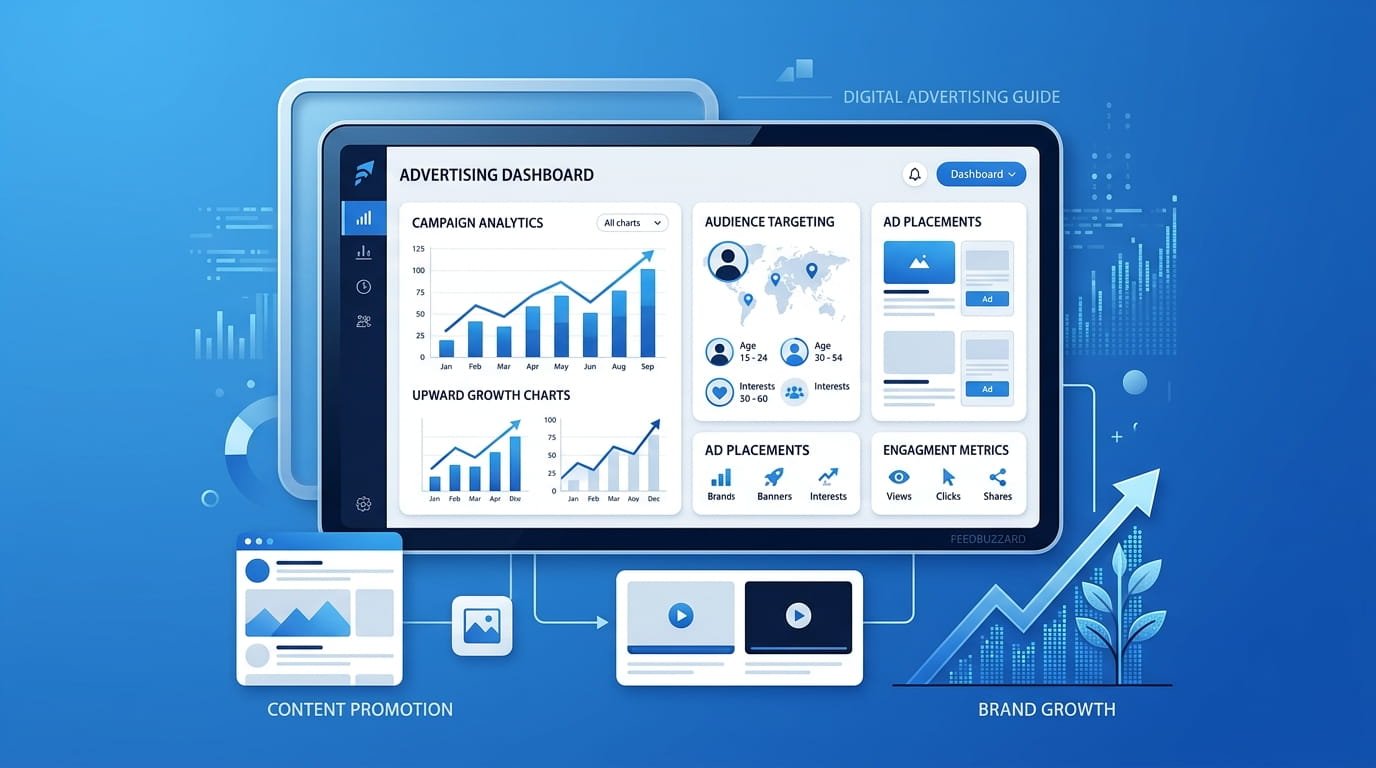
Advertise FeedBuzzard is a search phrase used by marketers and businesses looking for ways to promote a brand, website, product, service, or content through FeedBuzzard. Public information about the platform describes advertising options such as native cards, banners, videos, and sponsored articles, along with audience targeting and campaign tracking.

However, advertisers should separate what FeedBuzzard publicly states from claims repeated by third-party articles. Available information about pricing, audience size, campaign technology, and performance varies across sources. That makes verification especially important before committing a significant advertising budget.

This guide explains how to approach FeedBuzzard advertising, which formats may be relevant, how to structure a campaign, what metrics to track, and how to decide whether the platform fits your brand-growth strategy.

What Does Advertise FeedBuzzard Mean?

The phrase Advertise FeedBuzzard: Digital Advertising Guide generally refers to promoting a business or its content through advertising opportunities associated with FeedBuzzard.

FeedBuzzard presents itself as a content-focused website covering subjects across areas such as technology, gaming, business, and general news. Its current advertising guide describes several promotional formats and targeting options for advertisers.

For a business, advertising on a content-oriented platform can serve several purposes:

  • Building brand awareness
  • Generating website traffic
  • Promoting a new product
  • Supporting a content campaign
  • Attracting potential customers
  • Testing a new audience
  • Supporting lead-generation campaigns

The key is to treat advertising as a measurable marketing activity rather than simply buying exposure.

A campaign that produces thousands of impressions but no meaningful actions may have little business value. Conversely, a smaller campaign can be useful if it reaches the right audience and produces qualified visitors or customers.

How Advertise FeedBuzzard Is Described

FeedBuzzard’s own June 2026 advertising guide describes a campaign process involving objectives, audience selection, creative assets, budgets, tracking, approval, and performance monitoring. It also describes native cards, banner units, video spots, and sponsored articles as available formats.

The same source says advertisers can use demographic, interest, lookalike, keyword, device, operating-system, and geographic targeting. It also describes CPC, CPM, and CPI pricing models.

These details are useful for understanding the advertised model, but marketers should still confirm the current availability of each feature directly with FeedBuzzard before planning a campaign.

That distinction matters because online advertising products can change. A format mentioned in an article may not necessarily be available to every advertiser, country, account type, or campaign.

Why Brands May Consider Advertise FeedBuzzard

A smaller advertising environment can sometimes complement larger advertising networks.

Major platforms provide enormous reach, but businesses do not always need maximum reach. They may instead need a relevant audience for a particular campaign.

For example, a software company promoting a productivity tool could be more interested in reaching readers interested in technology and digital tools than in generating the largest possible number of impressions.

FeedBuzzard’s published advertising information describes audiences across English-speaking markets and mentions interest-based and behavioral targeting.

Potential reasons to test the platform include:

1. Audience experimentation

A new advertising channel gives marketers another environment in which to test messaging and audience assumptions.

2. Content-focused placements

Native and sponsored content can be useful when the campaign depends on explanation rather than a simple product image.

3. Additional traffic sources

A business that depends entirely on one advertising platform has limited diversification. Testing another source can reveal whether additional audiences are available.

4. Controlled testing

A small campaign can provide data before a business decides whether the channel deserves more budget.

Still, none of these potential advantages guarantees profitability. Performance depends on audience quality, creative quality, landing-page experience, offer strength, tracking accuracy, and campaign economics.

Advertise FeedBuzzard Ad Formats and Their Uses

Different advertising formats work for different objectives. FeedBuzzard’s published guide identifies four broad formats: native cards, banners, video spots, and sponsored articles.

Ad format Best suited for Main strength Main limitation
Native card Traffic and awareness Fits content-feed environments Can be overlooked if the message is weak
Banner Visual awareness Simple and familiar Often receives less attention than relevant content
Video Demonstrations and storytelling Can communicate more information Requires stronger creative production
Sponsored article Education and consideration Allows detailed explanation Takes longer to create and evaluate

Native advertising

Native placements attempt to fit naturally within a content environment. They can work well when the headline and visual immediately communicate why someone should click.

A common mistake is making a native advertisement look like an ordinary article without clearly communicating the commercial purpose. Advertisers should follow the platform’s disclosure and advertising rules.

Banner advertising

Banners work best when the message can be understood quickly.

A good banner usually communicates three things:

  1. What is being offered
  2. Why it matters
  3. What the viewer should do next

A crowded banner can weaken all three.

Video advertising

Video can demonstrate software, explain a service, show a product, or communicate a brand story.

However, production quality alone does not determine performance. The first few seconds need to establish relevance because viewers can move on quickly.

Sponsored articles

Sponsored content can be useful when a product requires context.

For example, a cybersecurity company may need more than a logo and button to explain why its service is relevant. An educational sponsored article can introduce the problem, explain possible solutions, and then present the brand.

The article should remain useful rather than becoming a long advertisement.

How to Build an Advertise FeedBuzzard Campaign

A structured campaign is easier to evaluate than a campaign created around vague goals.

Step 1: Define the business objective

Choose one primary objective.

Possible objectives include:

  • Brand awareness
  • Website traffic
  • Lead generation
  • Product promotion
  • App acquisition
  • Sales
  • Content distribution

Do not use “get more visibility” as the only measurement goal.

Turn it into something measurable, such as:

Generate 500 qualified visits to a product page within the test period.

That makes later evaluation much easier.

Step 2: Identify the target audience

Determine who should see the advertisement.

Consider:

  • Country
  • Language
  • Age range where appropriate
  • Interests
  • Device type
  • Search or content intent
  • Existing customer status
  • Previous website engagement

FeedBuzzard’s published material describes geographic, demographic, interest, keyword, device, and other targeting options.

Before launch, verify which targeting controls are actually available for your account.

Step 3: Select the appropriate format

Match the format to the objective.

1. If the goal is simple awareness, a visual placement may be enough.

2. If the product needs explanation, video or sponsored content may make more sense.

3. If the objective is direct-response traffic, a concise native advertisement with a specific landing page can be easier to measure.

Step 4: Prepare the creative

FeedBuzzard’s published guide says advertisers can upload image and video assets and preview placements before launch. It identifies JPG or PNG for image advertisements and MP4 with H.264 encoding for video.

Always confirm the latest technical requirements before producing a large batch of creative.

Your advertisement should have:

  • A clear headline
  • One primary message
  • Relevant imagery
  • A visible call to action
  • Accurate claims
  • Consistent branding

Avoid putting every benefit into one advertisement. One strong message is usually easier to understand than six competing messages.

Step 5: Create a relevant landing page

Do not send every visitor to the homepage.

Instead, connect the advertisement to a page that matches the promise made in the creative.

For example:

Ad:
“Try a faster way to manage your invoices.”

Landing page:
A page explaining the invoicing product, its features, pricing, and signup process.

The closer the relationship between advertisement and landing page, the easier it is for visitors to understand what happens next.

Step 6: Add tracking

Tracking is one of the most important parts of the campaign.

The FeedBuzzard advertising guide mentions conversion pixels and server-side events as tracking approaches.

Advertisers can also use standard campaign-tracking methods such as UTM parameters.

At minimum, separate campaigns by:

  • Source
  • Campaign
  • Audience
  • Creative
  • Landing page

This helps identify which combination actually produces results.

Budgeting: How Much Should You Spend?

There is no universally correct FeedBuzzard advertising budget.

Your budget should depend on the objective, audience, expected conversion value, and amount of data required to make a decision.

A sensible testing approach is to begin with an amount that the business can afford to lose without damaging cash flow.

The purpose of an initial campaign should be learning, not simply spending.

For example, you might test:

Test element Variation A Variation B
Headline Benefit-focused Problem-focused
Creative Product image Lifestyle graphic
Audience Broad relevant audience Narrow interest group
Landing page Product page Dedicated campaign page

Once enough data accumulates, you can reduce weaker combinations and concentrate spending on stronger ones.

FeedBuzzard’s published guide recommends starting with a conservative daily budget and increasing spending for better-performing audiences.

Which Advertising Metrics Matter Most?

Impressions alone do not tell you whether an advertising campaign is successful.

Track metrics according to your objective.

Click-through rate

CTR measures the percentage of impressions that generate clicks.

A low CTR can indicate that the creative, headline, audience, or offer needs attention.

Cost per click

CPC shows how much you pay for each click.

However, a cheap click is not automatically a good click.

If inexpensive traffic never converts, the low CPC provides little business value.

Conversion rate

Conversion rate measures the percentage of visitors who complete the desired action.

For example:

  • Purchase
  • Signup
  • Form submission
  • App installation
  • Consultation request

Cost per acquisition

CPA shows how much it costs to generate a customer or other defined conversion.

This is often more useful than CTR when the campaign’s goal is revenue.

Return on advertising spend

ROAS compares advertising revenue with advertising expenditure.

For example, if a business spends $200 and attributes $600 in revenue to the campaign, its ROAS is 3:1.

That does not automatically mean the campaign is profitable because product costs, salaries, payment fees, refunds, and other expenses still matter.

A Simple Way to Judge Campaign Performance

Consider the complete funnel rather than one metric.

Impressions → Clicks → Landing-page visits → Leads/Sales → Revenue

Suppose an advertisement receives many impressions but few clicks.

The problem may be the creative or targeting.

If it receives many clicks but few leads, the landing page or offer may be the problem.

If it generates leads but very few sales, the issue may be lead quality, sales follow-up, pricing, or product-market fit.

This approach prevents advertisers from blaming the advertising platform for every weak result.

Advertise FeedBuzzard vs Traditional Advertising Channels

FeedBuzzard should not automatically replace established advertising channels.

It may instead function as an additional test channel.

Factor Advertise FeedBuzzard test Large advertising network Organic search
Speed Potentially fast Fast Usually slower
Cost Depends on campaign Highly variable Content/SEO costs
Audience control Depends on available targeting Usually extensive Mostly intent-driven
Creative control Depends on format Extensive Content-focused
Immediate traffic Possible Possible Usually limited initially
Long-term value Depends on repeat performance Depends on campaign Can compound over time
Main risk Limited channel data Rising competition/cost Slow results

The important question is not whether FeedBuzzard is “better” than every alternative.

The better question is:

Does it produce acceptable results for this particular business?

Important Verification Points Before Spending Money

This is one area where advertisers should be cautious.

FeedBuzzard’s own website publishes detailed claims about advertising capabilities, but independent articles sometimes provide additional figures or technical claims that are not clearly supported by official documentation.

For example, some third-party pages publish specific minimum deposits or CPC figures. Those numbers should not be treated as official pricing unless FeedBuzzard confirms them.

Before paying for a campaign, request current information about:

  • Advertising rates
  • Available countries
  • Minimum campaign budget
  • Ad formats
  • Audience data
  • Traffic sources
  • Targeting capabilities
  • Reporting
  • Conversion tracking
  • Refund policies
  • Creative restrictions
  • Campaign approval
  • Sponsored-content labeling

FeedBuzzard’s official contact page provides a contact form and an email address for inquiries.

For an advertising request, ask for a current media kit or rate card rather than relying on an old blog post.

Common Mistakes When Advertising on FeedBuzzard

Using the wrong audience

A technically good advertisement can fail when shown to people who have no reason to care.

Measuring clicks instead of customers

Clicks are only one stage of the funnel. A campaign should ultimately be evaluated against its business objective.

Sending traffic to a generic homepage

A targeted advertisement deserves a targeted destination.

Changing everything simultaneously

If you change the audience, headline, creative, offer, and landing page at the same time, you may not know what caused the improvement or decline.

Scaling too quickly

A small successful test does not necessarily prove that ten times the budget will produce ten times the results.

Trusting unverified performance claims

Third-party articles sometimes describe impressive results or specific platform capabilities. Treat those claims as leads for investigation, not guaranteed outcomes.

Ignoring brand safety

A low-cost placement is not necessarily valuable if it damages brand perception.

Review where advertisements appear and whether the surrounding content fits your company’s standards.

How to Improve Brand Growth With Advertise FeedBuzzard

Brand growth requires more than repeatedly displaying a logo.

A stronger approach connects advertising with broader brand activity.

Build consistent messaging

Use the same core positioning across advertisements, landing pages, social channels, and email campaigns.

Give users a reason to remember the brand

A useful message, distinctive visual identity, or clear value proposition can make an advertisement more memorable.

Retarget engaged visitors

If the available platform features support retargeting, returning visitors can receive a different message from first-time users.

The first advertisement might introduce the brand.

The second could explain a product benefit.

A later message might encourage conversion.

Test creative angles

Instead of producing ten nearly identical advertisements, test genuinely different messages.

For example:

  • Save time
  • Reduce costs
  • Improve productivity
  • Simplify a complicated process

The winning message can reveal what matters most to your audience.

What Competitors Often Miss About Advertise Feedbuzzard

A major overlooked issue is verification.

Search results contain many pages discussing FeedBuzzard advertising, but their descriptions do not always agree. Some describe it as a content platform, while others present it as a sophisticated advertising network with detailed bidding and targeting systems.

FeedBuzzard’s own June 2026 guide does describe RTB, targeting, multiple ad formats, and campaign tracking. Yet that does not mean every third-party claim about its traffic, pricing, or performance should be accepted without checking.

There is another useful distinction: advertising availability and advertising effectiveness are separate questions.

Even if a platform offers the format you want, it may not be profitable for your business.

The correct process is:

  1. Verify the current advertising product.
  2. Obtain current commercial terms.
  3. Define a measurable objective.
  4. Run a controlled test.
  5. Track visitors and conversions independently.
  6. Compare results against your existing channels.
  7. Scale only if the economics remain attractive.

That process protects the marketing budget while producing useful information.

Is Advertise FeedBuzzard Worth Testing?

Advertise FeedBuzzard can be considered as an experimental advertising channel, particularly for brands interested in content-oriented placements and additional digital reach.

Its published advertising information describes multiple formats, audience targeting, budget controls, and conversion tracking.

Still, advertisers should not assume that those features automatically translate into profitable campaigns.

The strongest reason to test a smaller platform is not the promise of unusually high returns. It is the possibility of finding an audience or placement that performs efficiently for a particular business.

Start with a controlled campaign, establish clear success criteria, and compare the results with alternatives.

Frequently Asked Questions (Advertise FeedBuzzard)

What does Advertise FeedBuzzard mean?

Advertise FeedBuzzard generally refers to using FeedBuzzard’s advertising opportunities to promote a business, product, service, website, or content. FeedBuzzard’s published advertising guide describes formats including native cards, banners, videos, and sponsored articles, along with audience targeting and campaign tracking.

Can small businesses advertise on FeedBuzzard?

Small businesses may consider FeedBuzzard as a test channel, but they should first confirm current advertising availability, minimum budgets, formats, and targeting options. Starting with a controlled budget is safer than committing substantial spending before the business has its own performance data.

What ad formats does FeedBuzzard offer?

FeedBuzzard’s current advertising guide lists native cards, banner units, video spots, and sponsored articles. It also describes placements within feeds, article pages, and mobile environments. Advertisers should verify the latest specifications and availability before preparing campaign assets.

How should I measure FeedBuzzard advertising?

Measure performance of Advertise feedbuzzard from impression through conversion. Useful metrics include CTR, CPC, conversion rate, CPA, revenue, and ROAS. Use campaign-specific tracking links or other attribution methods so you can distinguish FeedBuzzard visitors from traffic generated by other marketing channels.

Is FeedBuzzard advertising guaranteed to increase sales?

No. Advertising platforms cannot guarantee sales because campaign performance depends on many factors, including audience quality, creative, offer, landing page, pricing, competition, and conversion tracking. Treat initial FeedBuzzard advertising as a measurable experiment rather than a guaranteed source of revenue.

How can I contact FeedBuzzard about advertising?

FeedBuzzard’s official contact page provides a contact form and lists an email address for inquiries. For an advertising request, clearly explain your brand, campaign objective, target audience, campaign dates, and approximate budget. You can also request current advertising rates or a media kit.

Should I use FeedBuzzard instead of Google or social media advertising?

Not necessarily. Advertise feedbuzzard can be tested alongside established channels rather than automatically replacing them. Compare channels using the same business metrics, such as qualified traffic, leads, customer acquisition cost, and revenue. The best channel is the one that delivers acceptable results for your specific objective.

Conclusion of Advertise FeedBuzzard

Advertise FeedBuzzard: Digital Advertising Guide is best approached as a practical framework for testing FeedBuzzard as an additional digital advertising channel. The platform’s published information describes native, banner, video, and sponsored-content formats alongside audience targeting, budget controls, and conversion tracking.

The most important step is verification. Advertising features, pricing, audience availability, and campaign conditions can change, while third-party articles may repeat claims that are difficult to confirm. Check current details directly with FeedBuzzard, start with a controlled campaign, and measure results independently.

For brand growth, the goal should not simply be more impressions. The goal is relevant attention that produces measurable business value.

Continue Reading

Business

Financial Literacy Worksheets: Money Management Basics

Published

on

Financial literacy worksheets for learning money management basics

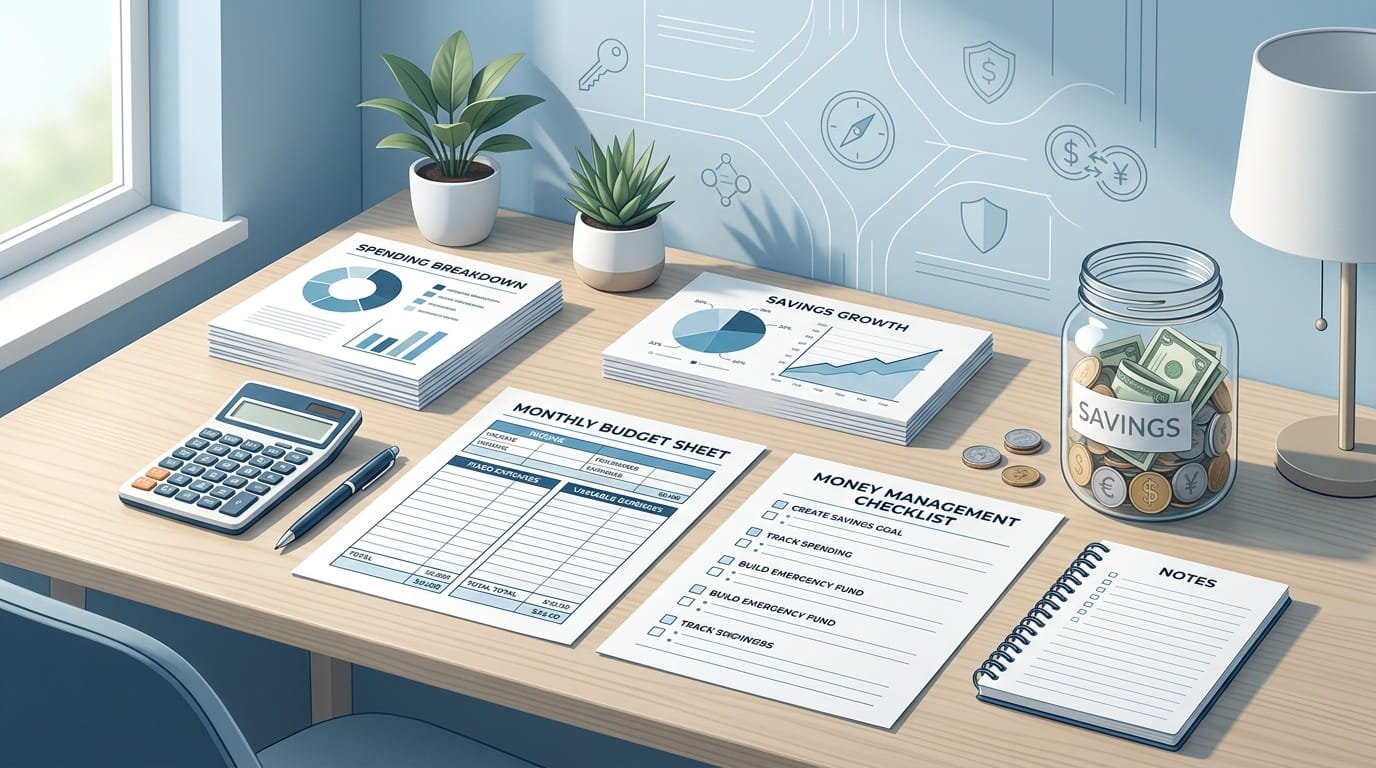
Financial Literacy Worksheets: Money Management Basics can turn abstract financial concepts into practical exercises that people can complete, review, and apply to everyday decisions. Instead of simply reading about budgeting, saving, credit, debt, or investing, learners can work through realistic examples and see how different choices affect their finances.

Financial literacy is broader than knowing how to add up expenses. The OECD describes it as a combination of financial awareness, knowledge, skills, attitudes, and behaviours needed to make sound financial decisions and improve financial well-being.

That makes worksheets particularly useful. A well-designed worksheet does not simply test whether someone knows a definition. It gives them an opportunity to practice the decision-making process.

What Are Financial Literacy Worksheets?

Financial literacy worksheets are structured learning activities that help people understand and practice personal finance concepts.

They may be designed for:

  • Students learning basic money skills
  • Teenagers preparing for financial independence
  • College students
  • Adults improving their budgeting habits
  • Families teaching children about money
  • Classroom financial education programs
  • Community and workplace education programs

A worksheet might ask a learner to create a monthly budget, compare two borrowing options, calculate savings growth, identify needs versus wants, or build a plan for reaching a financial goal.

The strongest worksheets connect financial knowledge with an actual decision. This matters because financial literacy is not simply about memorizing financial terminology. The OECD’s financial literacy framework emphasizes applying knowledge and skills to real-life financial situations.

Why Financial Literacy Worksheets Matter

Money decisions often involve several factors at once.

For example, deciding whether to purchase a $1,000 item is not just a question of whether someone has $1,000 available. A responsible decision may require considering:

  • Current income
  • Existing expenses
  • Savings
  • Emergency needs
  • Debt
  • Interest costs
  • Future goals
  • Opportunity cost

A worksheet makes those factors visible.

Instead of saying, “Create a budget,” a worksheet can provide categories for income, housing, food, transportation, debt payments, savings, entertainment, and miscellaneous spending. The learner then has to allocate actual amounts.

That process can reveal problems that are easy to overlook when financial concepts are discussed only in theory.

The Main Types of Financial Literacy Worksheets

Different worksheets serve different learning objectives. Using several types is generally more effective than relying on one generic budgeting sheet.

1. Budgeting Worksheets

Budget worksheets help learners compare income with expenses.

A basic monthly budget might include:

Category Example
Monthly income $2,500
Housing $800
Food $350
Transportation $250
Utilities $150
Debt payments $200
Savings $300
Entertainment $150
Other expenses $200
Remaining amount $100

The numbers above are only an illustration. Actual categories and amounts vary significantly by location, household, income, and lifestyle.

A useful worksheet should distinguish between fixed and variable expenses.

Fixed expenses generally remain relatively stable, such as a contractual rent payment.

Variable expenses can change from month to month, such as groceries, fuel, dining, and entertainment.

This distinction helps learners identify which expenses are easier to adjust when money becomes tight.

2. Needs vs. Wants Worksheets

Needs-versus-wants activities teach learners how to prioritize spending.

For example:

  • Basic food → need
  • Essential medication → need
  • Luxury restaurant meal → want
  • Basic housing → need
  • Premium subscription → want
  • Required transportation → need

The distinction is not always absolute. A smartphone, for example, could be a convenience for one person but an essential work tool for another.

That is why good worksheets should encourage learners to explain why they classified an expense rather than simply marking “need” or “want.”

3. Savings Goal Worksheets

Savings worksheets turn a vague goal into a measurable target.

A worksheet can ask:

  1. What are you saving for?
  2. How much does it cost?
  3. When do you need the money?
  4. How much have you already saved?
  5. How much can you save regularly?
  6. What happens if your deadline changes?

Investor.gov provides a savings goal calculator that follows a similar practical approach by helping users determine how much they need to save to reach a specific goal.

This type of exercise teaches an important lesson: financial goals become easier to manage when they are measurable.

4. Emergency Fund Worksheets

An emergency savings worksheet focuses on unexpected expenses rather than planned purchases.

Possible scenarios include:

  • A vehicle repair
  • A temporary loss of income
  • An urgent household expense
  • An unexpected travel requirement
  • A major appliance replacement

The purpose is not to predict exactly what emergency will happen. It is to demonstrate why accessible savings can reduce the need to rely on expensive borrowing when something unexpected occurs.

The Consumer Financial Protection Bureau has highlighted the connection between emergency savings and the risk of relying on high-cost borrowing when unexpected expenses occur.

5. Credit and Debt Worksheets

Credit worksheets can help learners understand borrowing before they use it.

A useful activity might compare:

Factor Loan A Loan B
Amount borrowed $1,000 $1,000
Interest rate 10% 20%
Fees $20 $0
Repayment period 12 months 12 months
Total cost Calculate Calculate

The objective is not simply to choose the lower interest rate.

Fees, repayment periods, compounding methods, minimum payments, and other terms can affect the total cost of borrowing.

This is one reason worksheets should use complete examples rather than asking learners to compare interest rates alone.

Investor.gov also advises investors to pay attention to high-interest debt and understand how debt costs can affect financial progress.

Financial Literacy Worksheets for Students

Students can benefit from financial worksheets because many money concepts become easier to understand when connected to realistic situations.

A student worksheet might cover:

  • Earning income
  • Creating a budget
  • Opening and managing an account
  • Saving for a goal
  • Understanding interest
  • Comparing prices
  • Using credit responsibly
  • Recognizing financial scams
  • Introduction to investing
  • Understanding financial risk

Investor.gov offers classroom resources covering saving, investing, credit management, diversification, risk and return, quizzes, and calculators.

Its student materials also include worksheets for setting financial goals and estimating how long it may take to reach them.

Why Realistic Scenarios Work Better

A worksheet asking, “What is compound interest?” tests memory.

A worksheet asking, “You save $100 every month. How might your balance change over several years if the money earns a return?” encourages calculation and interpretation.

The second approach is closer to the real decisions people face.

The goal should be to help students understand the consequences of choices, not simply complete arithmetic problems.

Financial Literacy Worksheets for Adults

Adult learners often need worksheets that address more complicated financial situations.

Useful topics include:

  • Monthly cash flow
  • Household budgeting
  • Debt repayment
  • Emergency savings
  • Insurance decisions
  • Retirement planning
  • Investment fees
  • Financial scams
  • Long-term financial goals

Adults may also need worksheets that accommodate irregular income.

Someone earning a fixed salary can create a relatively predictable monthly budget. A freelancer, contractor, seasonal worker, or small-business owner may need to work with fluctuating income.

In those cases, a useful worksheet should allow learners to enter different income levels and examine how their spending plan changes.

How to Use Financial Literacy Worksheets Effectively

Simply downloading a worksheet does not automatically improve financial knowledge.

The learning process matters.

Step 1: Identify the learning objective

Start with one specific objective.

For example:

“Understand how monthly expenses affect savings.”

That is more useful than creating a worksheet containing ten unrelated financial topics.

Step 2: Use realistic numbers

The numbers should be believable and appropriate for the learner’s situation.

A worksheet for teenagers might use part-time income and everyday purchases. An adult worksheet might include rent, utilities, transportation, insurance, debt payments, and savings.

Step 3: Require decisions

Good worksheets should ask learners to make choices.

For example:

“If your income falls by 10%, which expenses would you change first?”

That question teaches prioritization rather than simple calculation.

Step 4: Explain the result

After completing an exercise, learners should understand why their answer matters.

A budget showing a surplus, for example, can lead to a discussion about saving, debt reduction, or other financial priorities.

Step 5: Review the worksheet later

Financial circumstances change. A worksheet completed six months ago may no longer describe the person’s situation.

Investor.gov recommends regularly reviewing financial information and maintaining an ongoing approach to financial planning.

A Practical Financial Literacy Worksheet Framework

A single worksheet can combine several basic money-management skills.

Income

Record all regular sources of income.

Essential expenses

List costs that are necessary for basic living or important obligations.

Flexible spending

Record expenses that can potentially be adjusted.

Debt

List balances, interest rates, minimum payments, and due dates.

Savings

Record short-term and long-term savings goals.

Financial goals

Write down specific targets and deadlines.

Review

Calculate whether income exceeds planned expenses and determine what needs adjustment.

This structure gives learners a simple view of their financial position without requiring advanced financial software.

Budget Worksheet vs. Financial Literacy Worksheet

These terms are related but not identical.

Feature Budget Worksheet Financial Literacy Worksheet
Main purpose Track income and spending Teach financial concepts and decisions
Typical use Personal planning Education and practice
Income tracking Usually included Often included
Expenses Central focus May be one topic
Credit Optional Common topic
Investing Usually limited Can be included
Financial concepts Limited Broader
Decision-making Practical Often central

A budget worksheet is primarily a planning tool. A financial literacy worksheet is primarily an educational tool, although the two can overlap.

What Makes a Good Financial Literacy Worksheet?

Not every worksheet is equally useful.

A strong worksheet should have several characteristics.

Clear instructions

Learners should know exactly what information they need and what they are expected to calculate or decide.

Appropriate difficulty

A beginner should not be presented with complicated investment terminology before understanding basic income, spending, saving, and debt.

Practical examples

Examples should resemble real financial situations rather than unrealistic textbook problems.

Room for explanation

Questions such as “Why did you choose this option?” can reveal whether the learner understands the underlying concept.

Accurate calculations

Financial exercises should be checked carefully. An incorrect interest calculation can teach the wrong lesson.

Adaptability

The best worksheets can be adjusted for different ages, income levels, currencies, and financial systems.

Common Mistakes When Using Money Worksheets

Treating every expense as fixed

Some spending can change, while other obligations cannot be adjusted easily. A worksheet should make this difference clear.

Focusing only on cutting expenses

Financial literacy is not simply about spending less.

Income, saving, borrowing, investing, risk, and financial goals also matter.

Ignoring irregular expenses

Annual insurance payments, school expenses, vehicle maintenance, gifts, and other occasional costs can disrupt an otherwise balanced monthly budget.

A good worksheet can include an “irregular expenses” section.

Teaching rules without context

A popular budgeting rule may be useful as a starting point, but it should not be presented as a universal law.

Housing costs, healthcare, transportation, taxes, family responsibilities, and income vary widely.

Confusing saving with investing

Savings and investments serve different purposes and involve different risks.

Money needed for an upcoming expense generally should not automatically be treated the same way as money intended for a long-term investment goal.

Digital Financial Literacy Is Becoming More Important

Modern financial literacy also involves digital financial services.

People increasingly interact with money through:

  • Mobile banking
  • Digital wallets
  • Online payment systems
  • Investment apps
  • Online lending platforms
  • Subscription services
  • Digital marketplaces

This creates additional learning requirements.

A modern worksheet can include exercises about identifying suspicious financial messages, checking whether a financial professional is properly registered, recognizing misleading investment claims, and protecting account information.

The OECD recognizes digital financial literacy as an increasingly important part of safely using digital financial services and technologies.

Investor.gov also provides resources designed to help people become more informed investors and avoid scams.

Practical Money Skills Worksheets Should Go Beyond Budgeting

One of the biggest weaknesses of basic financial education is treating budgeting as the entire subject.

A broader worksheet collection could cover five major areas:

Financial Skill Example Worksheet
Earning Compare gross and net income
Spending Build a monthly spending plan
Saving Create a savings goal
Borrowing Compare loan costs
Investing Understand risk and diversification

This approach gives learners a more complete understanding of personal finance.

Financial literacy ultimately involves applying knowledge to financial decisions, rather than simply knowing financial vocabulary.

Frequently Overlooked Details in Financial Worksheets

Some of the most useful lessons are easy to leave out.

Inflation

A worksheet can show that the same amount of money may not buy the same quantity of goods and services over time.

Opportunity cost

If someone spends money on one option, that money cannot simultaneously be used for another purpose.

Fees

Small fees can matter over long periods, particularly when associated with financial products or investments.

Investor.gov specifically provides tools that allow users to examine how investment fees and expenses can affect returns.

Risk

A worksheet about investing should not imply that higher potential returns are guaranteed.

Investment outcomes are uncertain, and risk should be part of the decision-making exercise.

Financial scams

Financial education should teach learners to question promises of unusually easy or guaranteed returns. Investor.gov explicitly advises investors to avoid opportunities that sound too good to be true.

How Teachers and Parents Can Make Worksheets More Effective

Worksheets work best when they become part of a larger discussion.

For example, after completing a budgeting exercise, a teacher could ask:

  • Which expense was hardest to reduce?
  • What would happen if income decreased?
  • Which costs were unexpected?
  • How would a major emergency affect the budget?
  • What financial goal should receive priority?

Parents can use similar questions at home.

The objective is not to tell children exactly how every financial decision should be made. It is to develop the reasoning skills needed to evaluate financial choices.

The OECD’s research supports the idea that financial literacy develops over time rather than representing a single level that someone either has or does not have.

Frequently Asked Questions

What are financial literacy worksheets?

Financial literacy worksheets are educational activities that teach practical money skills such as budgeting, saving, credit, debt, investing, financial goals, and risk management. They can be used by students, teachers, parents, adults, and community education programs to practice financial decisions using realistic examples.

What should a basic financial literacy worksheet include?

A basic worksheet can include income, essential expenses, flexible spending, savings goals, debt, and a final calculation showing whether the budget balances. More advanced worksheets can add credit costs, investing, inflation, financial risk, taxes, or scam awareness.

Are financial literacy worksheets useful for students?

Yes. Worksheets can help students apply financial concepts to realistic situations instead of only memorizing definitions. Topics such as saving, budgeting, credit, investing, and financial goals can be turned into practical exercises. Investor.gov provides classroom resources and activities covering several of these areas.

Can adults use financial literacy worksheets?

Yes. Adults can use worksheets to review household cash flow, debt, savings goals, investment costs, and long-term financial plans. They can be especially useful when financial circumstances change because they provide a structured way to compare income, expenses, obligations, and goals.

What is the difference between a budget worksheet and a financial literacy worksheet?

A budget worksheet primarily helps someone organize income and expenses. A financial literacy worksheet has a broader educational purpose and can cover budgeting along with saving, borrowing, investing, risk, financial goals, and other money-management concepts.

Can worksheets teach investing?

They can introduce basic investing concepts such as risk, diversification, fees, time horizons, and the difference between saving and investing. However, an educational worksheet should not present a particular investment as guaranteed to produce a profit. Investor.gov provides educational tools covering these concepts.

How often should a personal finance worksheet be updated?

A personal budget or financial plan should be reviewed whenever income, expenses, debt, goals, or household circumstances change. Even when circumstances remain stable, periodic reviews can help identify changes in spending patterns and progress toward financial goals.

Conclusion

Financial Literacy Worksheets: Money Management Basics provide a practical way to turn financial concepts into real decision-making exercises. They can teach budgeting, saving, credit, debt, investing, financial risk, and goal setting without requiring complicated financial software.

The most effective worksheets do more than ask learners to calculate numbers. They encourage them to compare choices, recognize trade-offs, explain their reasoning, and consider how financial decisions affect future goals.

For students, worksheets can provide an early foundation for responsible money habits. For adults, they can offer a structured way to review finances and identify areas that need attention. Used consistently and updated when circumstances change, financial literacy worksheets can become a practical part of lifelong financial education.

Continue Reading

Trending

Contact Us Email:- Team3brothers.uk@gmail.com